Crop guide · The mint family

How to grow spearmint

A vigorous perennial herb that delivers fresh, clean flavor from a single plant — or a whole bed if you let it run.

Mentha spicata · also called mint, garden mint

Partial sun Beginner Frost-hardy
Sun
Partial sun
Afternoon shade once temps stay above 85 °F (29 °C) prevents leaf scorch and slows bolting (the shift from leaf growth to flowering).
Frost
Hardy
Top growth dies back after hard frost
Spacing
18 in
45 cm between plants
Sow depth
⅛ in
3 mm
To harvest
60–90 days
counted from transplant
Soil pH
6.0–7.0
slightly acidic to neutral
Timing

When to plant spearmint

Windows are counted from the average date of your last spring frost.

Fall planting:6 weeks before first fall frost to allow roots to establish.
Background

Why grow spearmint

Spearmint is one of the most productive herbs per square foot, yielding multiple cuts per season with minimal inputs. Its spreading habit fills gaps quickly, and it thrives in containers where its roots can be kept in check.

A little history. Native to Europe and southwestern Asia, spearmint spreads by underground stems called rhizomes. It rarely sets viable seed, so commercial and garden stock is propagated vegetatively, which keeps flavor consistent across plants.

The season, step by step

From planting to harvest

Transplant outside

After last frost

Containers strongly preferred — rhizomes spread aggressively in open beds. A 10-inch or larger pot controls spread effectively. In containers: 2-gallon pot minimum; 5-gallon for sustained harvests. Space plants 18 inches (45 cm) apart.

Water and feed

All season

Water when the top inch of soil feels dry; more frequently in containers, which dry out faster than beds. Water when leaves begin to look slightly dull or soft before wilting — water at this point. Aim for about 1 inch per week including rain.

Side-dress (scatter fertilizer along the base and water in) once in spring and once after the first hard cut. What to use: balanced compost or a 5–5-5 organic granular; avoid high nitrogen, which dilutes flavor.

Prune and maintain

As it grows

Pinch out (remove by hand) the top two sets of leaves once stems reach 6 inches to encourage bushy growth. Cut stems back by half after flowering to reset the plant for a second flush of leaves.

Harvest and store

60–90 days from transplant

It's ready when harvest once stems are 6–8 inches tall and before flower buds open fully. Flavor is strongest just before the plant begins to bolt. Cut stems back to just above a leaf pair, leaving at least one-third of the stem on the plant. Use clean scissors or snips. Harvest in the morning after dew dries for best flavor.

Stand cut stems in a glass of water at room temperature for up to 5 days, or wrap loosely in a damp paper towel and refrigerate for up to 1 week. Freeze whole leaves on a tray, then bag.

Companions

Good neighbours, bad neighbours

Plant it with

Tomato

Mint's strong scent can help hide nearby tomatoes from aphids and flea beetles that hunt by smell. Sink a potted plant beside the row rather than planting free — loose mint roots will crowd tomatoes, and both crops can carry verticillium wilt.

Garden Pea

Gardeners have long set mint at the end of the pea row, crediting its scent with confusing pea aphids. The effect is not well demonstrated, so treat it as a pleasant habit and keep the mint in a buried pot so it does not run through the peas.

Cabbage

A strongly aromatic neighbour often reduces how many cabbage white butterflies and flea beetles find the crop, since they locate cabbage largely by smell. Plant mint in sunken containers along the bed edge, never loose between heads.

Carrot

Mint's scent can help cover the smell of carrot foliage that guides the carrot rust fly to the row. Keep it contained at the row's end — mint roots run straight through a carrot bed and make lifting roots a chore.

Keep it away from

Parsley

Mint's underground stems spread fast and reliably swamp a slower clump of parsley, and untangling the two at harvest means pulling both. Give parsley its own space or grow the mint in a pot.

Chamomile

Old charts keep these two herbs apart, without a demonstrated reason behind it. The practical concern is simpler: low, self-sowing chamomile is quickly buried by spreading mint, so keep them in separate pots or beds.
Lemongrass

Spearmint spreads by underground runners that thread straight into a lemongrass clump, and once tangled among the stem bases they are almost impossible to pull without wrecking the harvest. Grow mint in its own pot instead.

Carnation

Spearmint spreads by runners and will overrun a carnation clump within a season, smothering the low foliage and holding damp air against it. Grow it in a sunken pot or a separate container, never loose in the same bed.

Lavender

Spearmint spreads by underground runners and will thread through a lavender crown within a season, holding damp soil against the woody base and inviting rot. If you want both, sink the mint in a buried pot or grow it in a separate container.
French Lavender

Spearmint spreads by underground runners and will overrun the open, gritty ground a lavender needs, adding shade and trapped moisture at the crown. Keep it in a sunken pot or a separate bed entirely.

Fiddlehead Fern

Spearmint spreads by runners and will thread through a fern bed within a season or two. Digging it back out tears the fern's shallow crown and underground runners. Keep mint in a sunken pot or a separate bed entirely.

Parsley, Curly

Spearmint spreads by runners and will overrun a slow-starting parsley sowing within a season. Grow mint in a sunken pot or a separate container rather than trying to share the bed.

Parsley - Italian Flat-Leaf

Spearmint runs underground and will thread through a parsley clump within one season, making clean cutting impossible. Grow mint in its own pot, or sink a bottomless container 12 inches deep to hold the runners.
Solomon's Seal

Spearmint runs sideways underground and will thread through a Solomon's Seal clump within a season or two, making shoot harvest and any future division a tangle. Grow mint in a sunk pot or a separate bed well away from the patch.
Rosemary

Spearmint runs underground and will overrun the base of a rosemary shrub within a season, trapping moisture against the woody crown. Grow mint in a sunken pot or a separate container well away from the rosemary bed.

Crosne

Spearmint runs underground and will take over a crosne bed in a season. Both crops spread by underground stems, so at digging time you cannot tell one pale runner from the other. Grow mint in a sunken pot or a separate bed well away from the row.
Lemon Thyme

Spearmint spreads by underground runners and will thread through and smother a low thyme mound within a season. Grow mint in its own sunken pot or a separate container well away from the thyme.

Violet

Spearmint runs through shaded, moist ground exactly where violets thrive and will overrun a violet patch within a season or two. Grow it in a sunken pot or a separate bed rather than alongside.

Summer Savory

Mint spreads by runners and will overrun a slower annual herb within one season. The problem is territory, not chemistry — keep mint in a buried pot or a separate container.

Sweet Alyssum

Mint spreads by runners and will simply run over a low alyssum mat within a season. Keep mint in a sunken pot or a separate bed if you want the alyssum to persist.

Fig

Mint spreads by runners and will fill the entire mulched root zone within a season or two, so weeding and harvest mean disturbing shallow fig roots. If you want mint nearby, sink it in a buried bottomless pot or keep it in a separate container.
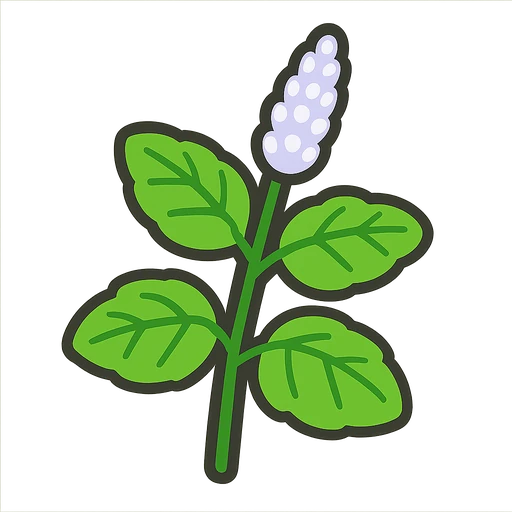

See spearmint in the full companion chart →

Crop rotation

After this crop

Rotation

A perennial — it holds its spot for years, so it sits outside the annual rotation.

Spearmint is a perennial that holds its ground rather than entering the yearly rotation, so no family gap applies. It is a moderate feeder that returns little to the soil. When you finally lift it, sift out every rhizome piece and top the bed with compost before replanting.

Trouble to watch for

Pests and diseases

Pests

Aphids

Sign
Clusters of small soft insects on new shoot tips; sticky residue on leaves below.
Fix
Knock off with a firm water spray; repeat daily for 3 days. Discard heavily infested tips.

Spider mites

Sign
Fine pale stippling across leaf surfaces; faint webbing on undersides in dry conditions.
Fix
Mist undersides of leaves daily and move containers out of hot, dry spots. Remove badly affected stems.

Mint flea beetles

Sign
Tiny round holes scattered across leaves; small shiny black beetles that jump when disturbed.
Fix
Cover young plants with row cover (fine mesh fabric) until established; hand-pick adults in the morning.

Cutworms

Sign
Stems severed at soil level overnight; fat gray-brown caterpillars found just below the soil surface.
Fix
Place a cardboard collar around each stem at planting, pushed 1 inch into the soil.

Diseases

Mint rust

Sign
Orange or pale yellow powdery pustules on leaf undersides; leaves yellow and drop early.
Prevent
Remove and bin all affected leaves immediately. Improve air circulation by thinning stems. Do not compost infected material.

Powdery mildew

Sign
White powdery coating on upper leaf surfaces, most common in late summer when nights cool and days stay warm.
Prevent
Space plants to allow airflow; water at the base, not overhead. Cut affected stems back hard and dispose of them.

Verticillium wilt

Sign
Sudden wilting of individual stems despite adequate moisture; stems may show brown discoloration inside when cut.
Prevent
Avoid replanting mint in soil where tomatoes, peppers, or strawberries recently grew. Refresh container soil every 2 years.
FAQ

Common questions about spearmint

When should I plant spearmint?
Spring: after last frost, once soil reaches 50 °F (10 °C). Fall: 6 weeks before first fall frost to allow roots to establish.
How long until spearmint is ready to harvest?
60–90 days, counted from transplant. It's ready when harvest once stems are 6–8 inches tall and before flower buds open fully. Flavor is strongest just before the plant begins to bolt.
Can I grow spearmint in a container?
Containers strongly preferred — rhizomes spread aggressively in open beds. A 10-inch or larger pot controls spread effectively. In containers: 2-gallon pot minimum; 5-gallon for sustained harvests.
How often should I water spearmint?
Water when the top inch of soil feels dry; more frequently in containers, which dry out faster than beds. Water when leaves begin to look slightly dull or soft before wilting — water at this point.
How should I store spearmint after harvest?
Stand cut stems in a glass of water at room temperature for up to 5 days, or wrap loosely in a damp paper towel and refrigerate for up to 1 week. Freeze whole leaves on a tray, then bag.
Can spearmint stay in the ground over winter?
Cut stems to 2 inches above soil after the first hard frost. Mulch the crown with 2–3 inches of straw in cold climates. Roots survive and re-sprout in spring without further intervention.

Verdie turns this guide into your plan

Set your garden's location and every window above becomes a real date — then Verdie reminds you when it's time to sow, transplant, water, and pick.

Download on the App Store
Free to download · iPhone & iPad