
Crop guide · The daisy family

How to grow chamomile

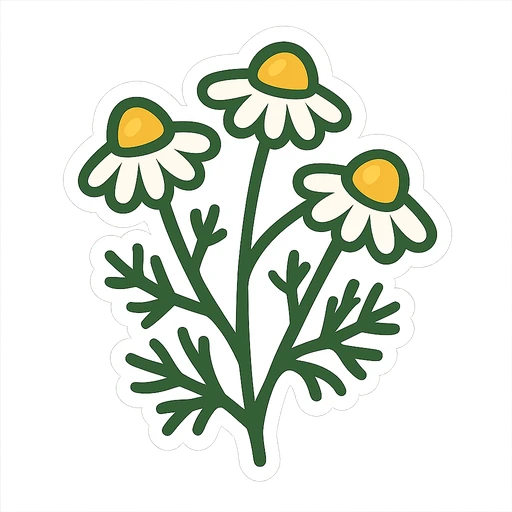
A self-seeding annual herb bearing apple-scented flowers that dry well for tea and attract beneficial insects throughout the season.

Matricaria chamomilla · also called German chamomile, scented mayweed

Full sun Beginner Half-hardy
Sun
Full sun
Light afternoon shade once temperatures stay above 90 °F (32 °C) helps extend flowering before the plant bolts (shifts from leaf growth to flowering and seed set).
Frost
Half-hardy
Established seedlings tolerate light frost to about 28 °F (-2 °C)
Spacing
6 in
15 cm between plants
To harvest
60–90 days
counted from sowing
Soil pH
5.6–7.5
slightly acidic to neutral
Timing

When to plant chamomile

Windows are counted from the average date of your last spring frost.

Fall planting:6–8 weeks before first fall frost for overwintered seedlings.
Too late?Skip a spring sowing once daytime temperatures regularly exceed 85 °F (29 °C) — sow again in late summer for a fall flush of flowers.
Background

Why grow chamomile

Chamomile flowers continuously from late spring through summer, providing a steady harvest for drying. Its open-faced flowers draw parasitic wasps and hoverflies that suppress aphid populations in nearby beds.

A little history. Native to southern and eastern Europe and western Asia; naturalized widely. Flowers contain hollow, cone-shaped receptacles — a reliable field distinction from Roman chamomile, which has solid receptacles.

The season, step by step

From planting to harvest

Sow outside

2–4 weeks before last frost

Aim for 6 inches (15 cm) between plants once thinned. Press seeds onto the soil surface — they need light to germinate. Mist daily to keep the top quarter-inch moist until sprouts appear. Seedlings emerge in 7–14 days.

Best soil temp 60–68 °F (16–20 °C) Minimum 45 °F (7 °C) Emerges in 7–14 days

Water and feed

All season

Water when the top inch of soil feels dry; roughly once or twice a week in warm weather. Water when leaves begin to look slightly dull or stems lose their upright posture. Aim for about 1 inch per week including rain.

A single light feeding at planting is usually sufficient; side-dress (scatter fertilizer along the row and water in) once if growth looks pale. What to use: low-nitrogen balanced compost or a 5–5-5 organic granular; excess nitrogen favors foliage over flowers.

Prune and maintain

As it grows

Deadhead (remove spent flowers) regularly to extend the flowering period. Once roughly one-third of flowers on a plant show petals reflexing (bending sharply back toward the stem), allow those heads to mature and drop seed for next year's volunteers.

Harvest and store

60–90 days from sowing

It's ready when petals are fully open and just beginning to reflex (bend back toward the stem); the central yellow cone feels slightly springy when pressed. Harvest in the morning after dew dries. Pinch or snip individual flower heads with a short stem. A wide-toothed herb rake drawn through the plant can speed harvest when many heads are ready simultaneously. Harvest every 2–3 days during peak bloom.

Spread flowers in a single layer on a mesh rack and dry at 95–105 °F (35–41 °C) or in a well-ventilated room out of direct light for 1–2 weeks. Store dried flowers in an airtight container away from heat and light; use within 12 months.

Companions

Good neighbours, bad neighbours

Plant it with

Basil

Chamomile's open-faced flowers feed hoverflies and tiny parasitic wasps, and those hunters often reduce aphid numbers on nearby basil tips. Both plants want full sun and the same light watering, so they share a bed comfortably.

Dill

Both carry small, shallow flowers that feed hoverflies, lacewings, and tiny parasitic wasps — the insects that clean aphids and small caterpillars off neighbouring crops. Letting the two bloom together broadens the nectar window across the season.

Cabbage

Chamomile in flower draws in the small parasitic wasps that lay eggs in cabbageworms, which can lower caterpillar damage on the heads. Keep the chamomile at the row edge so it does not shade young cabbage plants.

Onion

Gardeners have long tucked a few chamomile plants among onion rows, and old charts keep recommending it, though no mechanism has been demonstrated. It does no harm: chamomile's fine roots and small footprint leave onions their space.

Cucumber

Cucumbers set fruit only when bees move pollen from male to female flowers, and a steady patch of chamomile bloom nearby can help keep bees working that corner of the garden. Plant it beside the trellis, not under it.

Keep it away from

Fennel

Fennel roots release substances that stunt most garden plants growing close by, and small seedlings like chamomile suffer first. Grow fennel in its own corner well away from the bed — its flowers still feed hoverflies and tiny parasitic wasps from a distance.

Peppermint

Chamomile is a light, shallow-rooted plant that mint runners quickly crowd out, and mint's dense leafy growth shades the low chamomile flowers. Give chamomile its own space where it can reseed without being overrun.

Spearmint

Old charts keep these two herbs apart, without a demonstrated reason behind it. The practical concern is simpler: low, self-sowing chamomile is quickly buried by spreading mint, so keep them in separate pots or beds.

See chamomile in the full companion chart →

Crop rotation

After this crop

Family rest

Easy-going — Chamomile can grow almost anywhere in the rotation without a strict rest.

Good next crops

The pea and bean family, the cabbage family or the tomato family thrive in this ground next season.

A light feeder that takes little from the bed and leaves loose, easily worked soil behind. Keep a one-year gap before another daisy-family crop such as lettuce or sunflowers. Peas and beans, cabbage-family greens, or tomatoes and peppers all follow well.

Trouble to watch for

Pests and diseases

Pests

Aphids

Sign
Clusters of small soft-bodied insects on new growth and flower buds; sticky residue on leaves.
Fix
Knock off with a firm water spray; repeat every 2-3 days until populations drop.

Thrips

Sign
Silvery streaking or stippling on petals and leaves; tiny slender insects visible when you tap a flower head over white paper.
Fix
Remove and bag heavily infested flower heads; encourage ground beetles by reducing bare soil around plants.

Caterpillars (various)

Sign
Ragged holes in leaves or chewed flower heads; frass (dark pellet droppings) on foliage.
Fix
Hand-pick caterpillars in the evening; apply a targeted biological spray containing Bacillus thuringiensis for heavy infestations.

Diseases

Powdery mildew

Sign
White powdery coating on upper leaf surfaces, typically appearing in late summer when nights cool and humidity rises.
Prevent
Space plants at least 6 inches apart for airflow; water at the base, not overhead; remove affected stems promptly.

Damping off

Sign
Seedlings collapse at the soil line shortly after emergence; stem base appears pinched and water-soaked.
Prevent
Sow in well-draining soil or mix; avoid overwatering in the first two weeks; thin seedlings to prevent crowding.

Gray mold (botrytis)

Sign
Fuzzy gray-brown growth on flowers and stems during cool, wet periods; affected tissue collapses.
Prevent
Harvest flowers frequently; improve air circulation; remove dead plant material from the bed promptly.
FAQ

Common questions about chamomile

When should I plant chamomile?
Spring: 2–4 weeks before last frost, once soil can be worked. Fall: 6–8 weeks before first fall frost for overwintered seedlings.
How long until chamomile is ready to harvest?
60–90 days, counted from sowing. It's ready when petals are fully open and just beginning to reflex (bend back toward the stem); the central yellow cone feels slightly springy when pressed. Harvest in the morning after dew dries.
Can I grow chamomile in a container?
Either works — needs at least 6 inches of soil depth; containers dry out faster and need closer monitoring. In containers: 1-gallon pot minimum; 3-gallon preferred for sustained harvest.
How often should I water chamomile?
Water when the top inch of soil feels dry; roughly once or twice a week in warm weather. Water when leaves begin to look slightly dull or stems lose their upright posture.
How should I store chamomile after harvest?
Spread flowers in a single layer on a mesh rack and dry at 95–105 °F (35–41 °C) or in a well-ventilated room out of direct light for 1–2 weeks. Store dried flowers in an airtight container away from heat and light; use within 12 months.

Verdie turns this guide into your plan

Set your garden's location and every window above becomes a real date — then Verdie reminds you when it's time to sow, transplant, water, and pick.

Download on the App Store
Free to download · iPhone & iPad