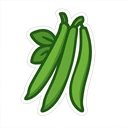
Start seeds indoors
Sow seeds 0.25 inches deep; keep the top half-inch moist until sprouts show — onion seeds lose viability quickly, so use fresh seed each season. Seedlings emerge in 7–14 days in warm soil.
A kitchen staple that rewards patient growers with firm, pungent bulbs that store for months when properly cured.
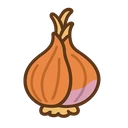
Allium cepa · also called bulb onion, common onion
Windows are counted from the average date of your last spring frost.
Home-grown onions can be harvested at any size from scallion to full bulb, and storage varieties keep well into winter. Growing from seed or sets gives access to dozens of flavors and colors unavailable at the supermarket.
A little history. Bulb formation is triggered by day length, not temperature: long-day varieties need 14-16 hours of daylight to bulb, short-day varieties bulb at 10-12 hours, and intermediate types fall between — choosing the wrong type for your latitude is the most common cause of failure.
Sow seeds 0.25 inches deep; keep the top half-inch moist until sprouts show — onion seeds lose viability quickly, so use fresh seed each season. Seedlings emerge in 7–14 days in warm soil.
Sow seeds ¼ inch (6 mm) deep.
Beds strongly preferred for full bulbs; containers work for scallion-stage harvest. Needs at least 8 inches of loose, well-drained soil depth. In containers: 5-gallon pot for 4–6 scallions; 15-gallon or larger for full bulbs. Space plants 4 inches (10 cm) apart.
Water deeply once or twice a week during active growth; taper off sharply once tops begin to fall over. Water when the top inch of soil feels dry during bulbing; stop watering when half the tops have fallen. Aim for about 1 inch per week including rain.
Side-dress (scatter fertilizer along the row and water in) every 3–4 weeks until bulbs reach marble size, then stop. What to use: nitrogen-forward fertilizer such as blood meal or 10–5-5 organic; switch to low-nitrogen once bulbing begins.
Remove any flower stalks (scapes) immediately if they appear — a bolting (shift from bulb growth to flowering) onion diverts energy away from the bulb and will not store well; use those bulbs fresh.
It's ready when tops have fallen over naturally on at least half the plants and the outer skin has begun to dry and papery; necks should feel thin and dry, not thick and green. Loosen soil with a fork, lift bulbs gently, and lay them on the soil surface or a rack in a warm, airy spot for 2–3 weeks to cure before trimming roots and tops.
Store cured bulbs in a cool (32–40 °F (0–4 °C)), dry, dark location with good airflow — mesh bags or slatted crates work well. Do not refrigerate uncured bulbs. Properly cured storage types keep 3–6 months.
For a continuous scallion supply, direct-sow a short row every 3 weeks from early spring through midsummer.
Carrot
Onion foliage can hide carrots from the carrot rust fly while the carrot tops do the same for onion-hunting flies, but trials show the effect only holds where the two are closely interplanted and pest pressure is light.
Lettuce
Lettuce feeds in the top few inches while onions send fine roots straight down from a narrow base, so the two share a bed without fighting for water. Upright onion leaves cast almost no shade, and the lettuce is cut long before bulbs swell.
Chamomile
A patch of chamomile at the row end keeps small open flowers coming through spring, and those feed hoverflies and tiny parasitic wasps whose young eat thrips. It often lowers thrips numbers, though it will not replace a spray under heavy pressure.
Beet
Gardeners have long run beets alongside onions, and no clear mechanism has been demonstrated. What is real is the practical fit: both want loose, fine soil and steady moisture, and both are lifted around the same time.
Tomato
Onions occupy only the top several inches of soil while tomatoes root deep, so a border of onions along a tomato row uses ground the tomatoes are not using. Keep the onions at the sunny edge, since tomato leaves shading them shrinks the bulbs.
Green Bean
Old charts keep onions away from beans, and the claim that onions stunt them has never been demonstrated. If you separate them, do it for a practical reason: beans shade the short onion rows and their nitrogen is released mostly for next season anyway.

Garden Pea
Onions are said to hold back peas, but the pairing rests on tradition rather than measured effect. The concrete drawback is shade: a pea trellis over a bed of bulbing onions costs the sun they need to size up.

Asparagus
Asparagus lives in the same bed for a decade or more on shallow crowns. Forking up onion bulbs each summer cuts roots and buds, and the onions also draw water from the surface layer the crowns depend on. Give each its own ground.
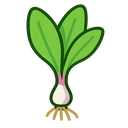
Ramps
Onions carry the same white rot and onion thrips as ramps, and a ramp bed is a permanent planting you cannot rotate away from trouble. Grow onions in the open vegetable garden, well clear of the woodland patch.
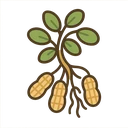
Peanut
Old charts keep the onion family away from beans, peas, and peanuts, though no mechanism has ever been shown. If you are short on beds, plant them apart rather than worrying; onions are shallow-rooted and mostly just compete for water in sandy soil.

Wasabi
Gardeners have long kept bulb onions out of wasabi beds, but the pairing is chart lore rather than tested effect. Onions also rot in the permanently damp shade wasabi requires, so give each its own site.

Daylily
Old companion charts keep daylilies away from the onion family, though no mechanism has been demonstrated. The practical objection is real enough: lifting onions each year disturbs the daylily's fleshy roots.

Snow Pea
Old companion charts keep peas and onions apart, and the pairing is repeated widely, but no mechanism has been demonstrated in trials. If you have the room, separate them; if you do not, expect no real harm.
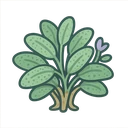
Sage
Old charts keep these apart, and there is a practical reason to follow along: lifting onions disturbs the shallow woody roots of a perennial that expects to sit undisturbed for years.
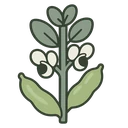
Fava Bean
Old companion charts have long kept beans and the onion family apart, and no mechanism has been demonstrated. If your bed is small, treat this as optional advice rather than a rule.

Edamame
Old charts keep beans and the onion family apart, and edamame is treated the same way. No mechanism has been demonstrated in trials, so if bed space is tight, separate them by a row and watch your own results rather than reworking the whole plan.
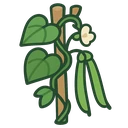
Pole Bean
Old charts keep beans away from onions, garlic, and their relatives. No mechanism has been shown in trials, so treat it as tradition; if you interplant anyway, watch that the shallow onion roots are not left dry by heavy bean watering.
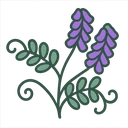
Hairy Vetch
Old companion charts have long kept the onion family away from peas, beans, and vetch. No mechanism has been demonstrated, so treat it as tradition; the practical concern is simply that a vetch mat crowds slender onion tops.
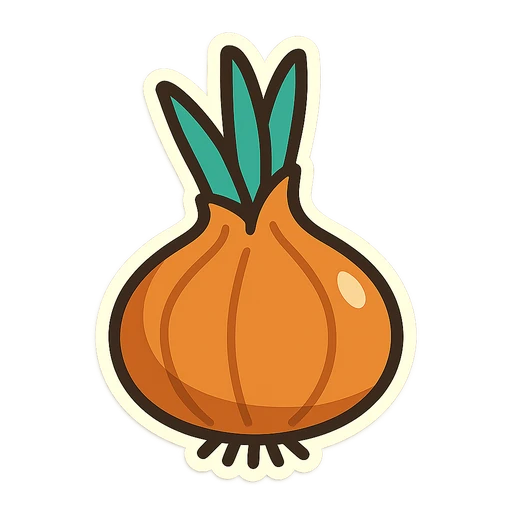
Give the onion family 4 years away from this spot before any of its relatives return.
The pea and bean family, the squash family or the beet family thrive in this ground next season.
Onions are moderate feeders that leave little behind — thin roots, scant residue, and no stored nitrogen. Keep every onion-family crop out of this bed for 4 years to break maggot and basal rot cycles. Follow with peas or beans to rebuild nitrogen, or with squash and cucumbers, or beets and chard.