
Sow outside
Sow seeds 1 inch (25 mm) deep, and aim for 6 inches (15 cm) between plants once thinned. Water once at sowing, then keep evenly moist but not soggy. Do not soak seed overnight — it splits and rots. Seedlings emerge in 6–10 days.
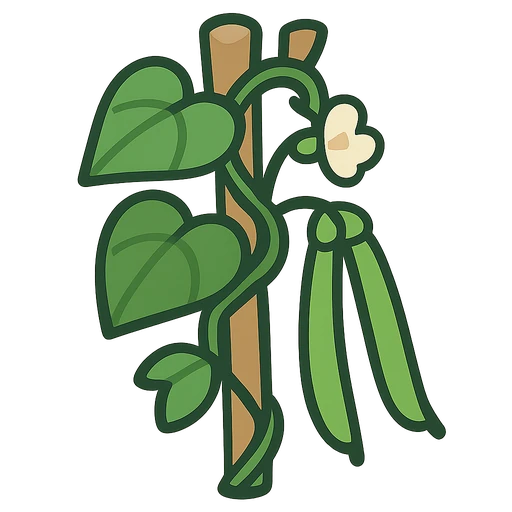
A climbing snap bean that keeps producing for two months from a single sowing, turning eight feet of vertical space into a steady pod harvest.
Phaseolus vulgaris 'Pole' · also called Climbing bean, Runner-type snap bean
Windows are counted from the average date of your last spring frost.
Pole beans yield far more per square foot than bush types and crop over weeks rather than all at once. Picking is done standing up, and the pods stay clean off the soil.
A little history. Common bean was domesticated in Mexico and the Andes. Climbing types twine counterclockwise around a support and keep growing from the tip until frost or heat stops them.
Sow seeds 1 inch (25 mm) deep, and aim for 6 inches (15 cm) between plants once thinned. Water once at sowing, then keep evenly moist but not soggy. Do not soak seed overnight — it splits and rots. Seedlings emerge in 6–10 days.
Deep soak once or twice a week; more often once pods are forming. Water when the top inch of soil feels dry. Aim for about 1 inch per week including rain.
Work compost in before planting; side-dress once when vines reach the top of the support. What to use: compost or a low-nitrogen 3–5-5 organic feed.
Pinch the growing tip when vines reach the top of the trellis to push growth into side shoots and pods rather than more stem.
It's ready when pods are pencil-thick, snap cleanly in half, and the seed bumps inside are still faint. Pick before pods look lumpy. Hold the vine with one hand and pinch or snip the pod stem with the other so you do not tear off the flowering spur. Pick every two or three days.
Unwashed in a perforated bag in the refrigerator for up to a week. Wash just before cooking.
One sowing usually carries the season. In long-summer areas, a second sowing in early summer replaces vines worn down by heat and rust.
Sweet Corn
In the Three Sisters planting, corn stalks give the vines something to climb, and the beans steady the corn against wind. Let the corn reach knee height before sowing beans at its base so the stalk can carry the load.

Pumpkin
Broad pumpkin leaves run along the ground beneath the bean poles, shading soil, holding moisture, and crowding out weeds where bean roots feed. Give the vines a clear lane out of the bed so they do not climb the trellis.

Butternut Squash
Sprawling squash foliage covers the open ground around bean supports, keeping soil cool and damp through midsummer and suppressing weeds you would otherwise have to pull between the poles.

Sweet Potato
Sweet potato vines form a dense low mat that shades soil and holds moisture beneath a bean trellis, and its storage roots sit well below the shallow bean roots. Plant it at the sunny edge so the trellis does not shade it out.

Sunflower Choke
The tall woody stalks can carry climbing beans much as corn does. Because this sunflower spreads by tubers and competes hard for water, plant beans only on the sunniest edge of an established clump and water both generously.

Nasturtium
Nasturtium often pulls black aphids onto its own stems ahead of the beans. It only helps if you cut and bin the loaded shoots rather than leaving them to breed more aphids beside the crop.

Sweet Alyssum
Its tiny flowers feed hoverflies and small parasitic wasps, whose larvae eat bean aphids. Sow a low band along the base of the trellis where it will not shade the young bean seedlings.
Beet
Old companion charts keep pole beans and beets apart, though no mechanism has been demonstrated. The practical issue is shade: a bean trellis casts a long shadow over a low root crop, so if you grow both, put the beets on the sunny side.
Mustard Greens
Gardeners have long separated pole beans from mustard and its cabbage-family relatives without a proven cause. What is real is competition — fast, leafy mustard crowds bean seedlings and both want the same surface moisture.
Onion
Old charts keep beans away from onions, garlic, and their relatives. No mechanism has been shown in trials, so treat it as tradition; if you interplant anyway, watch that the shallow onion roots are not left dry by heavy bean watering.
Fennel
Fennel roots release compounds that stunt most garden vegetables, beans included. Grow it in its own corner or a pot; kept well apart, its flowers still earn a place by feeding hoverflies and tiny parasitic wasps.
Kohlrabi
Old charts keep these apart without giving a reason that holds up. Practically, a bean trellis shades the row and picking beans means constant traffic over shallow kohlrabi roots.
Give the pea and bean family 2 years away from this spot before any of its relatives return.
The cabbage family, the beet family or grasses and grains thrive in this ground next season.
A giver: bean roots bank nitrogen that is released as they break down for next season. Cut vines at soil level and leave the roots in place, then follow with cabbage-family greens, beets or chard, or a grain such as corn. Keep peas and beans out of this bed for 2 years.