Crop guide · The cabbage family

How to grow Sweet Alyssum

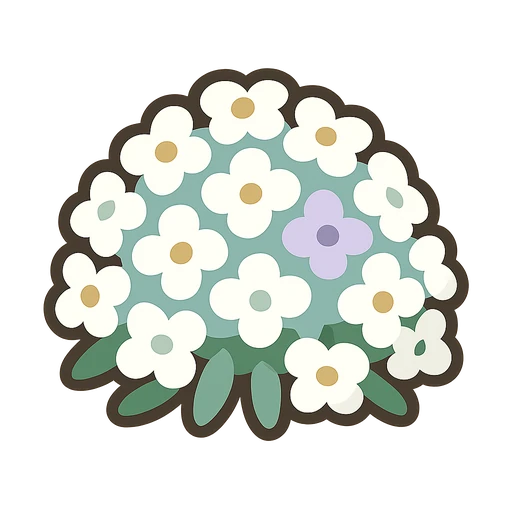
A low mat of tiny honey-scented flowers that blooms for months and feeds more beneficial insects per square foot than almost anything else you can sow.

Lobularia maritima · also called Alyssum, Carpet Flower

Full sun Beginner Half-hardy
Sun
Full sun
Light afternoon shade once days stay above 85 °F (29 °C) keeps plants blooming instead of stalling
Frost
Half-hardy
Takes light frost and keeps flowering into the mid-20sF
Spacing
6 in
15 cm between plants
Sow depth
0.06 in
2 mm
To harvest
45–60 days
counted from sowing
Timing

When to plant Sweet Alyssum

Windows are counted from the average date of your last spring frost.

Summer:any time through midsummer for late-season flowers.
Fall planting:in mild-winter areas, sow in early fall for winter and spring bloom.
Too late?Stop sowing about 8 weeks before your first fall frost — later sowings will not flower before cold shuts them down.
Background

Why grow Sweet Alyssum

The shallow, open flowers are sized for hoverflies and tiny parasitic wasps, the insects that clear aphids from nearby crops. It also works as a living edge that shades bare soil and gives a mild sweet-cabbage garnish.

A little history. A member of the cabbage family despite its look, native to the Mediterranean coast. Its flowers are shallow and open, so short-tongued beneficial insects can reach the nectar.

The season, step by step

From planting to harvest

Start seeds indoors

5–6 weeks before last frost

Press seed onto the surface and barely cover — it needs light. Mist daily so the top quarter-inch never dries. Seedlings emerge in 5–14 days in warm soil.

Best soil temp 55–70 °F (13–21 °C) Minimum 45 °F (7 °C) Emerges in 5–14 days

Sow outside

2–3 weeks before last frost

Sow seeds 0.06 inch (2 mm) deep.

Water and feed

All season

Water twice a week in warm weather; less once established. Water when the top inch of soil feels dry. Aim for about 1 inch per week including rain.

Once at planting; skip further feeding. What to use: a thin layer of compost worked into the top 2 inches.

Prune and maintain

As it grows

Shear the whole plant back by a third with scissors when bloom thins in midsummer heat. Water after shearing; new flowers follow in 2–3 weeks.

Harvest and store

45–60 days from sowing

It's ready when flower clusters are fully open and fragrant, before individual petals brown. Pick in the cool of the morning. Snip whole flower clusters with scissors just below the head, taking no more than a third of the open blooms at a time so the planting keeps feeding insects.

Refrigerate loose in a lidded container lined with a damp paper towel; use within 3 days. Flowers wilt fast at room temperature.

Companions

Good neighbours, bad neighbours

Plant it with

Carnation

Alyssum's tiny open flowers feed hoverflies and lacewings, whose larvae eat the aphids and thrips that cluster on carnation buds. Sow it as a skirt at the front of the carnation row so it does not crowd their stems.

Lettuce

Field trials in lettuce repeatedly show that alyssum strips draw in hoverflies, whose larvae cut aphid numbers in the crop. Plant one alyssum every few feet within or beside the lettuce block.

Broccoli

The nectar suits the tiny parasitic wasps that attack cabbage aphids and caterpillars. Keep alyssum at the bed's edge rather than between plants, since both are cabbage-family and share root diseases.

Bell Pepper

A low border of alyssum under peppers often reduces aphid buildup by keeping hoverflies and lacewings in the bed. It stays short enough not to compete for light.
Cucumber

Sown along the bed edge, the low mat shades bare soil, holds surface moisture, and crowds out weeds while its flowers pull in pollinators that cucumbers need for well-filled fruit.

Strawberry

Alyssum flowers early and long, bringing bees into the patch during strawberry bloom, which helps fruit fill out evenly. Keep it out of the runner zone so it does not tangle with the crowns.
Keep it away from

Cabbage

Alyssum is a cabbage-family plant, so it can host clubroot and the same aphids and caterpillars. Grow it as a border rather than interplanted, and do not let it self-sow through beds you rotate cabbage crops into.

Mint

Mint spreads by runners and will simply run over a low alyssum mat within a season. Keep mint in a sunken pot or a separate bed if you want the alyssum to persist.

Fennel

Fennel's roots release compounds that stunt most garden neighbours, and a shallow-rooted seedling like alyssum has little defence. Planted well apart, though, fennel's own flowers feed the same hoverflies and tiny wasps, so both earn a place in the garden.

See Sweet Alyssum in the full companion chart →

Crop rotation

After this crop

Family rest

Easy-going — Sweet Alyssum can grow almost anywhere in the rotation without a strict rest.

Good next crops

The pea and bean family, the cabbage family or the tomato family thrive in this ground next season.

A light feeder that leaves the bed much as it found it, so it fits almost anywhere. It is cabbage-family, so leave a 1-year gap before another cabbage-family crop here; peas or beans, cabbage-family greens, or tomato-family crops all follow well.

Trouble to watch for

Pests and diseases

Pests

Aphids

Sign
Clusters of small green or gray insects on stem tips, with sticky residue on leaves below.
Fix
Spray off with a hose. Leave a few — they feed the hoverflies and lacewings you planted this for.

Flea beetles

Sign
Tiny dark beetles that jump when disturbed; leaves pinholed as if shot with buckshot.
Fix
Cover young seedlings with fine mesh for the first 3 weeks; established mats outgrow the damage.

Cabbage worms

Sign
Small velvety green caterpillars on foliage and scattered dark pellets among the stems.
Fix
Pick off by hand. Damage is cosmetic on alyssum, but remove them so numbers do not build near cabbage crops.

Slugs and snails

Sign
Ragged holes in leaves and stems chewed through at the base, with slime trails on nearby soil.
Fix
Water in the morning so foliage dries by dusk; set iron phosphate bait around the mat's edge.

Diseases

Downy mildew

Sign
Yellow blotches on upper leaf surfaces with gray-white fuzz underneath; stems collapse in cool, wet spells.
Prevent
Space plants 6 in apart for airflow, water at soil level, and pull out heavily infected mats.

Damping off

Sign
Seedlings flop over with a pinched, water-soaked spot right at the soil line.
Prevent
Sow in clean mix, avoid standing water, and give trays bright light and moving air.

Root and stem rot

Sign
Whole sections of the mat brown and die back; roots dark and soft when lifted.
Prevent
Plant in well-drained soil, do not mulch right against the crown, and let the surface dry between waterings.

Clubroot

Sign
Plants wilt in midday and stay stunted; roots swollen into knobby clubs instead of fine threads.
Prevent
Rotate cabbage-family plantings and avoid soggy ground. Test soil before liming — lime suppresses clubroot but does not eradicate it, and over-liming locks out micronutrients.
FAQ

Common questions about Sweet Alyssum

When should I plant Sweet Alyssum?
Spring: 2–3 weeks before last frost, as soon as soil can be raked. Spring: 5–6 weeks before last frost for earlier bloom.
How long until Sweet Alyssum is ready to harvest?
45–60 days, counted from sowing. It's ready when flower clusters are fully open and fragrant, before individual petals brown. Pick in the cool of the morning.
Can I grow Sweet Alyssum in a container?
Either — happy in 6 in of soil, and good along bed edges or spilling from pots. In containers: 6-inch pot or a spot in any mixed container.
How often should I water Sweet Alyssum?
Water twice a week in warm weather; less once established. Water when the top inch of soil feels dry.
How should I store Sweet Alyssum after harvest?
Refrigerate loose in a lidded container lined with a damp paper towel; use within 3 days. Flowers wilt fast at room temperature.

Verdie turns this guide into your plan

Set your garden's location and every window above becomes a real date — then Verdie reminds you when it's time to sow, transplant, water, and pick.

Download on the App Store
Free to download · iPhone & iPad