Start seeds indoors
Sow ¼ inch deep and keep the medium evenly moist; do not let the surface crust or dry between waterings until sprouts appear. Seedlings emerge in 4–10 days in warm soil.
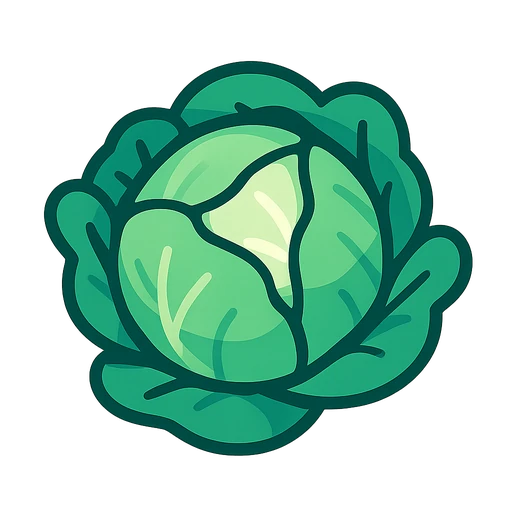
A cool-season heading crop that produces dense, sweet leaves when grown fast in fertile soil and harvested before summer heat sets in.
Brassica oleracea var. capitata · also called headed cabbage, red cabbage
Windows are counted from the average date of your last spring frost.
Home-grown cabbage harvested at peak maturity is markedly sweeter and crisper than store-bought. A single planting can yield heads for months if you stagger sowings across spring and fall.
A little history. Cabbage is a cultivated form of wild cabbage native to coastal western Europe. Cool nights drive sugars into the developing head as the plant channels energy from leaf growth into the tightly wrapped inner leaves.
Sow ¼ inch deep and keep the medium evenly moist; do not let the surface crust or dry between waterings until sprouts appear. Seedlings emerge in 4–10 days in warm soil.
Beds strongly preferred; containers work only for compact varieties with a minimum 5-gallon, 12-inch-deep pot per plant. In containers: 5-gallon pot, at least 12 inches deep. Space plants 18 inches (45 cm) apart.
Water deeply twice a week; increase to every other day during dry spells above 75 °F (24 °C). Water when the top inch of soil feels dry to the touch. Aim for about 1–1.5 inches per week including rain.
Side-dress (scatter fertilizer along the row and water in) once at transplant, again when heads begin to form. What to use: balanced 10–10-10 or compost-enriched organic blend; avoid excess nitrogen once heading starts.
Remove yellowing outer leaves as they appear to improve airflow. After the main head is cut, leave the stump and outer leaves in place — small secondary heads often sprout from the leaf axils (the joint where leaf meets stem).
It's ready when head feels firm and dense when squeezed — no give at all. Outer leaves are tight and glossy. Most varieties reach 2–5 lbs at maturity; size alone is less reliable than firmness. Cut the stem cleanly 1 inch below the head with a sharp knife. Leave the outer leaves and stump in the ground if you want secondary side-shoots to develop over the following weeks.
Refrigerate unwashed heads in a loose plastic bag in the crisper drawer; keeps 1–2 months. Do not cut until ready to use — cut heads deteriorate quickly.
Sow a new tray of transplants every 3–4 weeks from late winter through early spring, and again in midsummer, to extend harvest across both cool seasons.
Dill
Let a few dill plants flower near the row: the tiny umbrella-shaped blooms feed hoverflies and small parasitic wasps that hunt cabbageworms and aphids. It often reduces caterpillar numbers under low pest pressure, though it will not replace hand-picking.
Celery
Gardeners have long set celery beside cabbage on the belief that its strong scent throws off the cabbage white butterfly hunting for a place to lay eggs. The masking effect is unproven, but both crops want the same steady moisture and rich soil, so the pairing costs nothing.
Onion
The sharp onion smell can help hide cabbage from pests that locate their host by scent, and trials show some reduction in egg-laying by cabbage root fly. Effects are patchy, so treat it as a bonus alongside collars and row cover.
Nasturtium
Nasturtium draws cabbage aphids and some caterpillars onto its own leaves. It only helps if you check the plants weekly and pull or spray the infested shoots, otherwise it simply raises the pest population next to your heads.
Chamomile
Chamomile's shallow, open flowers are easy feeding for hoverflies, lacewings, and tiny parasitic wasps, whose young feed on aphids and caterpillars. Keep it at the bed edge so it does not crowd the cabbage root zone.
Strawberry
Old companion charts keep strawberries and the cabbage family apart, though no mechanism has been demonstrated. The practical reason to separate them is different bed cycles: strawberries stay put for years, while cabbage needs a four-year rotation away from its own family.

Tomato
This pairing is said to go badly, but there is no demonstrated mechanism. What is real is that both are heavy feeders on the same soil, and a tall tomato shades a cabbage that needs full sun to firm up its head.
Horseradish
Horseradish is a cabbage-family plant and hosts the same flea beetles, cabbageworms, and white rust as heading brassicas. Because it stays in place year after year, it can carry those problems over winter into next spring's cabbage planting.

Sweet Alyssum
Alyssum is a cabbage-family plant, so it can host clubroot and the same aphids and caterpillars. Grow it as a border rather than interplanted, and do not let it self-sow through beds you rotate cabbage crops into.

Lingonberry
Cabbage-family beds are usually limed toward neutral, fed heavily, and dug over each year — all three work against lingonberry, which needs undisturbed, unlimed, strongly acid ground. Test soil before liming anywhere near the berry bed.
Give the cabbage family 4 years away from this spot before any of its relatives return.
The tomato family, the pea and bean family or the carrot family thrive in this ground next season.
Cabbage leaves the bed hungry and full of coarse leaf and root debris — clear every stump so clubroot and black rot have nothing to overwinter in. Keep all cabbage-family crops out for 4 years. Follow with legumes to rebuild nitrogen, then nightshades or root umbellifers like carrots.