Transplant outside
4 weeks before last frost
Either — needs 8–12 in of acid, peaty, well-drained soil with no lime nearby. In containers: 5-gallon pot or a wide 12-in-deep trough. Space plants 12 inches (30 cm) apart.
A low evergreen shrub that spreads into a glossy mat and ripens tart scarlet berries in late summer.
Vaccinium vitis-idaea · also called Cowberry, Mountain cranberry
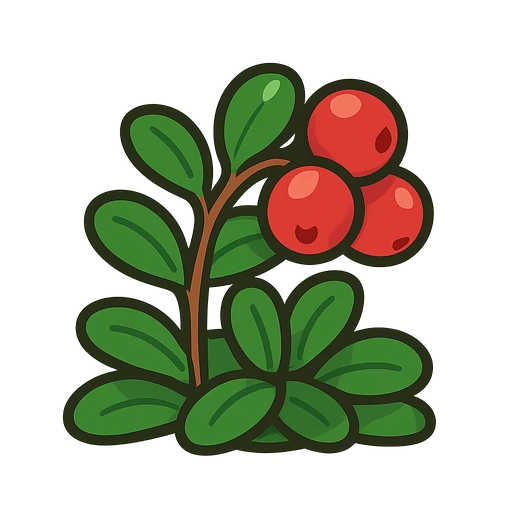
Set out potted plants as soon as the ground thaws, about 4 weeks before last frost.
Early fall, at least 6 weeks before the ground freezes.
One planting gives decades of fruit plus year-round evergreen cover for the front of an acid-soil bed. The berries hold their tartness and firmness far better in storage than most soft fruit.
A little history. An evergreen dwarf shrub of northern forests and tundra. It creeps by underground stems, and its fine roots depend on soil fungi that only function in strongly acid ground.
Either — needs 8–12 in of acid, peaty, well-drained soil with no lime nearby. In containers: 5-gallon pot or a wide 12-in-deep trough. Space plants 12 inches (30 cm) apart.
Water twice a week in warm weather; shallow roots dry out fast. Water when the top inch of mulch and soil feels dry. Aim for about 1 inch per week including rain.
Feed lightly once in early spring; skip the rest of the year. What to use: half rate of an acid-loving plant fertilizer, or a fresh top-up of pine bark mulch.
Little needed for the first 3 years. After that, shear off about a third of the oldest stems in early spring to bring on new fruiting shoots, and pull out dead wood.
It's ready when berries are firm, glossy, and evenly deep red top to bottom, with no pale shoulder. Flavor stays tart; fruit gets softer, not sweeter, if left too long. Roll clusters off between thumb and finger, or comb through the mat with a wide berry rake held low. Pick a whole section at a time, then sort out leaves and green fruit on a tray.
Fresh berries keep 4–8 weeks in a covered container in the fridge. Freeze loose on a tray, then bag, for a year.
Not a succession crop. Plant two different varieties at the same time so bees can cross them for heavier set.
Fully hardy where snow covers the mat. In bare-ground winters, lay evergreen boughs or a 2-in pine needle layer over plants to stop the leaves drying out.
 Blueberry
Both want the same strongly acid, peaty, well-drained ground, so one bed serves both. The lingonberry mat shades the blueberry's shallow surface roots and crowds out weeds that would otherwise need hoeing.
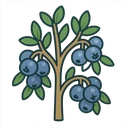 Blueberry - Rabbiteye
In warmer gardens the taller rabbiteye bushes cast light afternoon shade the heat-shy lingonberry appreciates, while the low mat holds soil moisture around the bushes' surface roots.
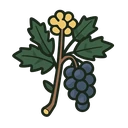 Oregon Grape
Both are evergreen woodland shrubs content in acid soil and part shade, and they root at different depths so they are not fighting for the same water. Together they give a fruiting understory that stays furnished all winter.
 Honeyberry
Honeyberry blooms very early and keeps bumblebees working the bed before lingonberry opens, so pollinators are already on site when its small bell flowers appear. Bumblebees are the main pollinator for both.
Heather demands the same acid, lean, sharply drained soil and stays low, so it shares the bed without shading the fruit. Its late flowers extend the nectar supply for the same bumblebees that pollinate lingonberry.
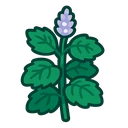 Peppermint
Mint runs underground and will thread straight through a low lingonberry mat, and you cannot pull it out without tearing up the berry plants' shallow roots. Grow mint in a sunk pot or a separate bed well away.
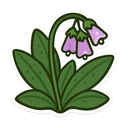 Comfrey
Comfrey's broad leaves and deep taproot out-muscle a 6-inch evergreen mat for both light and water within a season. Use its cut leaves as mulch by all means, but keep the plant itself out of the berry bed.
 Cabbage
Cabbage-family beds are usually limed toward neutral, fed heavily, and dug over each year — all three work against lingonberry, which needs undisturbed, unlimed, strongly acid ground. Test soil before liming anywhere near the berry bed.
 Asparagus
Asparagus wants near-neutral, richly fed soil and throws up tall ferny growth that shades a low mat all summer. The two crops cannot be kept happy in one bed.
A perennial — it holds its spot for years, so it sits outside the annual rotation.
A permanent perennial planting — no rotation applies, and no family gap is needed. Site it where the bed can stay acid and undug for a decade or more; each spring renew pine bark or needle mulch rather than turning the soil, and keep lime and wood ash out of the area.
Set your garden's location and every window above becomes a real date — then Verdie reminds you when it's time to sow, transplant, water, and pick.