Transplant outside
Best in open ground; a large container (25-gallon minimum) can work for dwarf selections but limits long-term vigor. In containers: 25-gallon half-barrel; dwarf cultivars only. Space plants 72 inches (185 cm) apart.
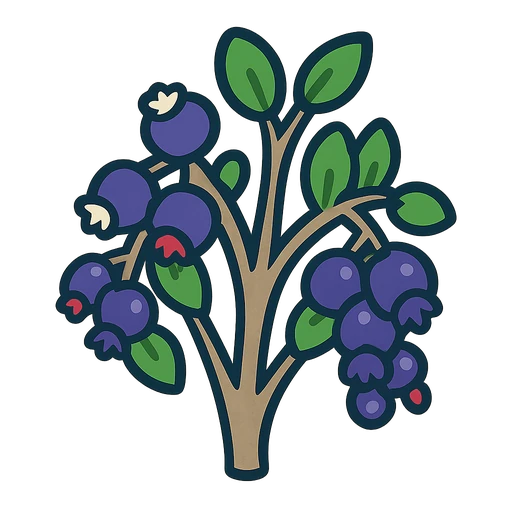
A cold-hardy, multi-season shrub that delivers blueberry-sized purple fruit in early summer with almost no coddling once established.
Amelanchier alnifolia · also called Saskatoon, serviceberry
As soon as soil is workable, 2–4 weeks before last frost.
6–8 weeks before first hard frost, while soil is still warm.
Juneberry ripens weeks before most summer fruit, filling a genuine gap in the harvest calendar. The shrub also provides spring blossom, fall color, and wildlife value — making it productive in every season.
A little history. Native to western and central North America, documented from Alaska to Colorado in standard flora references. Fruit are technically pomes (the same structural type as apples), not true berries, despite their berry-like appearance.
Best in open ground; a large container (25-gallon minimum) can work for dwarf selections but limits long-term vigor. In containers: 25-gallon half-barrel; dwarf cultivars only. Space plants 72 inches (185 cm) apart.
Deep soak once or twice a week for the first two growing seasons; established shrubs need water only during dry spells. Water when the top 2 inches of soil feel dry during the establishment period. Aim for about 1 inch per week including rain during establishment.
Side-dress (scatter fertilizer along the drip line and water in) once each spring as buds swell. What to use: balanced compost or a low-nitrogen 5–5-5 organic; avoid high nitrogen, which promotes leafy growth over fruit.
Remove dead, crossing, or crowded stems in late winter before buds break. On established multi-stem shrubs, cut the oldest 2–3 canes to the ground every 3–4 years to renew fruiting wood.
It's ready when fruit turns from red to deep blue-purple and yields to gentle pressure; taste a few — fully ripe fruit is sweet with a mild almond note from the seeds. Pick clusters by hand or spread a sheet beneath the shrub and shake branches gently. Harvest over 1–2 weeks as individual fruit ripen unevenly within a cluster.
Refrigerate unwashed in a shallow container for up to 1 week. Freeze in a single layer on a tray, then transfer to bags; keeps up to 12 months frozen.
Plant two or more cultivars for cross-pollination (cross-pollination, pollen transfer between genetically distinct plants), which significantly increases fruit set and berry size.
No action needed in most climates; dormant shrubs are cold-hardy without protection. In the first winter after planting, mulch the root zone with 3–4 inches of straw to buffer soil temperature swings.
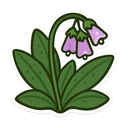
Comfrey
Comfrey's deep taproot works well below the juneberry's fibrous surface roots, so the two rarely fight over water. Cut the leaves two or three times a season and drop them on the root zone as mulch.
Chives
A ring of chives at the drip line gives off a strong onion smell that can help hide the shrub from pests that locate hosts by scent. Keep the clumps outside the root zone so they are easy to divide.
Strawberry
Strawberry runners knit into a low mat that shades the soil, holds moisture, and crowds out weeds under an open shrub. Leave 18 inches clear around the main stems so you can still prune and mulch.
Thyme
Let thyme flower at the shrub's edge and the small blooms feed hoverflies, lacewings, and tiny parasitic wasps whose young feed on aphids and sawfly larvae. It also tolerates the drier soil at the drip line.
Borage
Borage draws in bees reliably, though it flowers after juneberry bloom in most gardens. Its value is keeping a bee population working the yard through the season rather than pollinating this shrub directly.
Junipers host the rust diseases that spot and deform juneberry leaves and fruit; the fungus must move between the two hosts each year. Keeping juneberry several hundred feet from junipers measurably lowers infection.
Hawthorn is a close rose-family relative and carries the same fire blight, rust, and leaf spot problems. A nearby hawthorn acts as a reservoir that reinfects the juneberry each spring.
A perennial — it holds its spot for years, so it sits outside the annual rotation.
A woody perennial, so no bed rotation applies and no family gap is needed — it stays put for 20 years or more. It is a moderate feeder that returns leaf litter to its own root zone; top-dress with compost each spring rather than replanting the site.