Crop guide · The onion and garlic family

How to grow chives

A cold-hardy perennial herb that delivers a mild onion flavour from hollow, grass-like leaves cut repeatedly throughout the growing season.

Allium schoenoprasum · also called garden chives, common chives

Full sun Beginner Frost-hardy
Sun
Full sun
Tolerates partial shade in afternoon once temperatures regularly exceed 90 °F (32 °C)
Frost
Hardy
Tops die back after hard frost but bulbs survive in the ground
Spacing
6 in
15 cm between plants
Sow depth
¼ in
6 mm
To harvest
60–90 days
counted from sowing
Soil pH
6.0–7.0
slightly acidic to neutral
Timing

When to plant chives

Windows are counted from the average date of your last spring frost.

Fall planting:8–10 weeks before first fall frost for overwintering establishment.
Too late?Skip a fall sowing once nighttime temperatures stay below 40 °F (4 °C) — seedlings will not establish before hard ground freezes.
Background

Why grow chives

Chives regrow quickly after cutting, require minimal care, and tolerate light frost — making them one of the most productive herbs per square foot in a small garden. The edible purple flowers extend the harvest and attract pollinators.

A little history. Native to temperate regions of Europe and Asia, chives are a true perennial bulb-forming herb. Each plant produces a dense clump of small bulbs that multiply by division each season, documented in Flora Europaea.

The season, step by step

From planting to harvest

Sow outside

4–6 weeks before last frost

Sow seeds ¼ inch (6 mm) deep, and aim for 6 inches (15 cm) between plants once thinned. Sow seeds 0.25 inches deep and keep the top half-inch consistently moist; seeds need darkness to germinate reliably. Seedlings emerge in 7–14 days.

Best soil temp 60–70 °F (16–21 °C) Minimum 50 °F (10 °C) Emerges in 7–14 days

Transplant outside

Direct sow 4-6 weeks before last frost, or transplant seedlings 2-4 weeks before last frost

Either works well — needs at least 6 inches of soil depth; containers dry out faster so monitor moisture closely. In containers: 6-inch pot minimum; 8-inch or wider preferred for a productive clump.

Water and feed

All season

Water when the top inch of soil feels dry; roughly once or twice a week in warm weather. Water when leaf tips begin to look slightly pale or limp before wilting becomes severe. Aim for about 1 inch per week including rain.

Side-dress (scatter fertilizer along the row and water in) once in early spring and once after the first heavy cut. What to use: balanced compost or a 5–5-5 organic granular; avoid high-nitrogen feeds that reduce flavour intensity.

Prune and maintain

As it grows

Cut leaves to 2 inches above the soil with clean scissors; remove spent flower heads promptly if you want to redirect energy to leaf production. Divide clumps every 3–4 years when the centre becomes woody and productivity drops.

Harvest and store

60–90 days from sowing

It's ready when leaves are ready once they reach 6 inches tall. Flowers are ready when the purple globe is fully open but before petals begin to drop. Cut leaves with clean scissors 2 inches above soil level; harvest no more than one-third of the clump at a time to allow rapid regrowth. Snip individual flower heads at the stem base.

Use fresh for best flavour. Wrap cut leaves loosely in a damp paper towel and refrigerate up to one week, or freeze chopped leaves in a single layer then transfer to a sealed bag.

Companions

Good neighbours, bad neighbours

Plant it with

Carrot

The onion scent of chive foliage can help hide the carrot smell that guides the carrot rust fly to its target. Trial results vary, so treat it as a bonus alongside a fine insect mesh cover rather than a substitute for one.

Tomato

Gardeners have long edged tomato beds with chives, saying the strong scent keeps aphids off young shoots. No trial has demonstrated the effect, but the clump is compact enough that it costs the tomato nothing.

Rose

Chives are said to protect roses from aphids and leaf spotting, and the pairing appears in garden writing going back generations. The mechanism is unproven; plant it for the low purple skirt of flowers and treat any pest benefit as a maybe.

Parsley

Chives feed from a shallow mat of small bulbs while parsley sends down a taproot (a single deep central root), so the two often share a herb bed or a wide pot without fighting over water. Both also take the same steady moisture.

Strawberry

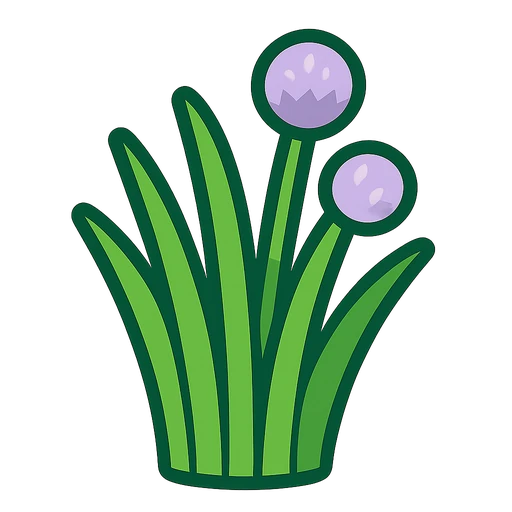
Chive globes open in late spring, close to strawberry bloom, and the nectar draws bees into the patch. Better-visited strawberry flowers often set fuller, less lopsided fruit, so let a few chive heads flower rather than cutting them all.

Keep it away from

Green Bean

Old charts keep the onion family away from beans, claiming stunted growth. No study has shown chives harming beans, so if space is tight this is a low-stakes rule to break; give each a foot of its own room and watch.

Garden Pea

Peas are said to sulk beside onions and chives, a pairing warning that has been copied between garden books for over a century without any demonstrated mechanism. Separate them if you like tidy tradition, but expect no dramatic difference.

Ramps

Chives host the same onion-family diseases and thrips, and they self-seed freely into shaded ground. Both the disease risk and the seedlings pushing into a slow-growing ramp colony argue for planting them elsewhere.

Wasabi

Chives are said to sit poorly with wasabi in traditional pairings, with no mechanism behind the advice. Chives do spread into clumps that compete for the cool, moist root zone wasabi depends on, which is reason enough to plant them apart.

See chives in the full companion chart →

Crop rotation

After this crop

Rotation

A perennial — it holds its spot for years, so it sits outside the annual rotation.

Chives hold their bed for years, so they sit outside the annual rotation and no family gap is scheduled behind them. They are a moderate feeder that gives nothing back to the soil. When you finally lift a clump, replant with anything but the onion family to keep white rot from building.

Trouble to watch for

Pests and diseases

Pests

Onion thrips

Sign
Silver-streaked or stippled leaf surfaces; tiny, slender insects visible when leaves are shaken over white paper.
Fix
Knock off with a strong water spray; apply insecticidal soap to the base of leaves if populations persist.

Aphids

Sign
Clusters of small soft-bodied insects, often pale green, at the base of leaves or on flower stems; sticky residue on foliage.
Fix
Blast off with water; introduce or encourage ladybirds and lacewings; use insecticidal soap as a last resort.

Allium leaf miner

Sign
White linear tunnels running along the length of leaves; small white maggots visible when a mined leaf is split open.
Fix
Remove and destroy affected leaves immediately; cover plants with fine insect mesh before adult flies emerge in spring and fall.

Diseases

Downy mildew

Sign
Pale elongated patches on the upper leaf surface with a grey-purple fuzzy growth on the underside; leaves eventually collapse.
Prevent
Space plants to allow good airflow; avoid overhead watering in the evening; remove and bin affected foliage promptly.

White rot

Sign
Yellowing and wilting of leaves; white fluffy fungal growth and small black resting bodies at the base of bulbs when lifted.
Prevent
Rotate alliums to a new bed every 3-4 years; do not replant alliums in affected soil for at least 8 years; improve drainage.

Rust

Sign
Bright orange or yellow powdery pustules scattered across leaf surfaces; severe infections cause leaves to yellow and die back early.
Prevent
Avoid overhead watering; thin clumps for airflow; remove heavily infected leaves; do not compost affected material.
FAQ

Common questions about chives

When should I plant chives?
Spring: direct sow 4–6 weeks before last frost, or transplant seedlings 2–4 weeks before last frost. Fall: 8–10 weeks before first fall frost for overwintering establishment.
How long until chives are ready to harvest?
60–90 days, counted from sowing. It's ready when leaves are ready once they reach 6 inches tall. Flowers are ready when the purple globe is fully open but before petals begin to drop.
Can I grow chives in a container?
Either works well — needs at least 6 inches of soil depth; containers dry out faster so monitor moisture closely. In containers: 6-inch pot minimum; 8-inch or wider preferred for a productive clump.
How often should I water chives?
Water when the top inch of soil feels dry; roughly once or twice a week in warm weather. Water when leaf tips begin to look slightly pale or limp before wilting becomes severe.
How should I store chives after harvest?
Use fresh for best flavour. Wrap cut leaves loosely in a damp paper towel and refrigerate up to one week, or freeze chopped leaves in a single layer then transfer to a sealed bag.
Can chives stay in the ground over winter?
Hardy perennial — no action needed in most climates. In very cold regions, mulch the crown with 2–3 inches of straw after the first hard frost to protect bulbs; remove mulch in early spring.

Verdie turns this guide into your plan

Set your garden's location and every window above becomes a real date — then Verdie reminds you when it's time to sow, transplant, water, and pick.

Download on the App Store
Free to download · iPhone & iPad