Crop guide · The carrot and parsley family

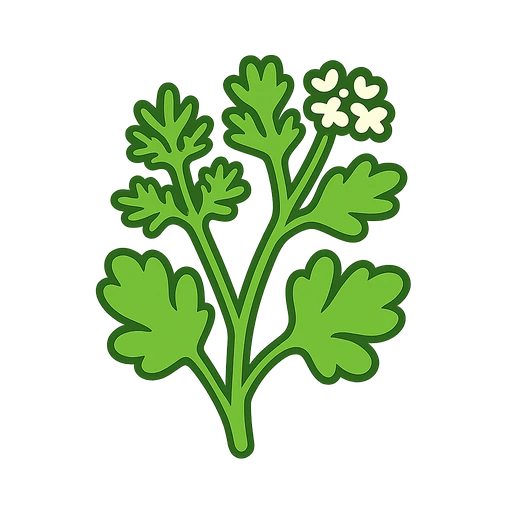
How to grow cilantro

A fast-growing cool-season herb that delivers fresh leaves in under six weeks, with seeds that double as the spice coriander.

Coriandrum sativum · also called Coriander, Chinese parsley

Full sun Beginner Half-hardy
Sun
Full sun
Provide afternoon shade once temperatures consistently exceed 85 °F (29 °C) to slow bolting.
Frost
Half-hardy
Tolerates light frost down to about 28 °F (-2 °C)
Spacing
6 in
15 cm between plants
Sow depth
¼ in
6 mm
To harvest
40–70 days
counted from sowing
Soil pH
6.2–6.8
slightly acidic to neutral
Timing

When to plant cilantro

Windows are counted from the average date of your last spring frost.

Fall planting:6–8 weeks before first fall frost.
Winter planting:in frost-free climates, sow October through February for best leaf production.
Too late?Skip a spring sowing once daytime temperatures regularly exceed 80 °F (27 °C) — the plant will bolt before usable leaves develop; switch to a fall sowing.
Background

Why grow cilantro

Home-grown cilantro far outlasts store-bought bunches in freshness, and a succession of small sowings keeps the harvest continuous. Growing your own also gives access to the dried seed — a distinct spice the same plant produces after bolting (shifting from leaf growth to flowering).

A little history. Native to the western Mediterranean and western Asia, Coriandrum sativum is one of the oldest documented culinary plants, with seed finds in Bronze Age archaeological sites. It is a true annual that completes its full life cycle — leaf, flower, and seed — in a single season.

The season, step by step

From planting to harvest

Sow outside

2–4 weeks before last frost

Sow seeds ¼ inch (6 mm) deep, and aim for 6 inches (15 cm) between plants once thinned. Lightly crush each seed husk before sowing to improve germination rate; keep the top half-inch moist until sprouts show. Seedlings emerge in 7–14 days.

Best soil temp 60–70 °F (16–21 °C) Minimum 55 °F (13 °C) Emerges in 7–14 days

Water and feed

All season

Water deeply every 3–4 days in warm weather; reduce to once a week in cool, overcast conditions. Water when the top inch of soil feels dry to the touch. Aim for about 1 inch per week including rain.

Apply once at planting and again 3–4 weeks later if leaves appear pale or growth slows. What to use: balanced compost or a dilute balanced liquid fertilizer; avoid high-nitrogen feeds that push leafy growth at the expense of flavor.

Prune and maintain

As it grows

Pinch out the central growing tip once the plant reaches 6 inches tall to encourage branching and delay bolting. Remove any flower stalks as soon as they appear if you want continued leaf harvest.

Harvest and store

40–70 days from sowing

It's ready when harvest when plants are 6–8 inches tall and have at least 4–5 sets of true leaves (the full-shaped leaves that follow the first rounded seed leaves). Leaves should be deep green and aromatic. Cut outer stems at the base with scissors, leaving the inner growing point intact. Take no more than one-third of the plant at a time. For seed, allow plants to flower and collect seed heads when they turn tan and dry.

Stand cut stems in a glass of water, loosely covered with a bag, in the refrigerator for up to 1 week. For longer storage, freeze chopped leaves flat in a single layer, then transfer to a sealed bag.

Companions

Good neighbours, bad neighbours

Plant it with

Basil

Basil's strong-smelling foliage can help hide low cilantro from insects that locate food by scent, and its bushy summer growth screens the herb from afternoon glare. Pair only in the shoulder weeks, since basil wants heat while cilantro bolts in it.

Dill

Both throw flat-topped flower clusters that feed hoverflies, lacewings, and tiny parasitic wasps, and those insects hunt the aphids that settle on new cilantro growth. Let a few plants of each bloom rather than cutting every stem.
Chervil

Gardeners have long sown these two soft cool-season herbs in the same patch because both want steady moisture and relief from midday heat. No pest or soil effect has been demonstrated, so treat it as a convenient grouping rather than a benefit.

Spinach

Spinach feeds from a shallow, spreading root mass while cilantro sends down a slim taproot, so the two draw water from different layers instead of competing. Their matching cool-weather timing also lets you clear the whole patch at once.

Tomato

A staked tomato throws light afternoon shade that keeps soil and leaves cooler, which often delays bolting (the shift from leaf growth to flowering) once days pass 80F. Sow cilantro on the east or north side so it still gets morning sun.
Keep it away from

Fennel

Fennel roots release substances that stunt most garden vegetables, and shallow-rooted young cilantro sits right in that zone. Grown in its own corner well away from the bed, fennel still earns space: its flowers feed hoverflies and tiny parasitic wasps.

Thyme

Cilantro is a fast, thirsty, short-lived leafy herb that demands frequent water and is pulled or reseeded every few weeks. That watering rate and soil disturbance work against a slow woody perennial trying to settle its roots.

See cilantro in the full companion chart →

Crop rotation

After this crop

Family rest

Give the carrot family 3 years away from this spot before any of its relatives return.

Good next crops

The pea and bean family, the cabbage family or the onion family thrive in this ground next season.

A light feeder that takes little and leaves loose, easily worked soil behind. Wait 3 years before returning any carrot-family crop — carrots, parsley, dill, parsnip — to the same ground. Beans or peas, a brassica such as kale, or an onion-family crop all follow well.

Trouble to watch for

Pests and diseases

Pests

Aphids

Sign
Clusters of small soft-bodied insects on new growth and undersides of leaves; sticky residue on foliage.
Fix
Knock off with a firm stream of water; repeat daily for 3-4 days. Apply insecticidal soap if colonies persist.

Whiteflies

Sign
Tiny white insects that scatter when foliage is disturbed; yellowing leaves with sticky coating.
Fix
Use yellow sticky traps to monitor; apply insecticidal soap to leaf undersides at first sign of infestation.

Carrot fly

Sign
Wilting seedlings; reddish-tinged leaves; tunneling damage visible if roots are pulled.
Fix
Cover seedlings with fine insect mesh immediately after sowing; remove and destroy affected plants.

Diseases

Powdery mildew

Sign
White powdery coating on leaf surfaces, most common in humid conditions with poor air circulation.
Prevent
Space plants at least 6 inches apart; avoid overhead watering; remove affected leaves promptly.

Damping off

Sign
Seedlings collapse at the soil line shortly after emergence; stem appears pinched and water-soaked at the base.
Prevent
Sow in well-draining soil; avoid overwatering; do not crowd seedlings.

Bacterial leaf spot

Sign
Water-soaked, irregular brown spots on leaves that enlarge and may have yellow halos.
Prevent
Avoid wetting foliage; use drip irrigation or water at the base; rotate planting location each season.
FAQ

Common questions about cilantro

When should I plant cilantro?
Spring: 2–4 weeks before last frost, once soil reaches 55 °F (13 °C). Fall: 6–8 weeks before first fall frost.
How long until cilantro is ready to harvest?
40–70 days, counted from sowing. It's ready when harvest when plants are 6–8 inches tall and have at least 4–5 sets of true leaves (the full-shaped leaves that follow the first rounded seed leaves). Leaves should be deep green and aromatic.
Can I grow cilantro in a container?
Either works well — needs at least 8 inches of soil depth for the taproot to develop without stress. In containers: 8-inch pot minimum; wider is better for multiple plants.
How often should I water cilantro?
Water deeply every 3–4 days in warm weather; reduce to once a week in cool, overcast conditions. Water when the top inch of soil feels dry to the touch.
How should I store cilantro after harvest?
Stand cut stems in a glass of water, loosely covered with a bag, in the refrigerator for up to 1 week. For longer storage, freeze chopped leaves flat in a single layer, then transfer to a sealed bag.

Verdie turns this guide into your plan

Set your garden's location and every window above becomes a real date — then Verdie reminds you when it's time to sow, transplant, water, and pick.

Download on the App Store
Free to download · iPhone & iPad