Crop guide · The mint family

How to grow French Lavender

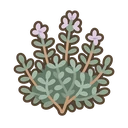
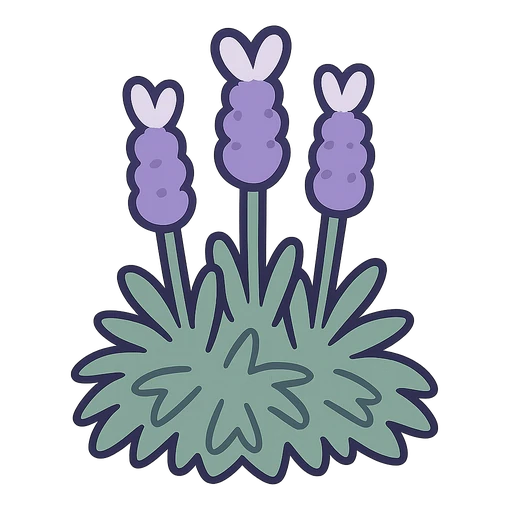
A frost-tender, nearly year-round-blooming lavender with toothed grey-green leaves and soft violet flower spikes topped by pale bracts.

Lavandula dentata · also called Fringed Lavender, Toothed Lavender

Full sun Intermediate Half-hardy
Sun
Full sun
Light afternoon shade above 95 °F (35 °C) reduces stress, but avoid deep shade or flowering declines sharply.
Frost
Half-hardy
Tolerates brief dips to 28 °F (-2 °C) but is damaged by sustained hard frost
Spacing
24 in
60 cm between plants
Sow depth
⅛ in
3 mm
To harvest
90–120 days
counted from transplant
Soil pH
6.5–8.0
neutral to alkaline
Timing

When to plant French Lavender

Windows are counted from the average date of your last spring frost.

Fall planting:6–8 weeks before first frost, in mild-winter climates only.
Too late?Do not transplant outdoors within 6 weeks of first frost unless you can overwinter under cover — plants need time to establish before cold arrives.
Background

Why grow French Lavender

Lavandula dentata blooms for a longer season than English lavender, tolerates humidity better, and makes a striking low hedge or container specimen. The flowers and foliage are both aromatic and edible as a culinary garnish.

A little history. Native to the Mediterranean and Macaronesian islands, Lavandula dentata is distinguished by its distinctly toothed (dentate) leaf margins — the feature that gives the species its name — and by the sterile, pale-lilac bracts that crown each flower spike.

The season, step by step

From planting to harvest

Transplant outside

After last frost

Both work well — needs excellent drainage; raised beds or containers with gritty mix prevent root rot. In containers: 5-gallon pot minimum; 7–10 gallon preferred for multi-season growth. Space plants 24 inches (60 cm) apart.

Water and feed

All season

Water deeply, then allow soil to dry out before watering again — roughly every 7–10 days once established. Water when the top 2 inches of soil feel completely dry and leaves begin to look slightly grey-silver. Aim for about 1 inch per week; reduce to every 2 weeks once fully established.

Feed once in early spring as new growth begins, then once after the first main flush of bloom. What to use: low-nitrogen balanced fertilizer or a light top-dressing of compost; excess nitrogen promotes leafy growth over flowers.

Prune and maintain

As it grows

After each bloom flush, cut spent flower stems back to just above the leafy growth — do not cut into bare woody stems. In early spring, shear the whole plant back by one-third to maintain a compact shape and encourage branching.

Harvest and store

90–120 days from transplant

It's ready when harvest flower spikes when roughly half the individual florets on the spike have opened — fragrance and essential oil content are highest at this stage. Cut stems with clean scissors or pruners just above the first set of leaves below the flower spike. Harvest in the morning after dew has dried. Take no more than one-third of the plant at a time.

Bundle stems loosely and hang upside down in a warm, dry, dark, well-ventilated space for 1–2 weeks. Store dried flowers in an airtight container away from light.

Companions

Good neighbours, bad neighbours

Plant it with

Rosemary

Both are dry-soil Mediterranean shrubs on the same lean, infrequent watering schedule, and rosemary's early flowers can help by drawing in hoverflies and tiny parasitic wasps that hunt aphids on nearby lavender shoots.

Thyme

Low creeping thyme carpets the open ground around a lavender's woody base, shading soil and crowding out weeds without demanding the extra water that would rot lavender roots.

Sage

Sage flowers overlap with lavender's first bloom flush and often bring in ladybugs, lacewings, and small parasitic wasps, spreading the predator pressure across both plants during aphid season.

Oregano

Flowering oregano reliably draws hoverflies and tiny parasitic wasps, whose larvae feed on aphids; left to bloom beside lavender it keeps predators in the bed through summer.

Echinacea

Echinacea wants the same full sun, lean soil, and sparse watering, and its deep taproot draws from below the lavender's shallower root plate, so the two share a dry border without fighting for water.

Keep it away from

Basil

Basil needs rich soil and steady moisture; watering to keep basil happy holds lavender roots wet and invites root rot, while watering to suit lavender leaves basil wilted and stunted.

Spearmint

Spearmint spreads by underground runners and will overrun the open, gritty ground a lavender needs, adding shade and trapped moisture at the crown. Keep it in a sunken pot or a separate bed entirely.

Impatiens

Impatiens want shade and constantly damp soil, the opposite of lavender's sun-and-drought regime; grown in one bed the shared watering usually rots the lavender and scorches the impatiens.

See French Lavender in the full companion chart →

Crop rotation

After this crop

Rotation

A perennial — it holds its spot for years, so it sits outside the annual rotation.

As a perennial subshrub, French lavender holds its spot for years rather than entering a rotation, and it is only a moderate feeder that leaves lean, well-drained soil behind. No family gap is needed after removal, but if root rot killed the plant, site the replacement lavender elsewhere.

Trouble to watch for

Pests and diseases

Pests

Spittlebug (froghoppers)

Sign
Blobs of white frothy foam on stems in late spring; hidden nymph inside the foam.
Fix
Blast foam and nymphs off with a firm jet of water; repeat every few days until gone.

Aphids

Sign
Clusters of small soft-bodied insects on new shoot tips; sticky residue on leaves below.
Fix
Knock off with a strong water spray or apply insecticidal soap directly to the colony.

Root weevil (vine weevil)

Sign
Irregular notches chewed from leaf margins; wilting despite adequate water — check roots for white C-shaped grubs.
Fix
Apply beneficial nematodes to moist soil in late summer or early fall when soil is above 50F.

Diseases

Root rot (Phytophthora and Pythium)

Sign
Sudden wilting, blackened stem base, and roots that are brown and mushy rather than white and firm.
Prevent
Plant in sharply drained soil or gritty potting mix; never let pots sit in standing water; avoid overhead irrigation.

Grey mould (Botrytis)

Sign
Fuzzy grey-brown fungal growth on spent flowers and stems, especially in cool humid conditions.
Prevent
Remove spent flower stems promptly; improve air circulation by spacing plants adequately and pruning out congested growth.

Shab (Phoma lavandulae)

Sign
Sudden die-back of individual stems from the tip downward; dark discolouration at the stem base.
Prevent
Prune out affected stems immediately, cutting well below the discoloured tissue; sterilise tools between cuts.
FAQ

Common questions about French Lavender

When should I plant French Lavender?
Spring: after last frost, once nights stay reliably above 40 °F (4 °C). Fall: 6–8 weeks before first frost, in mild-winter climates only.
How long until French Lavender is ready to harvest?
90–120 days, counted from transplant. It's ready when harvest flower spikes when roughly half the individual florets on the spike have opened — fragrance and essential oil content are highest at this stage.
Can I grow French Lavender in a container?
Both work well — needs excellent drainage; raised beds or containers with gritty mix prevent root rot. In containers: 5-gallon pot minimum; 7–10 gallon preferred for multi-season growth.
How often should I water French Lavender?
Water deeply, then allow soil to dry out before watering again — roughly every 7–10 days once established. Water when the top 2 inches of soil feel completely dry and leaves begin to look slightly grey-silver.
How should I store French Lavender after harvest?
Bundle stems loosely and hang upside down in a warm, dry, dark, well-ventilated space for 1–2 weeks. Store dried flowers in an airtight container away from light.
Can French Lavender stay in the ground over winter?
In climates with frost, move container plants under cover (unheated greenhouse or cool bright room) before first frost. In-ground plants can be mulched at the crown with grit or dry straw; avoid wet mulch against the stems.
Verdie turns this guide into your plan

Set your garden's location and every window above becomes a real date — then Verdie reminds you when it's time to sow, transplant, water, and pick.

Download on the App Store
Free to download · iPhone & iPad