Start seeds indoors
Press seed onto the surface and do not cover — it needs light. Mist daily so the top quarter-inch never dries. Seedlings emerge in 10–21 days in warm soil.
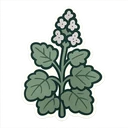
A hardy clumping perennial herb whose crinkled leaves give off a clean lemon scent when brushed, cut fresh all season for tea.
Melissa officinalis · also called Balm, Sweet Balm
Windows are counted from the average date of your last spring frost.
One plant supplies lemon-scented leaves from spring until frost with almost no care, and its summer flowers feed bees and the small predatory insects that patrol the rest of the garden.
A little history. A mint-family perennial from the eastern Mediterranean and western Asia. The scent sits in glands on the leaf surface and is strongest in young growth, fading as stems flower and turn woody.
Press seed onto the surface and do not cover — it needs light. Mist daily so the top quarter-inch never dries. Seedlings emerge in 10–21 days in warm soil.
Either — a pot keeps its heavy self-seeding in check. Needs about 10 in of soil depth. In containers: 3-gallon pot, at least 10 in deep. Space plants 18 inches (45 cm) apart.
Water once a week in dry weather; established clumps take short dry spells. Water when the top inch of soil feels dry and leaves look dull. Aim for about 1 inch per week including rain.
Top-dress once in early spring as new shoots appear. What to use: 1 inch of compost, or a light 5–5-5; skip heavy nitrogen, which gives soft, weakly scented leaves.
Shear the whole clump back by a third every 4–6 weeks and again as flower buds form. Cutting before bloom keeps leaves tender and cuts down on self-sown seedlings.
It's ready when stems are 8–10 in tall with several pairs of full-sized leaves and no open flowers; leaves smell strongly of lemon when rubbed. Cut stems with shears in the morning, taking whole stems back to a leaf pair rather than stripping single leaves. Never remove more than a third of the clump at once.
Use fresh within 2–3 days; stand cut stems in water on the counter or bag loosely in the fridge. Dried leaf loses scent within a few months.
No need to resow — shear the clump every 4–6 weeks for a fresh flush of tender leaves through the season.
Cut stems to 2–3 in after frost blackens them. Mulch 2 in around, not over, the crown once the ground cools. Divide every 3–4 years to keep growth vigorous.
Zucchini
Lemon balm flowers steadily through midsummer and draws bees into the bed, which can help squash blossoms set fruit rather than shriveling. Keep the clump at the row end so vines do not smother it.
Cucumber
A flowering clump near a cucumber trellis brings bees within easy reach of the female flowers, which each need several visits to fill out properly instead of forming stubby fruit.
Cabbage
Many cabbage pests find their host by smell, and strongly aromatic mint-family herbs nearby can reduce the number that land under low pest pressure. Site the clump at the end of the row so it does not shade heads or steal water.
Apple
The small pale summer flowers feed hoverflies, lacewings and tiny parasitic wasps, the insects that work on aphids in the branches above. Plant it in the strip around the tree, outside the drip line, not tight against the trunk.
Crosne
Crosne is dug over completely at harvest, and a permanent lemon balm clump beside it means roots and self-sown seedlings tangled in the trench. Keep lemon balm out of any bed you plan to fork through for tubers.
Peppermint
Peppermint travels by runners and will grow straight through a lemon balm crown in a season or two, leaving you unpicking two look-alike mint-family plants. Give each its own pot or a sunken bottomless bucket.
Fennel
Fennel roots release substances that reliably stunt most garden neighbours, lemon balm included, so keep several feet between them. Grown well apart its flat flower heads are still worth having, since they feed hoverflies and tiny parasitic wasps.
A perennial — it holds its spot for years, so it sits outside the annual rotation.
A perennial that stays put, so it sits outside the annual rotation entirely — give it a permanent corner or a pot rather than a bed you turn over. A moderate feeder that leaves no particular gift or gap behind; divide the clump every 3-4 years and replant into fresh compost.