Crop guide · The mint family

How to grow Crosne

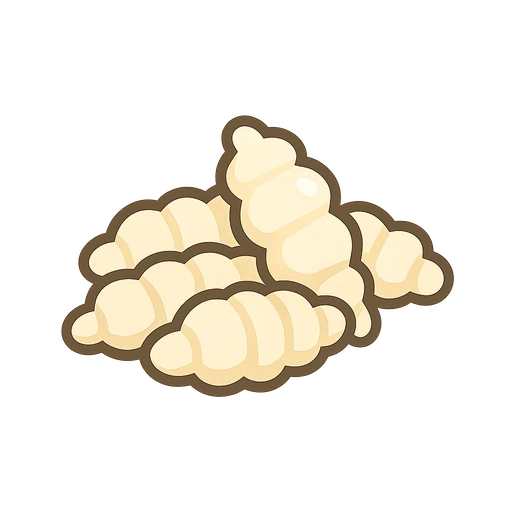
A frost-hardy tuber from the mint family that produces strings of small, ridged, ivory knobs with a crisp texture and mild, nutty flavor.

Stachys affinis · also called Chinese artichoke, Japanese artichoke

Partial sun Beginner Frost-hardy
Sun
Partial sun
Provide afternoon shade once temperatures regularly exceed 80 °F (27 °C)
Frost
Hardy
Tops are killed by hard frost, but tubers survive in the ground well below freezing and can be left unharvested until needed.
Spacing
12 in
30 cm between plants
Sow depth
2½ in
64 mm
To harvest
180–210 days
counted from sowing
Soil pH
6.0–7.0
slightly acidic to neutral
Timing

When to plant Crosne

Windows are counted from the average date of your last spring frost.

Fall planting:plant saved tubers in autumn for overwintered establishment in mild climates.
Too late?Do not plant after late spring once soil temperatures consistently exceed 65 °F (18 °C) — tuber formation requires a long cool growing season.
Background

Why grow Crosne

Crosne is rarely found in markets, making it a genuinely novel crop for adventurous gardeners. It tolerates light shade, requires almost no inputs once established, and the harvest is simply a matter of digging.

A little history. Native to China and introduced to European horticulture in the 1880s via France, where the village of Crosne gave the crop its common name. The edible portion is a rhizome (underground stem) segmented into tight, bead-like whorls.

The season, step by step

From planting to harvest

Sow outside

2–4 weeks before last frost

Sow seeds 2½ inches (64 mm) deep, and aim for 12 inches (30 cm) between plants once thinned. Plant tubers 2–3 inches deep; keep soil evenly moist until shoots break the surface. Do not let the bed dry out or crust over. Seedlings emerge in 14–28 days.

Best soil temp 50–60 °F (10–16 °C) Minimum 40 °F (4 °C) Emerges in 14–28 days

Water and feed

All season

Water deeply once or twice a week during active growth; reduce once tops die back in autumn. Water when the top 2 inches of soil feel dry to the touch. Aim for about 1 inch per week including rain.

Side-dress (scatter fertilizer along the row and water in) once at planting and once at midsummer. What to use: low-nitrogen balanced organic fertilizer or well-aged compost; excess nitrogen favors leafy growth over tubers.

Prune and maintain

As it grows

Pinch out flower spikes as they appear to redirect the plant's energy into tuber production rather than seed set.

Harvest and store

180–210 days from sowing

It's ready when harvest after the first hard frost kills the tops, typically late autumn. Tubers should be firm, ivory-white, and 1–2 inches long with distinct ridged segments. Loosen the soil with a fork 6–8 inches from the base; lift the entire root mass gently. Pick out tubers by hand — they detach easily. Leave a few small tubers in the ground to re-sprout next season.

Refrigerate unwashed in damp sand or a sealed bag for up to 3 weeks. Tubers discolor quickly once exposed to air — harvest and use in small batches.

Companions

Good neighbours, bad neighbours

Plant it with

Garlic

Garlic's strong smell can help hide low-growing neighbours from pests that hunt by scent, and its narrow upright leaves take up little room in a wide crosne bed. Lift the garlic in midsummer, long before the tubers do their bulking in autumn.

Lettuce

Lettuce feeds in the top few inches while crosne runners spread and swell deeper in the bed, so the two rarely fight over water or food. Lettuce is cut and gone by early summer, leaving the row clear for the long second half of the crosne season.

Spinach

Crosne is slow off the mark, taking two to four weeks to break the surface. A low spinach cover over that same ground shades the soil, holds moisture, and crowds out weeds until the shoots take over; pull it once it bolts (shifts to flowering).

Nasturtium

Aphids often settle on nasturtium in preference to nearby crops, which can pull them off crosne foliage. It only helps if you cut out and bin the infested nasturtium stems rather than letting the colony build and spread.

Keep it away from

Spearmint

Spearmint runs underground and will take over a crosne bed in a season. Both crops spread by underground stems, so at digging time you cannot tell one pale runner from the other. Grow mint in a sunken pot or a separate bed well away from the row.

Lemon Balm

Lemon balm seeds itself freely and builds a dense clump that shades out low crosne foliage and mats the top few inches of soil you have to fork through each autumn. Keep it potted or at the far end of the garden.

See Crosne in the full companion chart →

Crop rotation

After this crop

Family rest

Easy-going — Crosne can grow almost anywhere in the rotation without a strict rest.

Good next crops

The pea and bean family, the cabbage family or the tomato family thrive in this ground next season.

Crosne is a light feeder that takes little from the bed and banks no nitrogen for the next crop, though its frost-killed tops add organic matter. Leave a year before crosne returns to the same ground. Legumes, brassicas, or the tomato family all follow well once stray tubers are sifted out.

Trouble to watch for

Pests and diseases

Pests

Slugs

Sign
Irregular holes in young leaves; silvery slime trails on soil surface near shoots.
Fix
Set out shallow traps baited with beer at soil level; remove by hand at dusk.

Wireworms

Sign
Thin, cylindrical tunnels bored into tubers; stunted or wilting shoots with no obvious above-ground cause.
Fix
Dig and destroy affected tubers; avoid planting in ground that held grass sod the previous year.

Voles

Sign
Tubers disappear from the soil with no surface disturbance; shallow surface runways nearby.
Fix
Line the bed with hardware cloth (half-inch mesh) before planting, or harvest promptly after tops die back.

Diseases

Powdery mildew

Sign
White, powdery coating on upper leaf surfaces, typically appearing in late summer.
Prevent
Space plants at least 12 inches apart for airflow; avoid overhead watering late in the day.

Root rot

Sign
Soft, discolored tubers; yellowing and collapse of stems at the base.
Prevent
Plant only in well-drained soil; do not water-log the bed, especially in cool weather.
FAQ

Common questions about Crosne

When should I plant Crosne?
Spring: 2–4 weeks before last frost, once soil can be worked. Fall: plant saved tubers in autumn for overwintered establishment in mild climates.
How long until Crosne is ready to harvest?
180–210 days, counted from sowing. It's ready when harvest after the first hard frost kills the tops, typically late autumn. Tubers should be firm, ivory-white, and 1–2 inches long with distinct ridged segments.
Can I grow Crosne in a container?
Raised beds or open ground preferred; containers work but limit spread. Needs at least 10 inches of loose, well-drained soil depth. In containers: 15-gallon wide container, at least 12 inches deep.
How often should I water Crosne?
Water deeply once or twice a week during active growth; reduce once tops die back in autumn. Water when the top 2 inches of soil feel dry to the touch.
How should I store Crosne after harvest?
Refrigerate unwashed in damp sand or a sealed bag for up to 3 weeks. Tubers discolor quickly once exposed to air — harvest and use in small batches.
Can Crosne stay in the ground over winter?
Tubers are fully hardy in the ground where winters are not severely dry. Leave them in place and harvest through winter as needed, or lift and store before the ground freezes solid.
Verdie turns this guide into your plan

Set your garden's location and every window above becomes a real date — then Verdie reminds you when it's time to sow, transplant, water, and pick.

Download on the App Store
Free to download · iPhone & iPad