Crop guide · The carrot and parsley family (Apiaceae)

How to grow carrots

A cool-season root vegetable that rewards loose, deep soil with sweet, crisp taproots ready in 70–80 days from sowing.

Daucus carota subsp. sativus · also called garden carrot, cultivated carrot

Full sun Intermediate Frost-hardy
Sun
Full sun
Light afternoon shade once air temps stay above 85 °F (29 °C) helps prevent premature bolting (shift from root growth to flowering) and bitter flavor.
Frost
Hardy
Tolerates hard frost
Spacing
3 in
8 cm between plants
Sow depth
¼ in
6 mm
To harvest
65–80 days
counted from sowing
Soil pH
6.0–6.8
slightly acidic to neutral
Timing

When to plant carrots

Windows are counted from the average date of your last spring frost.

Fall planting:10–12 weeks before first fall frost.
Too late?Skip a spring sowing once soil temps consistently exceed 75 °F (24 °C) — germination fails and roots fork; switch to a fall sowing instead.
Background

Why grow carrots

Home-grown carrots harvested at peak maturity are markedly sweeter than store-bought, particularly after a light frost triggers the root to convert stored starches to sugars as a cold-tolerance response. Dozens of varieties — from stubby Chantenay types to slender Nantes — are unavailable in any supermarket.

A little history. Carrot is a biennial grown as an annual; it produces its edible taproot in year one and flowers in year two. Domesticated from wild carrot native to Central Asia, with purple- and yellow-rooted forms documented in Afghan cultivation by the 10th century CE.

The season, step by step

From planting to harvest

Sow outside

3–5 weeks before last frost

Sow seeds ¼ inch (6 mm) deep, and aim for 3 inches (8 cm) between plants once thinned. Keep the top half-inch constantly moist — carrot seeds are tiny and the crust will block emergence; lay a board or burlap over the row and check daily, removing it the moment sprouts appear. Seedlings emerge in 10–21 days.

Best soil temp 60–70 °F (16–21 °C) Minimum 45 °F (7 °C) Emerges in 10–21 days

Water and feed

All season

Water deeply twice a week; reduce frequency once roots are established but never let soil dry out completely. Water when the top inch of soil feels dry to the touch. Aim for about 1 inch per week including rain.

Side-dress (scatter fertilizer along the row and water in) once at thinning and again at 6 weeks after sowing. What to use: low-nitrogen, higher-phosphorus fertilizer such as 5–10-10 organic; excess nitrogen drives leafy tops at the expense of roots.

Harvest and store

65–80 days from sowing

It's ready when shoulder (the top of the root at soil level) is 0.5–0.75 inches across; check by brushing soil aside. Days-to-maturity on the seed packet is a reliable guide — taste one root to confirm sweetness. Loosen soil 4–6 inches from the root with a fork, then grasp the foliage close to the crown and pull steadily. Avoid yanking without loosening — roots snap. Harvest before the ground freezes hard.

Twist off tops to 0.5 inch, brush off soil, and store unwashed in perforated plastic bags in the refrigerator crisper at 32–40 °F (0–4 °C) for up to 4 weeks. In-ground storage under heavy mulch extends this through mild winters.

Companions

Good neighbours, bad neighbours

Plant it with

Onion

The onion's strong smell can help hide the carrot's own scent from carrot rust fly, which finds the row by odor. Trials show it only helps when onions are planted thickly alongside the carrots, not as a token edge row.

Leek

Leeks hold their pungent foliage all season, so they often reduce carrot rust fly pressure for longer than bulb onions, which fade once they mature. Alternate a full row of leeks with a full row of carrots for any real effect.

Lettuce

Lettuce feeds in the top few inches while the carrot taproot works far deeper, so the two rarely fight for water. Fast lettuce also marks the row during the slow 10 to 21 day carrot germination and is cut long before the roots size up.

Rosemary

Gardeners have long set rosemary at the end of the carrot bed in the belief that its resinous scent confuses carrot rust fly. Field evidence is thin, so treat it as a bonus and rely on fine insect mesh for actual protection.

Tomato

Old companion charts keep carrots at the foot of tomatoes, and no mechanism has been demonstrated. It is workable in practice as long as the tomato canopy does not shade the row heavily, since carrots grown in deep shade stay small.

Keep it away from

Dill

Dill and carrots are separate plants and cannot cross, despite the old claim. The real problem is that mature dill is tall, greedy for water and light, and hosts the same carrot family pests. Grow dill in another bed and let it flower there.
Parsnip

Parsnip is in the same family and carries the same leaf blight, carrot rust fly, and root-tunneling weevils, so side-by-side rows stack the risk and leave infected debris in one spot. Keep them in separate beds and separate rotations.
Celery

Carrots share celery's leaf-spot diseases and are the main host of carrot rust fly, so a mixed planting builds both problems in one spot. Keep them in separate beds and separate rotation slots.
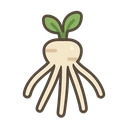
Skirret

Carrot and skirret feed the same carrot fly generations and host the same root rots, so a mixed bed lets pest and spore numbers build through the season. Keep them in separate beds and mesh each one.
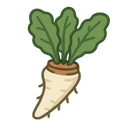
Horseradish

Every root fragment left in the ground sprouts a new plant, so horseradish steadily colonizes a bed. Digging carrots chops and scatters those fragments, and the following season you are weeding horseradish out of the carrot rows. Keep it in its own confined corner.

Crimson Clover

Carrots germinate slowly and stay small for weeks, which a dense clover stand easily overruns. Plant clover as the cover before or after carrots rather than alongside them.

Phacelia

Phacelia is up and branching in two weeks while carrots are still hair-thin seedlings, and its lacy canopy shades them out. Keep it to the bed edge or a separate patch rather than sowing it through a carrot row.

Sudangrass

Small-seeded, slow-starting root crops often come up thin and stunted in beds where this grass was recently turned under. Give the bed a full month, or sow a transplanted crop first instead.

Field Mustard

Fresh mustard residue often thins a carrot sowing, since carrot seed is tiny and takes two weeks to emerge even in clean ground. Let the chopped tops break down for 2-3 weeks, then rake and sow.


See carrots in the full companion chart →

Crop rotation

After this crop

Family rest

Give the carrot family 3 years away from this spot before any of its relatives return.

Good next crops

The pea and bean family, the cabbage family or the onion family thrive in this ground next season.

Carrots are light feeders and leave the bed loosened by their taproots, with little residue to break down. Keep the carrot family (parsnip, parsley, celery, dill) out of this ground for 3 years. Follow with legumes to rebuild nitrogen, or with brassicas or the onion family.

Trouble to watch for

Pests and diseases

Pests

Carrot rust fly

Sign
Rusty-brown tunnels and maggot trails just under the root skin; foliage may yellow and wilt.
Fix
Cover the bed with fine insect-mesh row cover immediately after sowing and keep it on until harvest.

Wireworm

Sign
Small round holes bored lengthwise through the root; damage is internal and often not visible until harvest.
Fix
Avoid planting in beds that were recently lawn; rotate and work soil deeply in fall to expose larvae to birds.

Aphids

Sign
Clusters of small soft insects on leaf undersides; foliage curls and becomes sticky.
Fix
Knock off with a firm jet of water; repeat daily for a week.

Carrot weevil

Sign
Zigzag tunnels in the upper root and crown; tops may collapse at soil level.
Fix
Remove and dispose of affected plants; rotate carrots to a new bed each season.

Diseases

Alternaria leaf blight

Sign
Dark brown spots with yellow halos on older leaves; lesions spread inward from leaf margins in humid weather.
Prevent
Space plants to 3 inches to allow airflow; water at the base, not overhead; remove infected foliage promptly.

Cavity spot

Sign
Oval, sunken grey-brown pits on the root surface, visible at harvest.
Prevent
Improve drainage; avoid waterlogged soil; maintain consistent moisture to prevent stress-related calcium uptake failure.

Aster yellows

Sign
Stunted, hairy secondary roots; tops turn yellow and twisted; roots taste bitter.
Prevent
Control leafhoppers (the insects that spread this disease) with row cover; remove and destroy affected plants immediately.
Good to know:Carrot tops are edible but can be confused with poison hemlock (a toxic look-alike in the same family) when seedlings are young — confirm identity before consuming foliage.
FAQ

Common questions about carrots

When should I plant carrots?
Spring: 3–5 weeks before last frost, once soil reaches 45 °F (7 °C). Fall: 10–12 weeks before first fall frost.
How long until carrots are ready to harvest?
65–80 days, counted from sowing. It's ready when shoulder (the top of the root at soil level) is 0.5–0.75 inches across; check by brushing soil aside. Days-to-maturity on the seed packet is a reliable guide — taste one root to confirm sweetness.
Can I grow carrots in a container?
Either works — needs at least 12 inches of loose, stone-free soil depth; use shorter Chantenay or Parisian varieties in containers. In containers: 5-gallon pot, 12 inches deep minimum.
How often should I water carrots?
Water deeply twice a week; reduce frequency once roots are established but never let soil dry out completely. Water when the top inch of soil feels dry to the touch.
Is any part of carrots unsafe to eat?
Carrot tops are edible but can be confused with poison hemlock (a toxic look-alike in the same family) when seedlings are young — confirm identity before consuming foliage.
How should I store carrots after harvest?
Twist off tops to 0.5 inch, brush off soil, and store unwashed in perforated plastic bags in the refrigerator crisper at 32–40 °F (0–4 °C) for up to 4 weeks. In-ground storage under heavy mulch extends this through mild winters.

Verdie turns this guide into your plan

Set your garden's location and every window above becomes a real date — then Verdie reminds you when it's time to sow, transplant, water, and pick.

Download on the App Store
Free to download · iPhone & iPad