Crop guide · The carrot and parsley family

How to grow Skirret

A cluster-rooted perennial grown as an annual for its sweet, starchy white roots — a largely forgotten vegetable with genuine garden merit.

Sium sisarum · also called crummock, chervin

Full sun Intermediate Frost-hardy
Sun
Full sun
Provide afternoon shade once temperatures regularly exceed 85 °F (29 °C)
Frost
Hardy
Established roots survive hard frost in the ground
Spacing
12 in
30 cm between plants
Sow depth
¼ in
6 mm
To harvest
100–135 days
counted from transplant
Soil pH
6.0–7.0
slightly acidic to neutral
Timing

When to plant Skirret

Windows are counted from the average date of your last spring frost.

Fall planting:sow 10–12 weeks before first fall frost for a late-season harvest.
Too late?Skip a spring sowing once sustained daytime temperatures exceed 80 °F (27 °C) — roots develop poorly in summer heat; plan a fall sowing instead.
Background

Why grow Skirret

Skirret produces a bundle of slender, sweet roots with a flavor closer to parsnip than carrot, and tolerates heavier, moister soils where carrots struggle. It is rarely available in shops, making home growing the only practical route to the table.

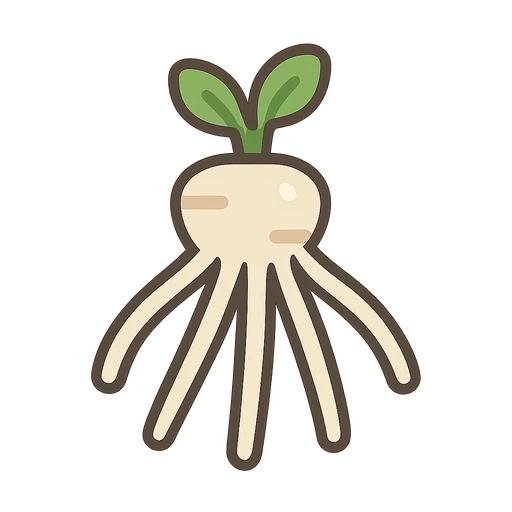
A little history. Native to eastern Asia and documented in European cultivation since at least the 16th century per Dodoens and Gerard. Produces a cluster of 6-12 pencil-thick storage roots from a single crown rather than one taproot.

The season, step by step

From planting to harvest

Start seeds indoors

6–8 weeks before last frost

Sow shallowly at ¼ inch; keep the seedbed evenly moist — seeds are slow and will fail if the surface dries out between waterings. Seedlings emerge in 14–28 days in warm soil.

Best soil temp 55–65 °F (13–18 °C) Minimum 50 °F (10 °C) Emerges in 14–28 days

Sow outside

2–4 weeks before last frost

Sow seeds ¼ inch (6 mm) deep.

Transplant outside

2–3 weeks after last frost

Beds strongly preferred; roots reach 8–12 inches and spread as a cluster — containers restrict yield significantly. In containers: 15-gallon half-barrel, minimum 14 inches deep. Space plants 12 inches (30 cm) apart.

Water and feed

All season

Water deeply twice a week during active growth; skirret tolerates moist soil better than most root crops. Water when the top 2 inches of soil feel dry, or leaves show slight midday wilt. Aim for about 1–1.5 inches per week including rain.

Side-dress (scatter fertilizer along the row and water in) once at planting and again 6 weeks later. What to use: low-nitrogen balanced fertilizer or well-rotted compost; excess nitrogen drives leafy growth at the expense of roots.

Prune and maintain

As it grows

Pinch out any flower stalks as soon as they appear — allowing the plant to bolt (shift from root growth to flowering) diverts energy from the roots and reduces yield significantly.

Harvest and store

100–135 days from transplant

It's ready when roots are harvest-ready when the foliage begins to die back in autumn, or once roots reach finger thickness (roughly ¾ inch diameter). Do not wait until roots become woody. Loosen the soil 6–8 inches out from the crown with a fork, then lift the whole cluster by the crown. Separate individual roots by hand. Leave the crown in the ground to overwinter if you want a second-year harvest.

Trim tops to 1 inch, brush off soil, and store unwashed in barely damp sand or peat in a cool (32–40 °F (0–4 °C)), dark place for up to 3 months. Do not refrigerate in plastic — roots rot quickly without airflow.

Companions

Good neighbours, bad neighbours

Plant it with

Onion

Onion leaves carry a strong smell that can help hide skirret's carrot-family scent from carrot fly females hunting for a place to lay eggs. The effect shows up mainly under low pest pressure and stops once the onions are pulled.

Leek

Leeks hold their ground beside skirret for the whole season, so their onion smell keeps working late into autumn when carrot fly is still active. Useful backup where insect mesh is awkward, though mesh remains the reliable control.

Lettuce

Lettuce feeds in the top few inches while skirret's root cluster works 8-12 inches down, so the two rarely fight over water. Lettuce is also cut and gone well before the roots do their main bulking.

Spinach

Sown between the rows, spinach covers bare ground during the two to four weeks skirret seed takes to emerge, holding surface moisture and crowding out weeds. Clear it once it starts shading the young crowns.

Keep it away from

Parsnip

Parsnip shares skirret's family and its troubles: carrot fly, and the soil-borne root rots that linger for years. Growing them in one bed stacks the pressure and leaves you nowhere clean to move either crop.

Carrot

Carrot and skirret feed the same carrot fly generations and host the same root rots, so a mixed bed lets pest and spore numbers build through the season. Keep them in separate beds and mesh each one.

Celery

Celery is another carrot-family crop that shares leaf blights and carrot fly with skirret, and its constant thirst draws on the same moist soil the roots need. Grow it in a different bed.

See Skirret in the full companion chart →

Crop rotation

After this crop

Rotation

A perennial — it holds its spot for years, so it sits outside the annual rotation.

Skirret sits outside the annual rotation: crowns hold a bed for several seasons, take a moderate feed, and leave soil loosened deep down. No fixed family gap applies. When you finally clear the bed, dig out every root piece, then follow with peas or beans and a leafy crop.

Trouble to watch for

Pests and diseases

Pests

Carrot fly

Sign
Rusty tunnels or fine channels on root surfaces; foliage yellows and wilts from the top down.
Fix
Cover seedlings with fine insect mesh immediately after sowing or transplanting and keep it on through harvest.

Aphids

Sign
Clusters of small soft insects on new growth and undersides of leaves; stems may curl or distort.
Fix
Knock off with a firm jet of water; repeat daily for a week. Introduce or encourage ladybirds and lacewings.

Slugs

Sign
Irregular holes in young leaves and seedling stems; silvery slime trails on soil surface nearby.
Fix
Set out beer traps or copper barrier tape around the bed; hand-pick at dusk after rain.

Diseases

Powdery mildew

Sign
White powdery coating on upper leaf surfaces, first appearing as discrete patches that spread to cover the whole leaf.
Prevent
Space plants at the full 12-inch interval to allow airflow; avoid overhead watering in the evening.

Crown rot

Sign
Soft, discolored tissue at the base of the plant where roots meet the stem; plant collapses suddenly.
Prevent
Improve drainage before planting by incorporating grit or coarse compost; never let water pool around crowns.

Violet root rot

Sign
Purple or violet fungal threads matted around the roots; roots decay and the plant wilts despite adequate moisture.
Prevent
Rotate out of the same bed for at least 4 years; remove and bin all infected plant material — do not compost it.
Good to know:Skirret belongs to the carrot family, which contains several toxic look-alikes including poison hemlock and water hemlock. Positively identify the plant before consuming any part; only the storage roots are eaten.
FAQ

Common questions about Skirret

When should I plant Skirret?
Spring: start indoors 6–8 weeks before last frost; transplant out 2–3 weeks after last frost. Spring: direct sow once soil reaches 50 °F (10 °C), typically 2–4 weeks before last frost.
How long until Skirret is ready to harvest?
100–135 days, counted from transplant. It's ready when roots are harvest-ready when the foliage begins to die back in autumn, or once roots reach finger thickness (roughly ¾ inch diameter). Do not wait until roots become woody.
Can I grow Skirret in a container?
Beds strongly preferred; roots reach 8–12 inches and spread as a cluster — containers restrict yield significantly. In containers: 15-gallon half-barrel, minimum 14 inches deep.
How often should I water Skirret?
Water deeply twice a week during active growth; skirret tolerates moist soil better than most root crops. Water when the top 2 inches of soil feel dry, or leaves show slight midday wilt.
Is any part of Skirret unsafe to eat?
Skirret belongs to the carrot family, which contains several toxic look-alikes including poison hemlock and water hemlock. Positively identify the plant before consuming any part; only the storage roots are eaten.
How should I store Skirret after harvest?
Trim tops to 1 inch, brush off soil, and store unwashed in barely damp sand or peat in a cool (32–40 °F (0–4 °C)), dark place for up to 3 months. Do not refrigerate in plastic — roots rot quickly without airflow.

Verdie turns this guide into your plan

Set your garden's location and every window above becomes a real date — then Verdie reminds you when it's time to sow, transplant, water, and pick.

Download on the App Store
Free to download · iPhone & iPad