Transplant outside
4–6 weeks before last frost
Best in a permanent ground bed with consistent moisture; containers dry out too quickly and restrict the spreading crown. Space plants 36 inches (90 cm) apart.
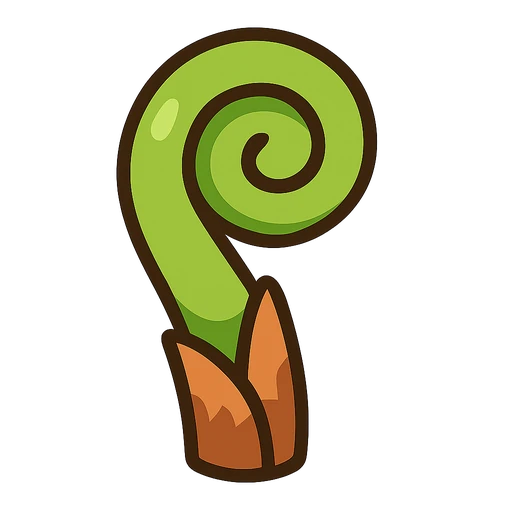
A native woodland fern whose tightly coiled spring shoots are harvested as a fleeting seasonal vegetable before the fronds unfurl.
Matteuccia struthiopteris · also called ostrich fern, shuttlecock fern
As soon as soil can be worked, ideally 4–6 weeks before last frost.
6–8 weeks before first hard frost, so roots establish before freeze.
Fiddleheads offer a genuinely brief harvest window each spring that no supermarket reliably stocks fresh. Once established, a clump returns and expands for decades with almost no intervention.
A little history. A deciduous fern native to moist temperate forests of North America, Europe, and Asia. It spreads by underground runners (stolons) and reproduces by spores, not seeds — no flowers are ever produced.
Best in a permanent ground bed with consistent moisture; containers dry out too quickly and restrict the spreading crown. Space plants 36 inches (90 cm) apart.
Water deeply twice a week during dry spells; never let the root zone dry out completely. Water when the top 2 inches of soil feel dry or fronds begin to droop slightly. Aim for at least 1 inch per week; more in summer heat.
Top-dress once each spring as shoots emerge, and again after harvest. What to use: aged compost or a balanced slow-release organic fertilizer worked lightly into the surface.
Cut back dead brown fronds to the ground in late fall or early spring before new croziers emerge. Do not cut green fronds — they feed the crown through summer.
It's ready when harvest when croziers are tightly coiled, 2–4 inches tall, and still wrapped in papery brown scales. Once the coil begins to open, they are past prime. Snap or cut croziers cleanly at soil level. Take no more than one-third of the emerging shoots per clump per year to preserve the plant's energy for the season.
Refrigerate unwashed in a damp paper towel inside a sealed bag for up to 1 week. Cook thoroughly before eating — do not eat raw.
Crowns are fully hardy and need no protection in most temperate climates. In exposed sites, a light mulch of shredded leaves applied after the first hard frost protects surface roots.
Trout lily finishes its whole above-ground season in early spring and dies back just as the fern's fronds expand, so both share the same moist shade without ever competing for light.
A low creeping carpet of wild ginger shades the soil around the fern crown, which helps hold the steady moisture fiddleheads need and crowds out weeds that would otherwise need pulling near shallow roots.
Hostas want the same partial shade, rich soil, and even moisture, and their mounded leaves fill the low space beneath the fern's upright vase. Set them at least 36 inches out so neither is crowded.
Old-fashioned bleeding heart blooms in cool spring shade and often goes dormant by midsummer, leaving the space to the fern's summer fronds. Both thrive in the same damp, humus-rich woodland soil.
 Spearmint
Spearmint spreads by runners and will thread through a fern bed within a season or two. Digging it back out tears the fern's shallow crown and underground runners. Keep mint in a sunken pot or a separate bed entirely.
A perennial — it holds its spot for years, so it sits outside the annual rotation.
A permanent planting, not part of any rotation — the bed stays put for decades and needs no family gap. Feed it moderately each spring, leave the summer fronds to build the crown, and let fallen fronds break down in place as leaf litter.
Set your garden's location and every window above becomes a real date — then Verdie reminds you when it's time to sow, transplant, water, and pick.