 Dill
Dill
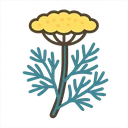
Dill and carrots are separate plants and cannot cross, despite the old claim. The real problem is that mature dill is tall, greedy for water and light, and hosts the same carrot family pests. Grow dill in another bed and let it flower there.
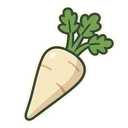 Parsnip
Parsnip is in the same family and carries the same leaf blight, carrot rust fly, and root-tunneling weevils, so side-by-side rows stack the risk and leave infected debris in one spot. Keep them in separate beds and separate rotations.
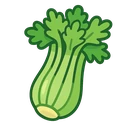 Celery
Carrots share celery's leaf-spot diseases and are the main host of carrot rust fly, so a mixed planting builds both problems in one spot. Keep them in separate beds and separate rotation slots.
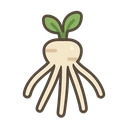 Skirret
Carrot and skirret feed the same carrot fly generations and host the same root rots, so a mixed bed lets pest and spore numbers build through the season. Keep them in separate beds and mesh each one.
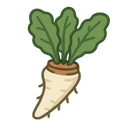 Horseradish
Every root fragment left in the ground sprouts a new plant, so horseradish steadily colonizes a bed. Digging carrots chops and scatters those fragments, and the following season you are weeding horseradish out of the carrot rows. Keep it in its own confined corner.
 Crimson Clover
Carrots germinate slowly and stay small for weeks, which a dense clover stand easily overruns. Plant clover as the cover before or after carrots rather than alongside them.
 Phacelia
Phacelia is up and branching in two weeks while carrots are still hair-thin seedlings, and its lacy canopy shades them out. Keep it to the bed edge or a separate patch rather than sowing it through a carrot row.
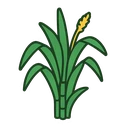 Sudangrass
Small-seeded, slow-starting root crops often come up thin and stunted in beds where this grass was recently turned under. Give the bed a full month, or sow a transplanted crop first instead.
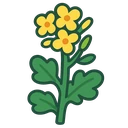 Field Mustard
Fresh mustard residue often thins a carrot sowing, since carrot seed is tiny and takes two weeks to emerge even in clean ground. Let the chopped tops break down for 2-3 weeks, then rake and sow.
 Onion
Onion Leek
Leek Lettuce
 Rosemary
 Tomato