Start seeds indoors
Keep the top half-inch damp until the thin grass-like shoots stand up. Break any surface crust with a light watering. Seedlings emerge in 7–14 days in warm soil.
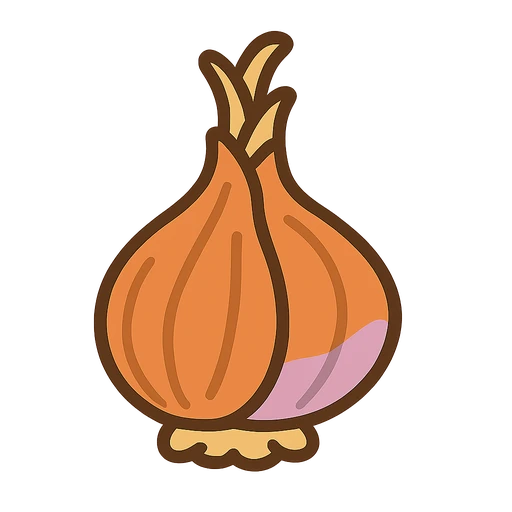
A small onion relative that splits one planted bulb into a cluster of several, giving fine-grained flavor and months of dry storage.
Allium cepa var. aggregatum · also called Multiplier onion, French shallot
Windows are counted from the average date of your last spring frost.
One bulb planted returns a whole cluster, so a short row supplies a kitchen all winter. Shallots cure hard and keep longer than most onions, and they mature early enough to free the bed by midsummer.
A little history. Shallots are a division of the cultivated onion that multiplies by side bulbs rather than forming one large bulb. Most kitchen types are grown from saved bulbs, not seed.
Keep the top half-inch damp until the thin grass-like shoots stand up. Break any surface crust with a light watering. Seedlings emerge in 7–14 days in warm soil.
Sow seeds 1 inch (25 mm) deep.
Water once or twice a week while tops are growing; stop once tops start yellowing. Water when the top inch of soil feels dry. Aim for about 1 inch per week including rain.
Side-dress once when shoots reach 6 in, again 3 weeks later; stop when bulbs swell. What to use: balanced 5–5-5 organic fertilizer or compost, watered in.
Snip off any flower stalk as soon as you see it — a flowering plant stops sizing bulbs and stores poorly. Green tops can be cut sparingly for the kitchen.
It's ready when tops yellow, flop, and start to dry, and the cluster has split into several firm bulbs — usually midsummer for spring plantings. Loosen the cluster with a fork, lift the whole clump by hand, and shake off soil without washing. Leave tops attached and cure in a single layer in a warm airy spot for 2–3 weeks.
Once necks are papery, trim tops to 1 in and store in mesh bags or trays at 35–50 °F (2–10 °C) in a dry dark place; well-cured bulbs hold 6–8 months.
Not worth successions for storage bulbs. Instead plant a few extra bulbs close together and pull them green as scallions through spring.
Fall-planted bulbs root before freeze-up and rest through winter. Mulch 2–3 in with straw after the ground chills, then pull the mulch back as shoots appear.
Carrot
Interplanted rows can each hide the other from pests that hunt by smell — the onion scent confuses carrot rust fly and the carrot foliage muddles the trail for onion maggot. The effect is partial, so keep netting as your main defense.

Lettuce
Shallots root shallowly in a narrow column and cast almost no shade, so lettuce can fill the gaps between clusters and be cut long before bulbs need the room.
Beet
Both want the same cool season, steady moisture, and loose well-drained soil, and neither crowds the other overhead. Beets also break up the block of onion-family plants that soil-borne allium problems build up in.
Cabbage
A border of shallots can reduce landings by cabbage-family pests that locate hosts by smell. Results vary with pest pressure, so treat it as a bonus alongside row cover.

Chamomile
Its open flowers feed hoverflies and tiny parasitic wasps, whose larvae work through thrips and aphids on nearby onion-family leaves. Let a few plants flower at the end of the row.

Sweet Alyssum
Alyssum reliably draws in hoverflies, and their larvae feed on thrips and aphids that build up on shallot leaves in hot dry weather. Its low mat also keeps the soil surface cool without shading the tops.

Strawberry
Gardeners have long tucked shallots along strawberry rows, and the two share a cool season and shallow rooting without fighting for light. No pest effect has been demonstrated, so plant it for the space savings.
Garden Pea
Old charts keep peas and the onion family apart, and pea growers still repeat the advice. No mechanism has been demonstrated, so if bed space is tight, plant them a row or two apart rather than reworking your whole plan.
Snow Pea
As with garden peas, gardeners have long separated snow peas from onion-family crops. The pairing is said to check pea growth, but nothing has been shown; a modest gap between rows satisfies the tradition.
Bush Bean
Beans and the onion family are another century-old chart separation with no demonstrated cause. Practically, beans also fill in and shade low shallot tops, so give shallots their own open row.
Fennel
Fennel roots release compounds that stunt most garden vegetables, and shallots are too shallow-rooted to shrug it off. Grow fennel in its own corner, where its flowers can still feed hoverflies and tiny parasitic wasps.
Asparagus
Lifting shallot clusters means forking through the top few inches of soil, which damages the shallow crowns and spears of an established asparagus bed. Keep the two in separate beds.
Give the onion family 4 years away from this spot before any of its relatives return.
The pea and bean family, the squash family or the beet family thrive in this ground next season.
A moderate feeder that leaves little behind and roots only shallowly, so the lower soil is barely touched. Keep onion-family crops out of this bed for 4 years; follow with peas or beans, a squash or cucumber, or beets and chard.