Sow outside
Sow seeds 2 inches (51 mm) deep, and aim for 6 inches (15 cm) between plants once thinned. Plant cloves pointed end up, 2 inches deep; keep soil moist until shoots emerge, then mulch heavily for winter. Seedlings emerge in 7–21 days.
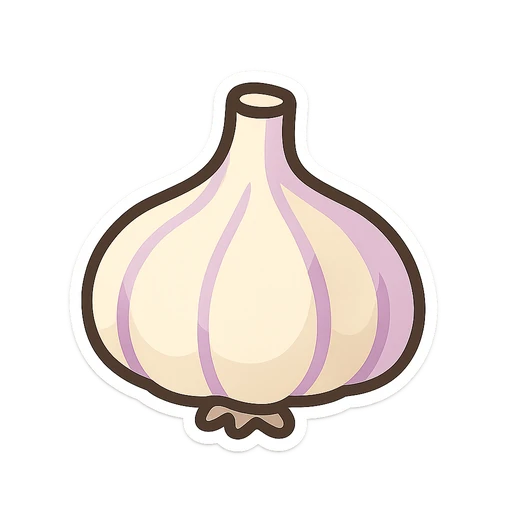
A cold-hardy bulb planted in autumn and harvested the following summer, rewarding patience with heads that store for months.
Allium sativum · also called hardneck garlic, softneck garlic
4–6 weeks before the ground freezes, typically mid-autumn.
As soon as soil can be worked, 4–6 weeks before last frost — yields smaller bulbs.
Home-grown garlic offers flavor complexity unavailable in supermarket stock, and the range of hardneck varieties — from mild to fiery — is inaccessible through commercial channels. A single autumn planting requires almost no attention through winter.
A little history. Native to central Asia, garlic rarely sets viable seed and is propagated almost exclusively by clove division. Hardneck types (var. ophioscorodon) produce a stiff central stem; softneck types (var. sativum) do not and store longer.
Sow seeds 2 inches (51 mm) deep, and aim for 6 inches (15 cm) between plants once thinned. Plant cloves pointed end up, 2 inches deep; keep soil moist until shoots emerge, then mulch heavily for winter. Seedlings emerge in 7–21 days.
Water every 3–5 days during active spring growth; taper off sharply 2–3 weeks before expected harvest. Water when water when the top inch of soil feels dry during bulbing; stop when lower leaves begin to yellow naturally. Aim for about 1 inch per week during spring growth.
Side-dress (scatter fertilizer along the row and water in) once in early spring when shoots reach 4–6 inches, then again 4 weeks later. What to use: nitrogen-forward fertilizer such as blood meal or 10–5-5 organic blend.
Remove scapes (the curling flower stalks that hardneck types send up in early summer) by snapping or cutting them off; redirects the plant's energy into bulb sizing rather than seed production.
It's ready when harvest when roughly half the leaves have yellowed and collapsed but 5–6 green leaves remain — each green leaf corresponds to a wrapper layer on the bulb. Loosen soil with a fork 6 inches from the plant before lifting to avoid slicing bulbs; pull by grasping the stem near the base, shake off loose soil, and do not remove the stem or roots yet.
Cure in a single layer in a shaded, dry spot with good airflow for 3–4 weeks. Once cured, store hardneck types at 50–60 °F (10–16 °C) for up to 6 months; softneck types store up to 12 months in the same conditions.
Autumn-planted cloves overwinter in the ground naturally; the cold period triggers the hormonal shift that drives bulb formation the following spring. Mulch with 4–6 inches of straw after the ground begins to freeze.
Tomato
Garlic's sulfur-heavy foliage can help hide tomatoes from aphids and spider mites that locate hosts by smell. The effect is modest and works best under low pest pressure, so treat it as a bonus rather than a substitute for scouting.
Carrot
Rows of garlic between carrots often reduce carrot rust fly damage, since the flies track their host by scent and garlic's odor muddies the trail. Garlic's narrow upright leaves cast almost no shade on the carrot tops.
Beet
Garlic feeds from a shallow, fibrous root mass while beets pull from deeper soil, so the two rarely fight over water or fertilizer. Both also come out of the bed in mid to late summer, which keeps digging to one pass.
Chamomile
Chamomile's small open flowers feed hoverflies and tiny parasitic wasps whose larvae hunt thrips and aphids, which can ease pressure on nearby garlic. Let a few plants flower at the bed edge in late spring, when garlic is bulbing.
Rose
Gardeners have long tucked garlic under roses in the belief that its scent confuses aphids searching for new buds. Evidence is thin, but the planting costs nothing and garlic's slim leaves do not crowd the rose's root zone.
Green Bean
Old charts keep beans away from the onion family, and the pairing is said to check bean growth. No mechanism has been demonstrated, so if bed space is tight, plant them apart out of caution rather than conviction.

Garden Pea
Gardeners have long separated peas from garlic and onions, claiming stunted pea vines. Nothing in the research supports it, so treat the rule as tradition; a practical point is that peas need trellis room garlic does not.

Asparagus
Asparagus lives in a permanent bed with shallow crowns, and lifting garlic each summer means forking through that root zone. Keep garlic in the rotating beds and leave the asparagus row undisturbed.
Ramps
Garlic and ramps are both onion-family crops and share white rot, a soil fungus whose resting bodies survive decades in one spot. Keeping garlic out of the ramp patch is the only practical protection for a colony you cannot move.
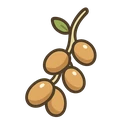
Groundnut
Old companion charts have long kept the onion family away from beans and their relatives, and groundnut inherits that caution. No mechanism has been demonstrated, so treat it as tradition rather than a rule worth redesigning a bed around.
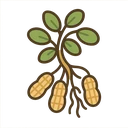
Peanut
Garlic is said to sit poorly with legumes in the same century-old charts that separate onions from beans, with no demonstrated effect. The practical objection is timing: garlic is lifted in midsummer, and that digging disturbs peanuts just as pods are filling.

Wasabi
Old companion charts keep the onion family away from wasabi, though no mechanism has been demonstrated. The practical reason to separate them is different: garlic wants sun and drier, freely drained soil, while wasabi needs shade and constant moisture.

Daylily
Garlic is said to sit poorly with daylilies on traditional charts. What you can count on is the digging: garlic is planted and lifted on its own schedule, and that spadework tears through spreading daylily roots.

Snow Pea
Gardeners have long said garlic checks the growth of peas and beans. It is a century-old chart pairing with no measured effect, so treat it as tradition rather than a rule worth rearranging a small bed for.
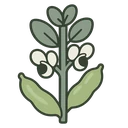
Fava Bean
Gardeners have long separated garlic from beans, though trials have not confirmed any effect. Both are grown over the same cool months, so if you do interplant, watch only for competition for water and light.

Edamame
Gardeners have long avoided planting beans beside garlic. The pairing rests on tradition rather than evidence, though the practical point stands: garlic is harvested mid-summer, and digging it disturbs bean roots that are flowering at that moment.
Give the onion family 4 years away from this spot before any of its relatives return.
The pea and bean family, the squash family or the beet family thrive in this ground next season.
Garlic is a moderate feeder that leaves loose, weed-free soil and little residue behind. Keep the onion family out of this bed for 4 years, since white rot bodies persist for many seasons. Follow with legumes, then squash or cucumbers, or with beets and chard.