Sow outside
Sow seeds 3 inches (76 mm) deep, and aim for 12 inches (30 cm) between plants once thinned. Plant tuber pieces 2–3 inches deep; keep soil evenly moist for the first 3 weeks until shoots break the surface. Seedlings emerge in 14–28 days.
A native North American climbing vine that produces strings of starchy, protein-rich tubers underground — an unusual dual-purpose crop yielding both edible roots and edible beans.
Apios americana · also called hopniss, Indian potato
Plant tubers 2–4 weeks after last frost, once soil reaches 60 °F (16 °C).
Plant tubers 6–8 weeks before first fall frost for establishment before dormancy.
Groundnut fixes its own nitrogen through root bacteria, improving soil while it grows. The tubers offer a nutty, chestnut-like flavor and contain roughly three times the protein of potato by dry weight, according to published nutritional analyses.
A little history. Native to eastern North America, documented in the wild from Nova Scotia to Florida. Tubers form as swellings along a slender underground rhizome (a horizontal underground stem), not as discrete root masses. Described by Meriwether Lewis during the 1804 expedition.
Sow seeds 3 inches (76 mm) deep, and aim for 12 inches (30 cm) between plants once thinned. Plant tuber pieces 2–3 inches deep; keep soil evenly moist for the first 3 weeks until shoots break the surface. Seedlings emerge in 14–28 days.
Water deeply once or twice a week during active vine growth; reduce once vines begin to yellow in late summer. Water when the top 2 inches of soil feel dry to the touch. Aim for about 1 inch per week including rain.
Amend bed with compost at planting; no further nitrogen feeding needed during the season. What to use: compost worked in at planting; excess nitrogen drives vine growth at the expense of tuber formation.
Pinch (remove the growing tip) of vines once they reach 5–6 feet to encourage lateral branching and redirect energy toward tuber development; provide a trellis or fence — vines reach 8–12 feet.
It's ready when harvest after the first killing frost browns the tops, or in late fall once foliage yellows naturally; tubers should be firm and at least 1 inch in diameter — larger tubers develop in the second and third year. Loosen soil with a fork 6–8 inches from the crown; lift the entire rhizome string carefully and snap off tubers; leave a few small tubers in place to regrow next season.
Brush off soil and store unwashed in a cool (35–40 °F (2–4 °C)), humid root cellar or refrigerator crisper drawer; use within 2–3 weeks — tubers dry out faster than potato.
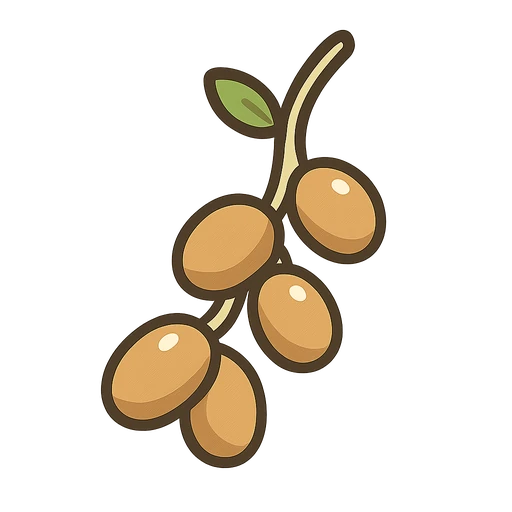
Groundnut is a perennial that returns from overwintered tubers; plan the bed as a multi-year planting rather than an annual succession crop.
Tubers overwinter in the ground without protection in most temperate climates; mulch with 3–4 inches of straw after frost to moderate soil temperature and mark the bed location.
Sweet Corn
Corn lends a living stalk for the twining vine, in the spirit of the Three Sisters. Groundnut is far heavier than a common bean, so let the corn reach 3 feet first and expect to add a stake or fence if the stalks start to lean.
Zucchini
Broad squash leaves shade the soil surface, hold moisture, and crowd out weeds around the shallow rhizomes (horizontal underground stems) where the tubers form. Keep the squash at least 2 feet out so digging season does not tangle the two.
Sunflower
A thick-stemmed sunflower can carry a young groundnut vine for one season, saving you a trellis. Choose a single-stem type over 6 feet, and cut the stalk off at soil level in fall rather than pulling it through the tuber string.
Both are eastern North American natives that want moist, rich ground at a pond or bed edge, and cardinal flower's upright red spikes root shallowly enough that they do not fight the groundnut rhizomes for space.
Fennel
Fennel roots release substances that stunt most garden vegetables, and a slow-establishing perennial like groundnut cannot outgrow the setback. Its flowers do feed hoverflies and tiny parasitic wasps, so keep a plant in a far corner of the garden instead.
Garlic
Old companion charts have long kept the onion family away from beans and their relatives, and groundnut inherits that caution. No mechanism has been demonstrated, so treat it as tradition rather than a rule worth redesigning a bed around.
A perennial — it holds its spot for years, so it sits outside the annual rotation.
A perennial that holds its bed for three or more years, banking nitrogen in its roots as it goes, so there is no annual rotation gap to keep. When you finally clear it, sift out every tuber fragment or it resprouts, then follow with a hungry crop such as cabbage family greens or corn.