Crop guide · The carrot family

How to grow Fennel

Florence fennel builds a crisp, anise-scented bulb from overlapping leaf bases, and grows best as a fast fall crop in its own corner of the garden.

Foeniculum vulgare · also called Florence fennel, Finocchio

Full sun Intermediate Half-hardy
Sun
Full sun
Light afternoon shade above 85 °F (29 °C) helps, though heat and long days still push spring plantings to flower early.
Frost
Half-hardy
Bulbs take light frost and firm up in cool weather
Spacing
10 in
25 cm between plants
Sow depth
¼ in
6 mm
To harvest
75–100 days
counted from sowing
Timing

When to plant Fennel

Summer
Direct sow

Midsummer to late summer, about 12–14 weeks before the first hard freeze.

Spring
Start indoors

4 weeks before last frost; set out only once nights stay above 50 °F (10 °C).

Fall
Direct sow

Early fall where winters stay mild, for late-winter bulbs.

Too late?Skip a spring sowing once days regularly top 75 °F (24 °C). Stop fall sowing about 12 weeks before your first hard freeze.
Background

Why grow Fennel

Few crops hand you a vegetable and a seasoning at once: the bulb roasts or shaves raw into salads, while fronds and seeds flavor fish and bread. Cool fall weather gives the firmest, sweetest bulbs.

A little history. The bulb is not a root but a stack of swollen leaf bases at the stem base. Native to Mediterranean coasts, the plant carries the wide flat flower clusters typical of the carrot family.

The season, step by step

From planting to harvest

Start seeds indoors

4 weeks before last frost

Sow ¼ inch deep and keep the top half-inch constantly moist until sprouts show; break any crust with a fine spray. Seedlings emerge in 7–14 days in warm soil.

Best soil temp 60–70 °F (16–21 °C) Minimum 50 °F (10 °C) Emerges in 7–14 days

Sow outside

Midsummer to late summer, about 12-14 weeks before the first hard freeze

Sow seeds ¼ inch (6 mm) deep.

Water and feed

All season

Water deeply twice a week; never let the bed dry out while bulbs are swelling. Water when the top inch of soil feels dry. Aim for about 1 inch per week including rain.

Side-dress once when plants reach 6 in tall (scatter along the row and water in). What to use: a light 5–5-5 organic feed or 1 in of compost; skip heavy nitrogen.

Prune and maintain

As it grows

Snip fronds sparingly for the kitchen. Cut off any flower stalk the moment it appears — bulb swelling stops once the plant shifts to flowering.

Harvest and store

75–100 days from sowing

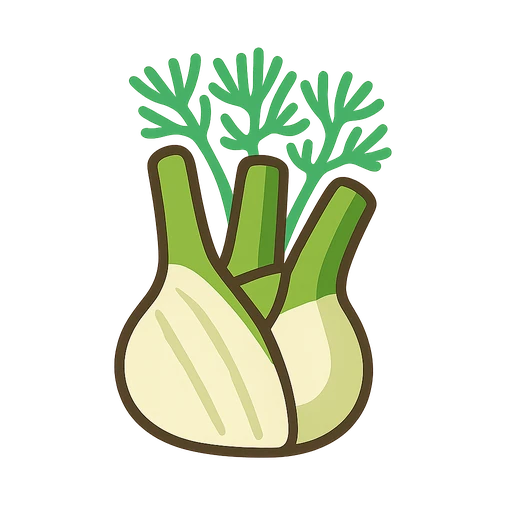
It's ready when bulbs are 3–4 in across, firm, and flattened rather than round, with tight overlapping leaf bases and no flower stalk rising from the center. Slice through the taproot just below the bulb with a sharp knife, keeping the bulb whole. Trim stalks back to 2 in and save a few fronds. Left in place, the stump often pushes small side shoots.

Trim the fronds, bag the bulb loosely, and refrigerate 1–2 weeks. Fronds hold a few days standing in water, or dry and freeze them separately.

Companions

Good neighbours, bad neighbours

Plant it with

Yarrow

Set together in a flowering strip well away from vegetable rows, fennel and yarrow both carry wide flat flower heads with shallow nectar that hoverflies, lacewings, and tiny parasitic wasps can reach. Those insects then work the aphids and caterpillars in nearby beds.

Sweet Alyssum

Alyssum has been shown to draw in large numbers of hoverflies, whose larvae eat aphids. Growing it along the edge of a fennel flowering corner keeps both plants blooming and beneficials fed from spring into fall.

Calendula

Calendula flowers open early and stay open late, and can help keep hoverflies and small parasitic wasps in the area between fennel bloom flushes. Use this pairing in a dedicated border, not inside a vegetable bed.

Keep it away from

Most Garden Vegetables

Fennel roots and residues release compounds that slow germination and stunt early growth across a very wide range of vegetables and herbs — beans, tomatoes and peppers, squash and melons, lettuce and spinach, and most soft-leaved herbs among them. Give fennel its own bed or a far corner, and do not till its residue into a vegetable bed.

Tomato

Tomatoes are among the crops most reliably set back by fennel: plants near it stay small and slow to set fruit. Keep fennel out of the tomato bed entirely rather than trying to buffer it with spacing.

Green Bean

Bean seedlings sown near established fennel germinate unevenly and stall at the first true leaves (the full-shaped leaves after the rounded seed leaves). Plant beans at the far end of the garden from fennel.

Bell Pepper

Peppers often sulk beside fennel, holding short and pale through the season. Since peppers already start slowly in cool soil, remove that extra drag by keeping fennel in another bed.

Cucumber

Cucumbers and their relatives commonly show reduced vine growth when planted alongside fennel, and the sprawling vines put their roots right into fennel's zone. Trellis cucumbers well away from any fennel planting.

See Fennel in the full companion chart →

Crop rotation

After this crop

Family rest

Give the carrot family 3 years away from this spot before any of its relatives return.

Good next crops

The pea and bean family, the cabbage family or the onion family thrive in this ground next season.

A light feeder that leaves little behind but a deep taproot channel and residue best pulled, not tilled in. Keep carrot-family crops — carrots, parsnips, celery, dill, parsley — out of this bed for 3 years. Legumes, cabbage-family crops, and onion-family crops follow well.

Trouble to watch for

Pests and diseases

Pests

Swallowtail caterpillars (parsley worms)

Sign
Fat green caterpillars with black bands and yellow dots stripping the fronds bare.
Fix
Hand-pick them off bulbing plants and move them to a spare fennel plant kept for the butterflies.

Aphids

Sign
Clusters of small green or gray insects in frond tips and leaf crotches; sticky residue on stalks.
Fix
Knock them off with a hard jet of water and repeat every few days until numbers drop.

Slugs and snails

Sign
Ragged holes and slime trails low on the stalks and around the bulb base.
Fix
Water in the morning, clear debris and boards, and set iron phosphate bait or beer traps.

Cutworms

Sign
Young seedlings clipped off flush with the soil line overnight.
Fix
Push a cardboard collar 1 in into the soil around each seedling.

Diseases

Cercospora leaf blight

Sign
Small tan spots with dark borders on fronds and stalks; heavy spotting yellows whole shoots during warm wet spells.
Prevent
Space for airflow, water at soil level rather than overhead, and clear old carrot-family debris from the bed.

Powdery mildew

Sign
White dusty film coating stalks and fronds, usually late in the season.
Prevent
Full sun, wide spacing, morning watering; strip off the worst leaves as they appear.

Bacterial soft rot

Sign
Water-soaked, slimy brown patches inside the bulb base, often with a sour smell.
Prevent
Plant in well-drained soil, keep mulch off the bulb crown, and harvest promptly in long wet weather.

Damping off

Sign
Seedlings pinch and collapse at the soil line a few days after emerging.
Prevent
Sow in clean mix, keep the surface moist but not soggy, and thin early so air moves between seedlings.
Good to know:Every part of the garden plant is edible, but never gather look-alike ferny umbels from the wild — poison hemlock and water hemlock resemble fennel foliage and are deadly.
FAQ

Common questions about Fennel

When should I plant Fennel?
Summer: midsummer to late summer, about 12–14 weeks before the first hard freeze. Spring: 4 weeks before last frost; set out only once nights stay above 50 °F (10 °C).
How long until Fennel is ready to harvest?
75–100 days, counted from sowing. It's ready when bulbs are 3–4 in across, firm, and flattened rather than round, with tight overlapping leaf bases and no flower stalk rising from the center.
Can I grow Fennel in a container?
Bed is easier — wants 12 in of loose, evenly moist soil; a deep pot works for one plant. In containers: 3-gallon pot per plant, at least 12 in deep.
How often should I water Fennel?
Water deeply twice a week; never let the bed dry out while bulbs are swelling. Water when the top inch of soil feels dry.
Is any part of Fennel unsafe to eat?
Every part of the garden plant is edible, but never gather look-alike ferny umbels from the wild — poison hemlock and water hemlock resemble fennel foliage and are deadly.
How should I store Fennel after harvest?
Trim the fronds, bag the bulb loosely, and refrigerate 1–2 weeks. Fronds hold a few days standing in water, or dry and freeze them separately.

Verdie turns this guide into your plan

Set your garden's location and every window above becomes a real date — then Verdie reminds you when it's time to sow, transplant, water, and pick.

Download on the App Store
Free to download · iPhone & iPad