Start seeds indoors
Press seeds onto moist mix — do not cover; they need light to germinate. Mist daily to prevent the surface from drying out. Seedlings emerge in 10–21 days in warm soil.
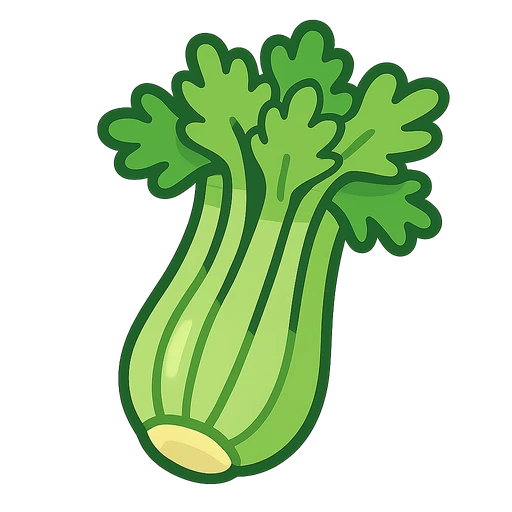
A cool-season stalk vegetable that rewards patient gardeners with crisp, aromatic ribs — but demands consistent moisture, steady feeding, and a long growing window.
Apium graveolens var. dulce · also called stalk celery, Pascal celery
Windows are counted from the average date of your last spring frost.
Home-grown celery develops far more flavor than supermarket stalks, which are harvested young for shelf life. Growing your own also lets you harvest outer stalks continuously rather than cutting the whole plant at once.
A little history. Native to the Mediterranean and Middle East, where it grows in seasonally wet, saline soils. Modern stalk types were selected in 17th-century Italy from wild forms with thin, bitter petioles (leaf stalks).
Press seeds onto moist mix — do not cover; they need light to germinate. Mist daily to prevent the surface from drying out. Seedlings emerge in 10–21 days in warm soil.
Beds strongly preferred; containers work only in large, deep pots with very consistent watering. In containers: 5-gallon pot minimum per plant, 12 inches deep. Space plants 12 inches (30 cm) apart.
Water deeply every 2–3 days; never let the soil dry out between waterings. Water when the top inch feels barely moist — do not wait until it feels dry. Aim for 1.5 inches per week; more in hot or windy weather.
Side-dress (scatter fertilizer along the row and water in) every 3 weeks from transplant to harvest. What to use: high-nitrogen balanced fertilizer or compost tea; celery is a heavy feeder.
Remove any flower stalks immediately if they appear. Strip off yellowing outer stalks at the base to keep air moving through the plant.
It's ready when stalks are 8–12 inches tall and at least 1 inch thick at the base. The plant has a full, upright bunch of 8 or more ribs. Outer stalks feel firm and snap cleanly. Cut outer stalks at the base with a sharp knife, leaving the inner stalks to keep growing. For a full head, cut the entire plant 1 inch above the soil — a new flush of small stalks may regrow.
Wrap unwashed stalks tightly in foil or a damp cloth and refrigerate; stays crisp for 2–3 weeks. Do not store near ethylene-producing fruit such as apples.
Start a second tray of transplants 4 weeks after the first to extend harvest; in mild climates a fall planting follows the spring crop with a midsummer indoor start.
Tomato
A staked tomato row on the celery's south or west side can throw afternoon shade once days pass 85F, which often slows bolting and eases tip burn. Keep the tomatoes far enough back that celery still gets a half day of direct sun.
Leek
The onion smell of a leek row can help hide celery from carrot rust fly, which hunts by scent. Results are inconsistent under heavy pest pressure, so treat it as a bonus and still rely on fine insect mesh.
Spinach
Spinach fills the open ground between young celery plants, shading the soil surface and holding the steady moisture celery demands. Cut the spinach as celery closes in, before the two compete for water.
Bush Bean
Bush beans bank nitrogen in their roots, but most of it is released only after those roots break down, so it feeds next season's bed rather than this year's celery. Cut the beans at soil level and leave the roots in place.
Nasturtium
Aphids often settle on nasturtium stems before moving to celery. It only helps if you act: pull or spray the loaded nasturtiums rather than letting them breed aphids beside the crop.
Parsnip
Parsnip is in the same carrot family and hosts the same carrot rust fly and leaf-spot diseases as celery. Growing them side by side stacks the risk and makes the three-year family gap harder to keep.
Carrot
Carrots share celery's leaf-spot diseases and are the main host of carrot rust fly, so a mixed planting builds both problems in one spot. Keep them in separate beds and separate rotation slots.
Fennel
Fennel roots release substances that stunt most garden vegetables, and celery's slow start makes it especially vulnerable. Grow fennel in its own corner, where its flowers still feed hoverflies and tiny parasitic wasps.
Lettuce
Old charts keep celery out of the lettuce row, though no mechanism has been demonstrated. What is practical: celery holds the ground for four months and demands steady heavy watering, so it crowds and overshadows a quick 45-day salad crop.
Skirret
Celery is another carrot-family crop that shares leaf blights and carrot fly with skirret, and its constant thirst draws on the same moist soil the roots need. Grow it in a different bed.
Give the carrot family 3 years away from this spot before any of its relatives return.
The pea and bean family, the cabbage family or the onion family thrive in this ground next season.
Celery leaves the bed hungry and low in nitrogen after a long heavy-feeding season. Keep carrot-family crops out for 3 years to break leaf-spot and rust fly cycles. Follow with peas or beans, then a cabbage-family or onion-family crop in the rebuilt soil.