Start seeds indoors
Soak seed 24 hours before sowing; keep the top inch moist but not waterlogged until sprouts show. Seedlings emerge in 10–21 days in warm soil.
A long-lived perennial that rewards patience with decades of spring harvests from the same permanent bed.
Asparagus officinalis · also called garden asparagus, sparrow grass
Windows are counted from the average date of your last spring frost.
Once established, a well-sited asparagus bed produces spears for 20 or more years with minimal annual effort. Home-grown spears harvested and cooked within hours retain a sweetness that store-bought cannot match, because the sugars begin converting to starch immediately after cutting.
A little history. Native to coastal Europe and western Asia, asparagus is a dioecious (separate male and female plants) perennial whose edible spears are the emerging shoots of a deep, fleshy root crown. Male plants produce no berries and direct more energy into spear yield.
Soak seed 24 hours before sowing; keep the top inch moist but not waterlogged until sprouts show. Seedlings emerge in 10–21 days in warm soil.
Permanent raised or in-ground bed strongly preferred; containers are impractical for long-term production. Space plants 18 inches (45 cm) apart.
Deep soak once or twice a week during the growing season; reduce after ferns yellow in fall. Water when the top 2 inches of soil feel dry. Aim for about 1–1.5 inches per week including rain.
Side-dress (scatter fertilizer along the row and water in) once in early spring before spears emerge, then again after harvest ends. What to use: balanced 10–10-10 or compost top-dress; avoid high nitrogen after midsummer.
Cut ferns to ground level in late fall or early spring once fully brown and dry; do not cut green ferns — they are recharging the crown for next year's harvest.
It's ready when spears are 6–9 inches tall and tips are still tightly closed; harvest before the tip begins to open into feathery branches. Snap spears off at ground level by bending until they break naturally, or cut with a sharp knife just below the soil surface; harvest daily during peak season to prevent over-maturity.
Stand upright in 1 inch of cold water in the refrigerator, loosely covered; use within 3–4 days for best flavor; blanch and freeze for longer storage.
Hardy perennial — crowns remain in ground year-round. After ferns die back, mulch the bed with 3–4 inches of straw or compost to moderate soil temperature and suppress early weeds; remove mulch as spears emerge in spring.
Tomato
Gardeners have long set tomatoes at the sunny end of an asparagus bed, saying each keeps the other's pests down. No trial has shown it. If you try it, keep tomatoes 3 feet clear of the crowns so their roots and your digging do not disturb the permanent bed.
Parsley
Parsley left to flower in its second year opens flat umbrella-shaped flower heads that feed hoverflies, lacewings, and tiny parasitic wasps. Those hunters often reduce aphid numbers on the summer fern canopy, though they will not clear asparagus beetles on their own.
Basil
Strongly aromatic basil planted along the bed edge can help hide the crop from insects that locate asparagus by smell, and it stays shallow-rooted enough not to bother the crowns. Treat it as a modest help under low pest pressure, not a substitute for hand-picking beetles.
French Marigold
French marigolds reduce root-knot nematodes only when grown as a thick solid block for a full season and then turned into the soil. Because an asparagus bed stays put for decades, use them the year before you plant crowns; a few edge flowers in an established bed do nothing.
Onion
Old companion charts keep onions out of the asparagus bed, and the reason has never been demonstrated. The practical case still holds: lifting bulbs means digging within inches of shallow crowns, and every nick is an entry point for crown rot.
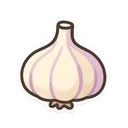
Garlic
Garlic is said to check asparagus growth, though no trial supports it. What is certain is the timing clash: garlic is planted in fall and harvested in midsummer, both moments when you should be leaving the crowns and their recharging ferns strictly alone.
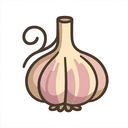
Garlic — Hardneck
Old charts warn against tucking the onion family into an asparagus bed. Nothing has been demonstrated, but there is a practical reason to keep them apart: lifting garlic every summer means digging through ground where asparagus crowns are spreading.
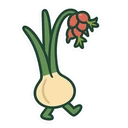
Walking Onion
Both are permanent beds, and walking onion earns its name by toppling and rooting wherever the bulbil cluster lands. Volunteers push into asparagus crowns, and lifting or weeding them disturbs the shallow spear buds you want left alone.
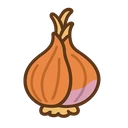
Shallot
Lifting shallot clusters means forking through the top few inches of soil, which damages the shallow crowns and spears of an established asparagus bed. Keep the two in separate beds.
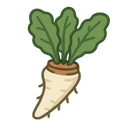
Horseradish
Both are long-lived, but harvesting horseradish means forking down 12 inches or more, which slices through asparagus crowns you cannot replace. Give each perennial its own block with a clear walking strip between.

Lingonberry
Asparagus wants near-neutral, richly fed soil and throws up tall ferny growth that shades a low mat all summer. The two crops cannot be kept happy in one bed.
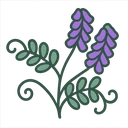
Hairy Vetch
Vetch twines onto anything nearby and drops hard seed that sprouts for years, so it can tangle a permanent asparagus row and make spear cutting awkward. Keep it in annual beds you will mow and turn.
A perennial — it holds its spot for years, so it sits outside the annual rotation.
Asparagus is a permanent bed, not part of the annual rotation, so no family gap applies while it stands. It draws moderately on the soil for 15-20 years and returns little. When the bed is finally retired, rest the ground 4 years before replanting asparagus and sow a legume cover crop.