Crop guide · The carrot and parsnip family

How to grow Italian Flat-Leaf Parsley

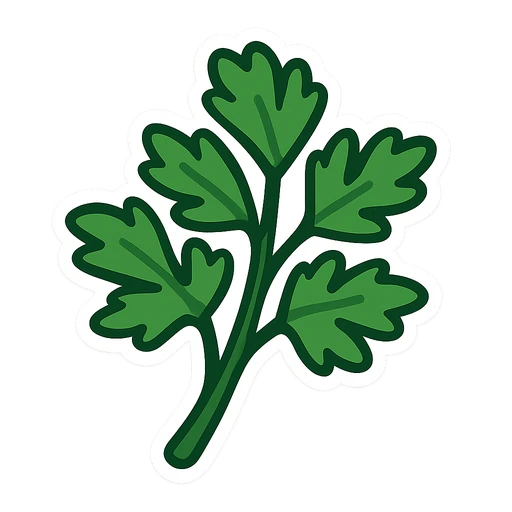
A vigorous, flat-leafed biennial herb grown as an annual for its richly flavored, dark green leaves — far more aromatic than the curly type.

Petroselinum crispum var. neapolitanum · also called flat-leaf parsley, Italian parsley

Full sun Beginner Half-hardy
Sun
Full sun
Provide afternoon shade once temperatures stay above 85 °F (29 °C) to slow bolting (the shift from leaf growth to flowering) and keep leaves from scorching.
Frost
Half-hardy
Tolerates light frost down to about 28 °F (-2 °C)
Spacing
9 in
25 cm between plants
Sow depth
¼ in
6 mm
To harvest
70–90 days
counted from sowing
Soil pH
6.0–7.0
slightly acidic to neutral
Timing

When to plant Italian Flat-Leaf Parsley

Windows are counted from the average date of your last spring frost.

Fall planting:8–10 weeks before first fall frost for a late-season harvest.
Too late?Skip a spring sowing once daytime temperatures regularly exceed 85 °F (29 °C) — sow again in late summer for a fall crop instead.
Background

Why grow Italian Flat-Leaf Parsley

Flat-leaf parsley produces heavier yields than curly types and holds its flavor better after cooking, making it the preferred choice for stocks, sauces, and fresh garnishes. A single plant kept cut will supply a household for months.

A little history. A biennial native to the central Mediterranean region, parsley completes leaf growth in its first year, then flowers and sets seed in its second. Most gardeners treat it as an annual, pulling plants before they flower.

The season, step by step

From planting to harvest

Sow outside

3–4 weeks before last frost

Sow seeds ¼ inch (6 mm) deep, and aim for 9 inches (25 cm) between plants once thinned. Sow ¼ inch deep; keep the seedbed evenly moist — parsley germinates slowly and the surface crust will block emergence if it dries out. Seedlings emerge in 14–28 days.

Best soil temp 65–75 °F (18–24 °C) Minimum 50 °F (10 °C) Emerges in 14–28 days

Transplant outside

Direct sow 3-4 weeks before last frost, or start indoors 8-10 weeks before last frost

Either works well — needs at least 8 inches of soil depth for its taproot to develop properly. In containers: 1-gallon pot minimum; 2-gallon preferred for sustained harvest.

Water and feed

All season

Water deeply when the top inch of soil feels dry; more frequently in hot or windy weather. Water when top inch of soil feels dry to the touch. Aim for about 1 inch per week including rain.

Side-dress (scatter fertilizer along the row and water in) once a month during active growth. What to use: balanced compost or a 5–5-5 organic granular fertilizer; avoid high-nitrogen feeds that reduce flavor.

Prune and maintain

As it grows

Remove any flower stalks immediately as they appear to extend the harvest. Harvest outer stems first, cutting at the base; never remove more than one-third of the plant at one time.

Harvest and store

70–90 days from sowing

It's ready when stems are at least 6 inches tall and carry three or more leaf segments; outer stems are dark green and fully open. Do not harvest until the plant has at least 8–10 stems total. Cut individual outer stems at the base with scissors or a sharp knife, leaving the inner growing crown intact. Harvest in the morning after dew dries for best flavor and longest vase life.

Stand cut stems in an inch of water in the refrigerator, loosely covered with a plastic bag, for up to 2 weeks. Alternatively, chop and freeze flat in a single layer, then transfer to a bag.

Companions

Good neighbours, bad neighbours

Plant it with

Tomato

A low skirt of parsley at the base of staked tomatoes takes up little room, and any plant allowed to open its small flat flower clusters feeds hoverflies and tiny parasitic wasps that hunt aphids. Under low pest pressure this can keep aphid colonies on the tomatoes in check.

Asparagus

Gardeners have long tucked parsley between asparagus crowns, and no mechanism has been demonstrated. It is at least practical: parsley roots stay shallow enough to avoid the crowns, and the bed is left undug for years, which suits a slow starter.

Chives

Carrot fly finds its hosts largely by smell, and the onion scent of a chive clump can help cover the scent of carrot-family foliage nearby. Treat it as a small bonus, not a substitute for insect mesh over young parsley.

Carrot

Old charts keep these two relatives together simply because they want the same loose, evenly moist soil. There is no demonstrated benefit, and they share carrot fly and leaf spot, so mesh both from sowing and move the whole planting together at rotation time.

Rose

Parsley is said to protect roses from aphids, a pairing repeated in cottage-garden writing without supporting trials. It does make a tidy edging that shades the soil at the base of the canes, so treat the planting as ornamental rather than protective.

Keep it away from

Spearmint

Spearmint runs underground and will thread through a parsley clump within one season, making clean cutting impossible. Grow mint in its own pot, or sink a bottomless container 12 inches deep to hold the runners.

Lettuce

Parsley can take 14 to 28 days to emerge, and a fast lettuce rosette often closes over the seedbed before then, leaving the seedlings starved of light and water. Sow lettuce at least a foot away, or wait until parsley has true leaves.

See Italian Flat-Leaf Parsley in the full companion chart →

Crop rotation

After this crop

Family rest

Give the carrot family 3 years away from this spot before any of its relatives return.

Good next crops

The pea and bean family, the cabbage family or the onion family thrive in this ground next season.

A light feeder that leaves soil little changed but hosts carrot fly and leaf spot in the top few inches. Wait 3 years before any carrot-family crop returns here. Peas or beans, cabbage-family greens, or onions and garlic all follow well after a compost topping.

Trouble to watch for

Pests and diseases

Pests

Parsleyworm (black swallowtail caterpillar)

Sign
Large green-and-black striped caterpillars with yellow dots stripping leaves, sometimes defoliating a small plant entirely.
Fix
Handpick and relocate to wild carrot or Queen Anne's lace; these become beneficial pollinators as adults.

Aphids

Sign
Clusters of small soft-bodied insects on new growth and undersides of leaves; sticky residue and distorted stems.
Fix
Knock off with a firm jet of water; repeat daily for several days until populations collapse.

Carrot fly

Sign
Wilting seedlings; reddish-brown tunnels in the taproot when pulled.
Fix
Cover seedlings with fine insect mesh immediately after sowing and keep it on through the season.

Diseases

Leaf spot (Septoria blight)

Sign
Small tan or brown spots with yellow halos on older leaves, spreading upward through the plant in wet weather.
Prevent
Space plants for good airflow; water at the base rather than overhead; remove and bin affected leaves promptly.

Crown rot (Pythium root rot)

Sign
Stems collapse at soil level; roots appear brown and water-soaked; plant wilts despite moist soil.
Prevent
Improve drainage before planting; avoid overwatering; do not bury the crown below soil level.

Powdery mildew

Sign
White powdery coating on leaf surfaces, most common in late summer when nights cool and days stay warm.
Prevent
Maintain good airflow by correct spacing; avoid overhead watering in the evening.
Good to know:Flat-leaf parsley can be confused with poison hemlock, which has similar divided leaves but hollow stems, purple-blotched lower stems, and a musty odor when crushed. Always confirm identification before harvesting from an unfamiliar plant.
FAQ

Common questions about Italian Flat-Leaf Parsley

When should I plant Italian Flat-Leaf Parsley?
Spring: direct sow 3–4 weeks before last frost, or start indoors 8–10 weeks before last frost. Fall: 8–10 weeks before first fall frost for a late-season harvest.
How long until Italian Flat-Leaf Parsley is ready to harvest?
70–90 days, counted from sowing. It's ready when stems are at least 6 inches tall and carry three or more leaf segments; outer stems are dark green and fully open. Do not harvest until the plant has at least 8–10 stems total.
Can I grow Italian Flat-Leaf Parsley in a container?
Either works well — needs at least 8 inches of soil depth for its taproot to develop properly. In containers: 1-gallon pot minimum; 2-gallon preferred for sustained harvest.
How often should I water Italian Flat-Leaf Parsley?
Water deeply when the top inch of soil feels dry; more frequently in hot or windy weather. Water when top inch of soil feels dry to the touch.
Is any part of Italian Flat-Leaf Parsley unsafe to eat?
Flat-leaf parsley can be confused with poison hemlock, which has similar divided leaves but hollow stems, purple-blotched lower stems, and a musty odor when crushed. Always confirm identification before harvesting from an unfamiliar plant.
How should I store Italian Flat-Leaf Parsley after harvest?
Stand cut stems in an inch of water in the refrigerator, loosely covered with a plastic bag, for up to 2 weeks. Alternatively, chop and freeze flat in a single layer, then transfer to a bag.

Verdie turns this guide into your plan

Set your garden's location and every window above becomes a real date — then Verdie reminds you when it's time to sow, transplant, water, and pick.

Download on the App Store
Free to download · iPhone & iPad