Transplant outside
In-ground only for standard trees; dwarfing rootstocks can hold a large half-barrel for a few years. In containers: 25-gallon container minimum, dwarfing rootstock only. Space plants 180 inches (455 cm) apart.
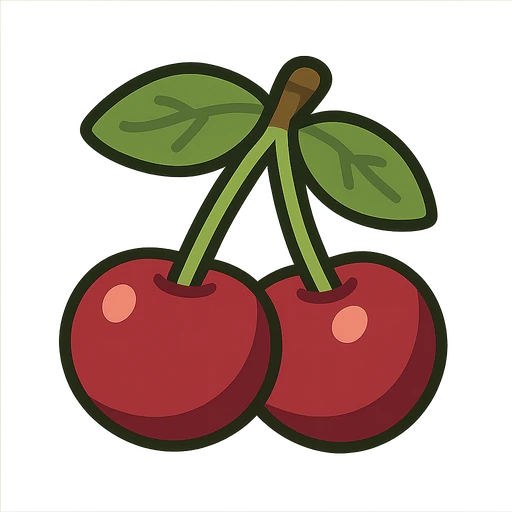
A long-lived orchard tree that ripens firm, high-sugar fruit in early summer, weeks ahead of most other tree fruit.
Prunus avium · also called Mazzard, Wild cherry
Set dormant bare-root trees as soon as soil is workable, 2–4 weeks before last frost.
In mild-winter areas, 6 weeks before the ground freezes.
Shop cherries are picked firm and underripe because ripe fruit bruises and ferments quickly. A home tree lets you pick at full color and full sugar, and one mature tree carries more fruit than a season of buying.
A little history. Native to Europe and western Asia. Fruit forms on short, long-lived spurs that keep bearing for years, which is why heavy cuts into old wood cost several seasons of crop.
In-ground only for standard trees; dwarfing rootstocks can hold a large half-barrel for a few years. In containers: 25-gallon container minimum, dwarfing rootstock only. Space plants 180 inches (455 cm) apart.
Deep soak once a week through the first three years, then during dry spells only. Water when soil 4 inches down feels dry. Aim for about 1 inch per week including rain.
Once in early spring before buds swell; do not feed after midsummer. What to use: balanced 5–5-5 or 1 inch of compost spread out to the drip line.
Prune in dry summer weather after harvest, not wet late winter, to limit canker infection. Remove crossing limbs and open the center so light and air reach the fruiting spurs.
It's ready when fruit reaches full deep color for the variety, comes away easily with the stem, and tastes sweet rather than tart; cherries do not ripen further off the tree. Pull each cherry with the stem attached, lifting up and twisting slightly so the spur stays on the branch. Never strip or yank, as broken spurs mean no fruit at that point next year.
Refrigerate unwashed with stems on in a vented bag; use within 5–7 days. Wash only just before eating.
Plant an early, a midseason, and a late variety to stretch picking from roughly 3 weeks to 6.
Fully winter-hardy once established. Wrap young trunks with a light guard against sunscald and rodent gnawing.
White Clover
A low clover cover under the drip line shades the soil, holds moisture, and crowds out weeds that would otherwise be mowed close to the trunk. Its nitrogen goes mainly to next season as the roots break down, so it is a slow soil builder rather than a quick feed.

Sweet Alyssum
Its tiny open flowers are among the best feeders for hoverflies, whose larvae eat black cherry aphids on shoot tips. Sow a band around the tree ring in spring and let it reseed.

Yarrow
Flat yarrow flower heads give lacewings, ladybugs, and tiny parasitic wasps an easy landing pad and nectar source through summer, which often reduces aphid buildup on nearby young shoots.

Comfrey
Comfrey roots run far below the cherry feeder roots, so the two rarely fight for water. Cut the leaves two or three times a season and drop them as mulch under the canopy.

Chives
Gardeners have long ringed young stone-fruit trees with chives in the belief that the onion smell puts off aphids. The evidence is thin, but chives are harmless neighbours and their spring flowers do feed early bees.

Borage
Sweet cherry sets fruit only if bees move pollen between compatible trees during a short bloom window. Borage nearby keeps bees working the area, though it flowers later than the cherry itself, so treat it as season-long support rather than bloom-time help.
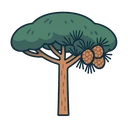
Stone Pine
A mature stone pine casts dense year-round shade and its wide surface roots take the top layer of water and food. A cherry planted inside that reach grows thin, leans toward light, and fruits poorly on the shaded side.
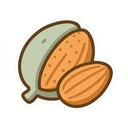
Almond
Almond and sweet cherry are close stone-fruit relatives and share brown rot, bacterial canker, and shot hole. Planted side by side, spores and bacteria move between them freely and one infected tree keeps reinfecting the other. Give them separate corners of the yard.
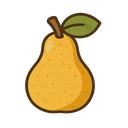
Peach
Peach carries the same brown rot and canker organisms as cherry, and its heavier mummy load in wet springs raises pressure on nearby cherries. Space stone fruits well apart and strip mummies from both every winter.
Black Walnut
Roots and leaf litter of black walnut release compounds that reliably stunt many trees and vegetables. Cherries planted within the walnut root zone commonly grow weakly and die back; keep at least 60 feet between them.
A perennial — it holds its spot for years, so it sits outside the annual rotation.
A permanent planting, so there is no rotation. Choose the site for 20 years of drainage and sun, and keep annual beds outside the drip line. Feeding is moderate; a clover or comfrey ring under the canopy builds soil in place year after year.