Start seeds indoors
Press cuttings or divisions into moist, well-drained mix; keep evenly moist but not wet until new growth shows. This plant is propagated vegetatively, not from seed. Seedlings emerge in 7–14 days in warm soil.
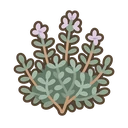
A sterile hybrid combining the sweetness of sweet marjoram with the heat-tolerant vigor of Greek oregano, producing aromatic leaves with mild, complex flavor.
Origanum × majoricum · also called Hardy Marjoram, Greek Oregano hybrid
Windows are counted from the average date of your last spring frost.
Yields more flavorful leaves than common oregano sold in supermarkets, and its compact, semi-woody habit suits both containers and border edges. Harvest repeatedly through the growing season.
A little history. A sterile hybrid of sweet marjoram and Greek oregano, confirmed in botanical literature; it does not set viable seed, so all propagation is vegetative. Native range of parent species spans the Mediterranean basin.
Press cuttings or divisions into moist, well-drained mix; keep evenly moist but not wet until new growth shows. This plant is propagated vegetatively, not from seed. Seedlings emerge in 7–14 days in warm soil.
Thrives in both; needs at least 8 inches of well-drained soil depth. Excellent in terracotta pots where drainage is sharp. In containers: 2-gallon pot minimum; 5-gallon preferred for overwintering indoors. Space plants 12 inches (30 cm) apart.
Water deeply when the top inch of soil is dry; reduce frequency in cool or cloudy weather. Water when leaves begin to look slightly dull or stems feel less turgid — do not wait for wilting. Aim for about 1 inch per week; less in cool weather.
Side-dress (scatter fertilizer along the base and water in) once in spring and once midsummer. What to use: low-nitrogen balanced organic such as 5–5-5; excess nitrogen reduces leaf oil and flavor.
Pinch (remove the growing tip between thumb and forefinger) stem tips back by one-third when plants reach 6 inches to encourage bushy branching. Cut back hard by half after flowering to stimulate a fresh flush of leaves.
It's ready when harvest when stems carry at least 4 pairs of leaves and before flower buds fully open — oil content and flavor peak at early bud stage. Cut stems back by up to one-third with clean scissors or shears, just above a leaf node (the point where leaves attach). Never remove more than one-third of the plant at one cutting.
Use fresh immediately for best flavor. Dry cut stems upside-down in a warm, airy spot for 1–2 weeks; store dried leaves in an airtight jar away from light for up to 1 year.
Not applicable for succession sowing; take stem cuttings in late summer to propagate new plants for indoor overwintering or to replace aging stock every 2–3 years.
In areas with hard winters, mulch the crown heavily after first frost or move containers indoors to a bright, cool window (50–60 °F (10–16 °C)). Cut stems back to 3 inches before bringing indoors.
Tomato
Let a few oregano stems flower and their tiny blooms feed hoverflies and small parasitic wasps that hunt aphids around tomato plants. A low oregano edging also shades the soil at the row's feet.
Bell Pepper
Flowering oregano keeps small predatory insects working near peppers, and its low mounded habit covers bare soil between plants without competing for light.
Eggplant
The same flowering stems that feed hoverflies and tiny wasps work beside eggplant, helping keep its aphid colonies in check while asking little water or food in return.
Basil
Basil and oregano want the same full sun and lean, well-drained ground, so they share a herb corner without one crowding the other — and both feed pollinators when a few stems are left to flower.
Thyme
Thyme hugs the ground below oregano's taller stems, and both are Mediterranean herbs that like the same dry feet — an easy, low-water pairing for a bed edge.
Fennel
Fennel roots release compounds that stunt most garden plants, herbs included — give fennel its own corner well away from the herb bed.
A perennial — it holds its spot for years, so it sits outside the annual rotation.
A perennial herb with no rotation demands — it can hold the same spot for 2-3 years. When you finally lift it, follow with a light feeder or a legume to rebuild the soil; no replant interval is needed.