Start seeds indoors
Press seeds onto the surface — they need light to germinate. Mist gently to keep the surface moist; do not cover with soil or they will fail to sprout. Seedlings emerge in 7–14 days in warm soil.
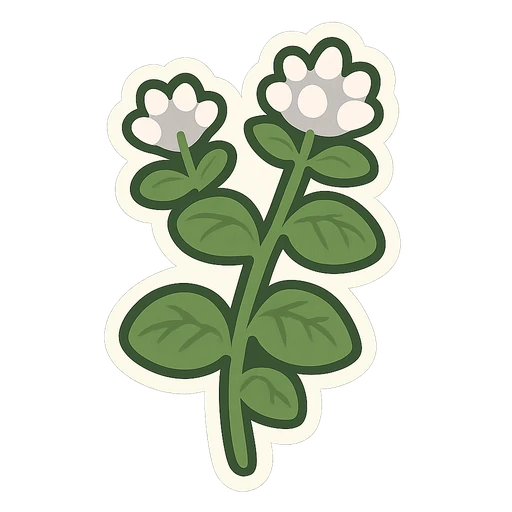
The pungently aromatic oregano of Mediterranean cooking, with far more flavor than common wild oregano — worth growing if you cook with dried herbs at all.
Origanum vulgare subsp. hirtum · also called True Oregano, Rigani
Windows are counted from the average date of your last spring frost.
Dried Greek oregano is markedly more potent than most supermarket product, which is often a blander subspecies. One established plant yields enough to dry for a full year's cooking, and it requires almost no maintenance once settled.
A little history. Native to the rocky hillsides of Greece and Turkey, this subspecies is distinguished by dense white hairs on its leaves and stems — the trait encoded in 'hirtum' (Latin for hairy) — and a higher concentration of aromatic compounds than the common wild form.
Press seeds onto the surface — they need light to germinate. Mist gently to keep the surface moist; do not cover with soil or they will fail to sprout. Seedlings emerge in 7–14 days in warm soil.
Either works well — needs at least 8 inches of soil depth and excellent drainage; raised beds and containers both suit its preference for lean, dry conditions. In containers: 2-gallon pot minimum; terracotta preferred for drainage. Space plants 12 inches (30 cm) apart.
Water deeply once a week; allow soil to dry out between waterings — this herb is drought-tolerant and resents wet roots. Water when the top 2 inches of soil feel dry to the touch. Aim for about 1 inch per week; less once established.
Feed once at planting, then once each spring as new growth emerges; avoid heavy feeding. What to use: light application of balanced compost or 5–5-5 organic; excess nitrogen reduces aromatic intensity.
Pinch (remove the growing tip between thumb and forefinger) when stems reach 6 inches to encourage bushy branching. Cut stems back by one-third after each harvest. Remove flower buds promptly to delay bolt (the shift from leaf growth to flowering) and maintain leaf flavor.
It's ready when harvest just before flower buds open — this is when aromatic intensity peaks. Stems should be 6–8 inches long with full, dense foliage. Cut stems back to just above a leaf node (the point where a leaf meets the stem), removing no more than one-third of the plant at a time. Use clean scissors or snips. Harvest in the morning after dew dries.
Tie cut stems in small bundles and hang upside down in a warm, dry, well-ventilated spot for 1–2 weeks. Strip dried leaves and store in an airtight jar away from light; retains potency for up to 1 year.
Not needed — one established perennial plant provides continuous harvests for 3–5 years. Replace plants when stems become woody and production declines.
Cut stems back to 2–3 inches after the first hard frost. Apply a 2-inch layer of straw mulch over the crown in cold climates. Remove mulch in early spring as new growth emerges from the base.
Tomato
The heavy scent of oregano foliage can make it harder for pests that hunt by smell to zero in on a tomato plant, and the low mound shades the soil at its feet. Treat it as a modest edge, not pest control on its own.

Bell Pepper
Planted at the sunny edge of a pepper bed, the spreading mat of oregano shades bare soil, slows evaporation, and crowds out weeds. Keep it about 12 inches out from the pepper stem so the two are not fighting for root room.

Eggplant
Let one oregano stem flower instead of cutting it and the tiny blooms feed hoverflies, lacewings, and small parasitic wasps that hunt aphids and flea beetle larvae near eggplant. Harvest the rest of the plant before bud break to keep leaf flavor.

Basil
Basil and oregano both throw nectar-rich flower spikes when allowed to bloom, drawing bees into the bed for nearby fruiting crops. Water them separately, though: basil wants steady moisture and oregano wants to dry out between drinks.
Thyme
Gardeners have long grouped these two in the same lean, gritty corner. No effect on each other has been demonstrated, but the practical gain is real: both want full sun, sharp drainage, and the same once-a-week deep watering.
Fennel
Fennel roots release compounds that stunt most garden vegetables and herbs growing close by, oregano included. Give it its own corner well away from the herb bed, where its flowers still earn their keep feeding hoverflies and tiny parasitic wasps.


A perennial — it holds its spot for years, so it sits outside the annual rotation.
A perennial that holds its ground for 3-5 years, so no rotation gap applies and nothing follows it in season. It is a moderate feeder that leaves the soil neither depleted nor enriched; when you finally pull a woody plant, loosen the spot, work in compost, and any family may follow.