Crop guide · The daisy family

How to grow Tansy

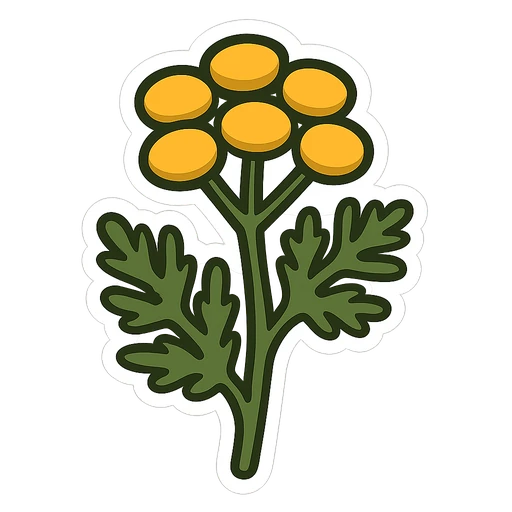
A tough, spreading perennial with ferny leaves and flat clusters of yellow button flowers that bloom for weeks and feed hoverflies, ladybugs, and tiny parasitic wasps.

Tanacetum vulgare · also called Common tansy, Golden buttons

Full sun Beginner Frost-hardy
Sun
Full sun
Takes afternoon shade where days top 90 °F (32 °C), but stems grow taller and looser.
Frost
Hardy
Top growth blackens after hard frost
Spacing
18 in
45 cm between plants
To harvest
120–365 days
counted from sowing
Timing

When to plant Tansy

Spring
Sow or transplant

Sow or divide 2–4 weeks before last frost, as soon as soil can be worked.

Fall
Transplant

Set out divisions 6 weeks before first hard frost.

Too late?Sow or divide by late summer so roots settle before hard frost; after that, wait for spring.
Background

Why grow Tansy

Grown at the edge of fruit plantings, its long, flat-topped bloom gives predatory and parasitic insects a steady nectar source through midsummer. It asks for almost nothing: lean soil, sun, and a boundary to keep its creeping roots in bounds.

A little history. A daisy-family perennial from Europe and Asia, widely naturalized in North America; the yellow buttons are clusters of disc florets without the ray petals most daisies carry.

The season, step by step

From planting to harvest

Sow outside

2–4 weeks before last frost

Aim for 18 inches (45 cm) between plants once thinned. Press seed onto the surface and leave it uncovered — light helps it sprout. Keep the top quarter-inch damp for 3 weeks. Seedlings emerge in 10–21 days.

Best soil temp 60–70 °F (16–21 °C) Minimum 50 °F (10 °C) Emerges in 10–21 days

Transplant outside

Sow or divide 2-4 weeks before last frost, as soon as soil can be worked

Either — a container or an edged strip is safer, since the roots creep sideways each year. In containers: 5-gallon pot, at least 12 in deep.

Water and feed

All season

Water weekly the first season; after that only in long dry spells. Water when leaves look dull and stems droop at midday. Aim for about 1 inch per week including rain, first year only.

Skip feeding in average soil; top-dress once in early spring on poor sand. What to use: a half-inch of compost. Extra nitrogen makes stems flop.

Prune and maintain

As it grows

Pinch tips at 12 in for a bushier clump. Cut off spent flower clusters before seed sets to limit self-sowing, then shear stems to 4 in after frost.

Harvest and store

120–365 days from sowing

It's ready when cut flower stems when the buttons are fully open and deep yellow, before the outer clusters brown. Leaves can be cut any time in summer. Cut stems 12–18 in long with clean shears just above a leaf joint, taking no more than a third of the clump at once. Wear gloves — the sap irritates some skin.

Hang cut stems upside down in bundles in a dark, airy room until crisp, then box them away from light. Label clearly as not for food use.

Companions

Good neighbours, bad neighbours

Plant it with

Black Currant

Tansy's flat flower heads bloom right through the weeks currants carry aphids and sawfly larvae, and they often draw in hoverflies and tiny parasitic wasps whose young feed on those pests. Plant a clump at the end of the row, not among the canes, so roots do not creep into the bush.

Raspberry

A long-blooming tansy clump beside a raspberry row can help hold aphid numbers down by feeding ladybugs, lacewings, and parasitic wasps — useful because aphids spread virus in canes. Keep it outside the picking rows so the spreading roots stay clear of the crowns.

Rose

Roses lose new shoots to aphids in late spring; nectar from nearby tansy often builds up hoverfly and ladybug numbers before the worst of it. Set the clump 3 ft off so it does not shade the rose's base.

Potato

Trials with strongly scented borders have sometimes shown fewer Colorado potato beetles finding the rows, and tansy is one of the plants tested. Treat it as a modest edge planting under low pest pressure, not a substitute for hand-picking beetles and egg masses.

Apple

Gardeners have long ringed apple trunks with tansy against ants and codling moth. No mechanism has been demonstrated, so plant it for the beneficial insects its flowers feed and keep your trapping and sanitation routine in place.

Keep it away from

Annual Vegetable Beds

Tansy runs sideways on creeping roots and self-sows freely, so within a couple of seasons it comes up between rows and every spade of digging chops the roots into new plants. Keep it in its own edged strip or a pot beside the beds instead.

Strawberry

Strawberry rows are low, shallow-rooted, and picked over constantly. Tansy's runners thread straight through the matted crowns, and pulling them out lifts the berry plants with them.

Lettuce

A mature tansy clump reaches 3-4 ft and casts real shade while its dense roots take the surface moisture lettuce depends on. Give leafy salad crops their own open ground well away from the clump.

See Tansy in the full companion chart →

Crop rotation

After this crop

Rotation

A perennial — it holds its spot for years, so it sits outside the annual rotation.

A long-lived perennial that sits outside the annual rotation — no family gap to respect and nothing given back to the soil. Give it a permanent edged strip of its own, and lift and divide every 3-4 years to keep the creeping roots inside their boundary.

Trouble to watch for

Pests and diseases

Pests

Aphids

Sign
Clusters of small green or black insects on new shoots and flower stems, with sticky residue below.
Fix
Leave light infestations as food for ladybugs; hose off heavy ones with a hard spray of water.

Slugs and snails

Sign
Ragged holes chewed in tender spring shoots, with slime trails on the soil at dawn.
Fix
Pull mulch back from the crown and hand-pick at dusk for a week.

Spider mites

Sign
Fine pale stippling on leaves and faint webbing on stem tips during hot, dry weather.
Fix
Spray the undersides of leaves with water every few days until the stippling stops spreading.

Diseases

Powdery mildew

Sign
Dusty white patches on upper leaves late in the season, usually on crowded or shaded stems.
Prevent
Space clumps 18 in apart, thin weak stems in early summer, and water the soil rather than the leaves.

Crown and root rot

Sign
Stems collapse at the base and the crown feels soft and brown when you scrape it.
Prevent
Plant in well-drained ground, keep mulch off the crown, and avoid winter-wet low spots.
Good to know:Not a food or tea plant. Leaves, stems, and flowers are toxic when eaten, and the concentrated oil is dangerous. Grow it strictly as a companion and handle with gloves.
FAQ

Common questions about Tansy

When should I plant Tansy?
Spring: sow or divide 2–4 weeks before last frost, as soon as soil can be worked. Fall: set out divisions 6 weeks before first hard frost.
How long until Tansy is ready to harvest?
120–365 days, counted from sowing. It's ready when cut flower stems when the buttons are fully open and deep yellow, before the outer clusters brown. Leaves can be cut any time in summer.
Can I grow Tansy in a container?
Either — a container or an edged strip is safer, since the roots creep sideways each year. In containers: 5-gallon pot, at least 12 in deep.
How often should I water Tansy?
Water weekly the first season; after that only in long dry spells. Water when leaves look dull and stems droop at midday.
Is any part of Tansy unsafe to eat?
Not a food or tea plant. Leaves, stems, and flowers are toxic when eaten, and the concentrated oil is dangerous. Grow it strictly as a companion and handle with gloves.
How should I store Tansy after harvest?
Hang cut stems upside down in bundles in a dark, airy room until crisp, then box them away from light. Label clearly as not for food use.

Verdie turns this guide into your plan

Set your garden's location and every window above becomes a real date — then Verdie reminds you when it's time to sow, transplant, water, and pick.

Download on the App Store
Free to download · iPhone & iPad