Sow outside
Aim for 18 inches (45 cm) between plants once thinned. Press seed onto the surface and leave it uncovered — light helps it sprout. Keep the top quarter-inch damp for 3 weeks. Seedlings emerge in 10–21 days.
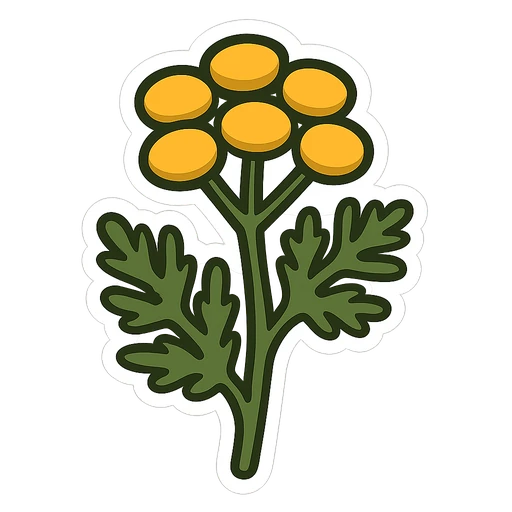
A tough, spreading perennial with ferny leaves and flat clusters of yellow button flowers that bloom for weeks and feed hoverflies, ladybugs, and tiny parasitic wasps.
Tanacetum vulgare · also called Common tansy, Golden buttons
Sow or divide 2–4 weeks before last frost, as soon as soil can be worked.
Set out divisions 6 weeks before first hard frost.
Grown at the edge of fruit plantings, its long, flat-topped bloom gives predatory and parasitic insects a steady nectar source through midsummer. It asks for almost nothing: lean soil, sun, and a boundary to keep its creeping roots in bounds.
A little history. A daisy-family perennial from Europe and Asia, widely naturalized in North America; the yellow buttons are clusters of disc florets without the ray petals most daisies carry.
Aim for 18 inches (45 cm) between plants once thinned. Press seed onto the surface and leave it uncovered — light helps it sprout. Keep the top quarter-inch damp for 3 weeks. Seedlings emerge in 10–21 days.
Either — a container or an edged strip is safer, since the roots creep sideways each year. In containers: 5-gallon pot, at least 12 in deep.
Water weekly the first season; after that only in long dry spells. Water when leaves look dull and stems droop at midday. Aim for about 1 inch per week including rain, first year only.
Skip feeding in average soil; top-dress once in early spring on poor sand. What to use: a half-inch of compost. Extra nitrogen makes stems flop.
Pinch tips at 12 in for a bushier clump. Cut off spent flower clusters before seed sets to limit self-sowing, then shear stems to 4 in after frost.
It's ready when cut flower stems when the buttons are fully open and deep yellow, before the outer clusters brown. Leaves can be cut any time in summer. Cut stems 12–18 in long with clean shears just above a leaf joint, taking no more than a third of the clump at once. Wear gloves — the sap irritates some skin.
Hang cut stems upside down in bundles in a dark, airy room until crisp, then box them away from light. Label clearly as not for food use.
Dies back to the crown. Leave 4 in stubs to mark its place and mulch lightly the first winter only; established clumps need no protection.
Black Currant
Tansy's flat flower heads bloom right through the weeks currants carry aphids and sawfly larvae, and they often draw in hoverflies and tiny parasitic wasps whose young feed on those pests. Plant a clump at the end of the row, not among the canes, so roots do not creep into the bush.
Raspberry
A long-blooming tansy clump beside a raspberry row can help hold aphid numbers down by feeding ladybugs, lacewings, and parasitic wasps — useful because aphids spread virus in canes. Keep it outside the picking rows so the spreading roots stay clear of the crowns.
Rose
Roses lose new shoots to aphids in late spring; nectar from nearby tansy often builds up hoverfly and ladybug numbers before the worst of it. Set the clump 3 ft off so it does not shade the rose's base.
Potato
Trials with strongly scented borders have sometimes shown fewer Colorado potato beetles finding the rows, and tansy is one of the plants tested. Treat it as a modest edge planting under low pest pressure, not a substitute for hand-picking beetles and egg masses.
Apple
Gardeners have long ringed apple trunks with tansy against ants and codling moth. No mechanism has been demonstrated, so plant it for the beneficial insects its flowers feed and keep your trapping and sanitation routine in place.
Tansy runs sideways on creeping roots and self-sows freely, so within a couple of seasons it comes up between rows and every spade of digging chops the roots into new plants. Keep it in its own edged strip or a pot beside the beds instead.
Strawberry
Strawberry rows are low, shallow-rooted, and picked over constantly. Tansy's runners thread straight through the matted crowns, and pulling them out lifts the berry plants with them.
Lettuce
A mature tansy clump reaches 3-4 ft and casts real shade while its dense roots take the surface moisture lettuce depends on. Give leafy salad crops their own open ground well away from the clump.
A perennial — it holds its spot for years, so it sits outside the annual rotation.
A long-lived perennial that sits outside the annual rotation — no family gap to respect and nothing given back to the soil. Give it a permanent edged strip of its own, and lift and divide every 3-4 years to keep the creeping roots inside their boundary.