Sow outside
Sow seeds 1 inch (25 mm) deep, and aim for 12 inches (30 cm) between plants once thinned. Press seeds 1 inch deep and firm soil over them; keep the seedbed moist but not waterlogged until shoots emerge. Seedlings emerge in 5–10 days.
A warm-season grass that converts field-row scale into backyard scale when planted in compact blocks for reliable pollination.
Zea mays · also called corn on the cob, sugar corn
Windows are counted from the average date of your last spring frost.
Home-grown sweet corn eaten within hours of picking retains sugars that convert to starch rapidly after harvest — a quality gap no supermarket can close. Modern varieties hold sweetness longer, but freshness still wins.
A little history. Sweet corn is a mutation of field corn in which sugars accumulate in the endosperm (the starchy interior of the kernel) rather than converting fully to starch. It is an annual grass, wind-pollinated via tassels (male flowers at the top) shedding pollen onto silks (female strands) below.
Sow seeds 1 inch (25 mm) deep, and aim for 12 inches (30 cm) between plants once thinned. Press seeds 1 inch deep and firm soil over them; keep the seedbed moist but not waterlogged until shoots emerge. Seedlings emerge in 5–10 days.
Water deeply twice a week; increase to every other day during tasseling and ear fill. Water when the top 2 inches of soil feel dry, or leaves begin to roll inward in the afternoon. Aim for 1–1.5 inches per week including rain.
Side-dress (scatter fertilizer along the row and water in) when plants reach knee height, then again at tasseling. What to use: high-nitrogen fertilizer such as blood meal or 10–3-3 organic granules.
Remove suckers (side shoots at the base) only if they crowd the block — research shows sucker removal rarely improves yield and may reduce it.
It's ready when silks have turned brown and dry; the ear feels full to the tip when squeezed through the husk; a punctured kernel releases milky juice — clear juice means too early, pasty means too late. Grip the ear firmly, bend it sharply downward and twist in one motion to snap it from the stalk; harvest in the morning when sugars are highest and cool immediately.
Eat within hours for peak sweetness; if needed, refrigerate unhusked ears at 32–35 °F (0–2 °C) for up to 3 days; blanch and freeze for longer storage.
Sow a new block every 2–3 weeks rather than all at once; stagger varieties with different maturity dates to extend harvest across 6–8 weeks.
Pole Bean
In the Three Sisters planting, corn stalks give pole beans a living pole to climb, and the beans in turn steady the stalks against wind. Bean roots bank nitrogen that is mostly released for the following season as they break down, so sow beans once corn is knee high.
Pumpkin
Broad pumpkin leaves run along the ground between corn stalks, shading the soil, holding moisture, and crowding out weeds that would otherwise compete with a heavy-feeding crop. Give the vines a clear edge to run out of the block.
Sunflower
Sunflower heads draw in hoverflies, lacewings, and tiny parasitic wasps that hunt aphids and young earworms. Plant them on the north side so they do not shade the corn block or steal water from it.
Fennel
Fennel roots release compounds that stunt most garden vegetables, and corn seedlings sharing that ground grow slowly and unevenly. Give fennel its own corner well away from the block, where its flowers can still feed hoverflies and tiny parasitic wasps.
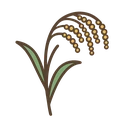
Teff
Sweet corn is a heavy feeder with a deeper, faster root system, and it will take water, nitrogen, and light from fine-stemmed teff. Its stalks also shelter the grass stem borers that tunnel into teff tillers, so give each crop its own bed.

Proso Millet
Both are grass-family crops that host the same smuts, leaf blights, and armyworms, so growing them side by side stacks the risk and leaves more spores and caterpillars in the bed. Keep grass-family crops out of the same ground for 2 years.
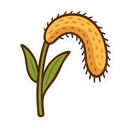
Foxtail Millet
Both are grasses and share smut, leaf blights, armyworms, and hungry flocks of birds, so growing them side by side stacks the same problems in one bed. Keep them apart and keep grasses out of this ground for two years.

Tomato
The tomato fruitworm and the corn earworm are the same caterpillar, so pairing the crops keeps a steady supply of hosts through the season. Tall corn also shades tomatoes and competes hard for nitrogen and water.

Eggplant
Corn grows tall fast and is a heavy nitrogen user, so it often shades eggplant and drains the same soil. Eggplant needs full sun all day to set fruit, and shaded plants flower less and size up slowly.

Wheat
Corn stubble is the main overwintering site for the fungus that causes head blight (scab) in wheat, which bleaches spikelets and taints grain. Keep wheat out of beds that grew corn, and do not plant the two side by side.

Emmer
Corn and emmer host the same head blight fungus, and corn stubble left in or near the bed carries spores that infect wheat heads at flowering. Keep them in separate beds and separate rotation years.
Spelt
Corn stubble carries the same fungus that causes head blight in spelt, bleaching spikelets and spoiling grain. Do not plant spelt into last year's corn ground or beside a standing corn patch; leave at least two seasons between them.
Give grasses and grains 2 years away from this spot before any of its relatives return.
The pea and bean family, the squash family or the tomato family thrive in this ground next season.
Corn leaves behind coarse stalk residue and soil drained of nitrogen. Keep grasses and grains out of this bed for 2 years. Follow with legumes such as beans or peas to start rebuilding nitrogen, then cucurbits or nightshades once fertility is back up.