Crop guide · The daisy and sunflower family

How to grow Sunflower Choke

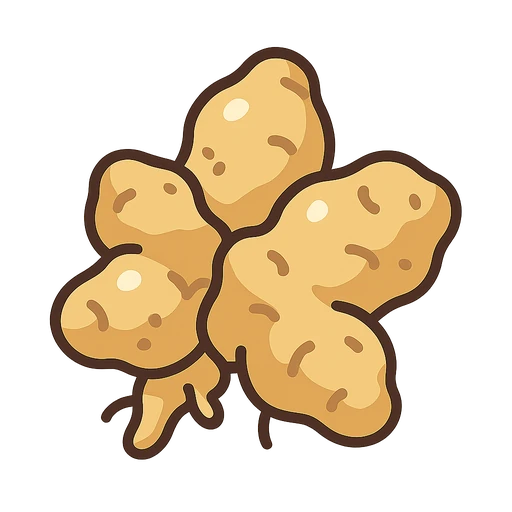
A perennial North American native that produces edible, knobby tubers with a crisp, nutty flavor similar to Jerusalem artichoke but with a somewhat milder taste.

Helianthus strumosus · also called pale-leaf woodland sunflower, wild sunflower choke

Full sun Beginner Frost-hardy
Sun
Full sun
Tolerates partial afternoon shade above 90 °F (32 °C)
Frost
Hardy
Tops are killed by hard frost
Spacing
18 in
45 cm between plants
Sow depth
4 in
102 mm
To harvest
120–150 days
counted from sowing
Soil pH
6.0–7.5
slightly acidic to neutral
Timing

When to plant Sunflower Choke

Windows are counted from the average date of your last spring frost.

Fall planting:plant tubers 4–6 weeks before first hard frost for spring emergence.
Too late?Skip spring planting if soil stays above 75 °F (24 °C) before shoots emerge — wait for a fall planting window instead.
Background

Why grow Sunflower Choke

Helianthus strumosus is a low-input perennial that returns reliably each year from overwintered tubers, requiring minimal fertilizer once established. Its tubers store well in the ground and can be harvested across a long autumn-to-winter window.

A little history. Native to eastern North America, H. strumosus is closely related to Jerusalem artichoke (H. tuberosus) but typically produces smoother, less knobby tubers and has paler leaf undersides — a distinction noted in Gray's Manual of Botany.

The season, step by step

From planting to harvest

Sow outside

2–4 weeks before last frost

Sow seeds 4 inches (102 mm) deep, and aim for 18 inches (45 cm) between plants once thinned. Plant tuber pieces 3–4 inches deep with at least one visible bud eye; keep soil evenly moist until shoots break the surface. Seedlings emerge in 14–28 days.

Best soil temp 55–65 °F (13–18 °C) Minimum 45 °F (7 °C) Emerges in 14–28 days

Water and feed

All season

Deep soak once or twice a week during active growth; reduce once tops yellow in fall. Water when the top 2 inches of soil feel dry to the touch. Aim for about 1 inch per week including rain.

Side-dress (scatter fertilizer along the row and water in) once in early summer when plants reach 12 inches tall. What to use: balanced compost or a low-nitrogen 3–5-5 organic blend; excess nitrogen favors tops over tubers.

Prune and maintain

As it grows

Pinch out the central growing tip when plants reach 24–30 inches to encourage branching and potentially increase tuber set; remove spent flower stalks after bloom to redirect energy belowground.

Harvest and store

120–150 days from sowing

It's ready when dig after the first hard frost kills the tops, when foliage has fully yellowed and died back — tubers are at peak starch-to-sugar conversion at this point. Loosen soil with a fork 8–10 inches from the stem base; lift the root mass and pick off tubers by hand. Leave several small tubers in place to regrow next season.

Store unwashed tubers in a perforated bag with slightly damp sand or peat in a refrigerator or cold cellar at 32–40 °F (0–4 °C) for up to 3 months. Alternatively, leave in-ground and dig as needed.

Companions

Good neighbours, bad neighbours

Plant it with

Pole Bean

The stout stems make a living pole for beans once the sunflower choke is knee-high, saving you a trellis — set the bean seed about 3 inches out from the stalk. The nitrogen the beans bank in their roots is mostly released for next season, as those roots break down.

Sweet Corn

Gardeners have long lined these two tall crops along the same bed edge so their shade falls outside the growing space. No mechanism has been demonstrated, and both are hungry for water and light, so give each its own 18 inches of room.

Nasturtium

Aphids often settle on nasturtium ahead of nearby crops, pulling colonies off young sunflower choke shoots. It only pays off if you pull and bin the infested nasturtium stems rather than letting the colony build and spread.

Borage

Borage's long run of blue flowers brings in hoverflies, lacewings and tiny parasitic wasps, whose larvae can keep aphid clusters on stem tips from building. Plant it at the sunny edge of the patch so the flowers stay above the foliage.

Keep it away from

Jerusalem Artichoke

Close relatives that host the same white mold and powdery mildew, so side-by-side planting stacks the risk in one bed. Their tubers also intermingle underground and are hard to tell apart at digging — keep the two patches in separate beds.

Potato

Both host white mold, and both feed the same soil-dwelling wireworms that tunnel tubers, so the pressure often builds where they share ground. Digging potatoes also chops the sunflower choke's shallow rhizomes and scatters unwanted regrowth.

See Sunflower Choke in the full companion chart →

Crop rotation

After this crop

Rotation

A perennial — it holds its spot for years, so it sits outside the annual rotation.

A perennial patch, so it stays put rather than moving through rotation and no family gap applies. A moderate feeder that leaves loose, deeply forked soil behind. When you retire a section, sow a legume cover crop such as crimson clover, and keep other daisy-family crops out for two years.

Trouble to watch for

Pests and diseases

Pests

Slugs

Sign
Ragged holes in young leaves near soil level; silvery slime trails on soil or foliage in the morning.
Fix
Set out shallow traps baited with beer at soil level; remove by hand at dusk.

Sunflower beetle

Sign
Irregular pale patches or skeletonized areas on upper leaf surfaces; small tan-and-black beetles visible on leaves.
Fix
Knock beetles into a bucket of soapy water in the morning when they are sluggish.

Wireworms

Sign
Tubers show narrow, bored tunnels when dug; plants may wilt without obvious above-ground cause.
Fix
Harvest promptly once tops die back; avoid planting in beds that held grass sod the previous year.

Aphids

Sign
Clusters of small soft-bodied insects on stem tips and leaf undersides; sticky residue on leaves below colonies.
Fix
Knock off with a firm water spray; introduce or encourage ladybird beetles by avoiding broad-spectrum sprays.

Diseases

Powdery mildew

Sign
White to pale grey powdery coating on upper leaf surfaces, typically appearing in late summer as humidity rises.
Prevent
Space plants at least 18 inches apart for airflow; avoid overhead watering in the evening.

Sclerotinia stem rot (white mold)

Sign
Water-soaked lesions at the stem base that turn white and cottony; stems collapse; hard black bodies visible inside rotted tissue.
Prevent
Rotate planting areas every 3-4 years; avoid overwatering and improve drainage before planting.

Downy mildew

Sign
Yellow angular patches on upper leaf surface with a grey-purple fuzzy growth on the underside directly beneath.
Prevent
Improve air circulation by thinning crowded stems; water at the base rather than overhead.
Good to know:Leaves, stems, and flowers are not considered edible. Like Jerusalem artichoke, tubers contain inulin (a fermentable fiber) that can cause significant digestive discomfort if eaten in large quantities, especially raw.
FAQ

Common questions about Sunflower Choke

When should I plant Sunflower Choke?
Spring: plant tubers 2–4 weeks before last frost, once soil is workable. Fall: plant tubers 4–6 weeks before first hard frost for spring emergence.
How long until Sunflower Choke is ready to harvest?
120–150 days, counted from sowing. It's ready when dig after the first hard frost kills the tops, when foliage has fully yellowed and died back — tubers are at peak starch-to-sugar conversion at this point.
Can I grow Sunflower Choke in a container?
Beds strongly preferred — spreading rhizomes (underground stems that spread laterally) need containment; containers limit yield significantly. In containers: 15-gallon pot minimum, at least 14 inches deep.
How often should I water Sunflower Choke?
Deep soak once or twice a week during active growth; reduce once tops yellow in fall. Water when the top 2 inches of soil feel dry to the touch.
Is any part of Sunflower Choke unsafe to eat?
Leaves, stems, and flowers are not considered edible. Like Jerusalem artichoke, tubers contain inulin (a fermentable fiber) that can cause significant digestive discomfort if eaten in large quantities, especially raw.
How should I store Sunflower Choke after harvest?
Store unwashed tubers in a perforated bag with slightly damp sand or peat in a refrigerator or cold cellar at 32–40 °F (0–4 °C) for up to 3 months. Alternatively, leave in-ground and dig as needed.

Verdie turns this guide into your plan

Set your garden's location and every window above becomes a real date — then Verdie reminds you when it's time to sow, transplant, water, and pick.

Download on the App Store
Free to download · iPhone & iPad