Crop guide · The nettle family

How to grow stinging nettle

A perennial herb grown for its iron-rich young shoots, which lose their sting entirely when blanched, steamed, or dried.

Urtica dioica · also called common nettle, burn nettle

Partial sun Beginner Frost-hardy
Sun
Partial sun
Afternoon shade once temps stay above 85 °F (29 °C) prevents premature bolting (shift from leaf growth to flowering) and keeps leaves tender
Frost
Hardy
Established crowns survive hard frost
Spacing
18 in
45 cm between plants
Sow depth
0.1 in
3 mm
To harvest
60–90 days
counted from sowing
Soil pH
5.5–7.0
on the acidic side
Timing

When to plant stinging nettle

Windows are counted from the average date of your last spring frost.

Fall planting:sow in early fall so seeds overwinter and germinate naturally the following spring.
Too late?Stop harvesting shoots once stems exceed 12 inches and leaves toughen; wait for the next flush of regrowth after cutting back.
Background

Why grow stinging nettle

Young spring shoots rival spinach in iron and protein content and are harvested weeks before most garden greens are ready. A dedicated patch also supplies a potent liquid fertilizer when leaves are steeped in water.

A little history. Native across temperate Eurasia and naturalized widely; hollow silica-tipped hairs on leaves and stems inject a mix of irritant compounds on contact, a defense mechanism absent in the closely related but sting-free Urtica dioica subsp. galeopsifolia.

The season, step by step

From planting to harvest

Sow outside

2–4 weeks before last frost

Sow seeds 0.1 inch (3 mm) deep, and aim for 18 inches (45 cm) between plants once thinned. Press seeds onto the surface — they need light to germinate; mist daily to keep the top quarter-inch moist without washing seeds away. Seedlings emerge in 10–21 days.

Best soil temp 59–68 °F (15–20 °C) Minimum 41 °F (5 °C) Emerges in 10–21 days

Transplant outside

Direct sow or transplant 2-4 weeks before last frost; seeds need cold exposure to break dormancy

Bed strongly preferred — roots spread aggressively; use a buried root barrier or a large container to limit spread. In containers: 15-gallon pot, at least 12 inches deep.

Water and feed

All season

Water deeply once or twice a week; nettles prefer consistently moist soil but tolerate brief dry spells. Water when the top inch of soil feels dry or leaves begin to droop slightly. Aim for about 1 inch per week including rain.

Top-dress (spread compost over the root zone and water in) once each spring; side-dress (scatter fertilizer along the row and water in) again after the first cut. What to use: aged compost or a balanced organic fertilizer; nettles are heavy nitrogen users.

Prune and maintain

As it grows

Cut the entire plant back to 3–4 inches above ground after each harvest flush to encourage a fresh set of tender young shoots; remove flowering stems promptly to prevent unwanted self-seeding.

Harvest and store

60–90 days from sowing

It's ready when harvest when shoots are 4–8 inches tall and leaves are still small and bright green; tips should snap cleanly rather than bend. Wear thick gloves. Pinch or snip the top 2–3 pairs of leaves from each shoot. Take no more than one-third of the plant at a time to allow rapid regrowth.

Use fresh within 2 days; blanch briefly in boiling water to neutralize sting, then freeze in portions. Dried leaves keep 6 months in an airtight container away from light.
Companions

Good neighbours, bad neighbours

Plant it with

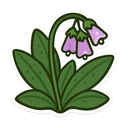
Comfrey

Comfrey's deep taproot draws water and minerals from below the nettle's shallow spreading roots, so the two share a moist bed without fighting over the same layer of soil. Both also make excellent steeped liquid feed from the same corner of the garden.

Yarrow

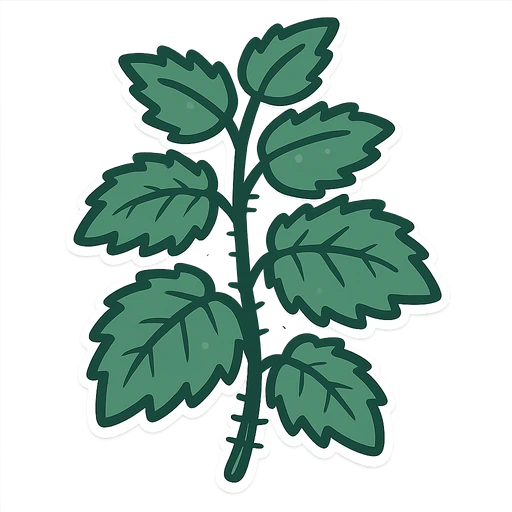
Yarrow's flat flower clusters are easy landing pads for hoverflies, lacewings, and tiny parasitic wasps, and those hunters move straight onto the aphid colonies that build up on young nettle shoots in spring.

Spearmint

Both want the same moist, part-shaded ground and both run hard underground, so pairing them keeps two aggressive spreaders in one place instead of two. Contain the pair with a buried barrier at least 12 inches deep, or grow each in its own large pot.

Borage

Borage flowers over a long season and often draws in hoverflies and other predators whose larvae clean aphids off nearby nettle tips. It also self-seeds happily in the same rich, moist soil nettles favour.

Keep it away from

Fennel

Fennel roots release compounds that stunt most garden plants growing close by, including a young nettle patch. Give it its own corner well away from the bed, where its flowers still earn their keep by feeding hoverflies and tiny parasitic wasps.

See stinging nettle in the full companion chart →

Crop rotation

After this crop

Rotation

A perennial — it holds its spot for years, so it sits outside the annual rotation.

As a perennial, nettle holds its ground for years rather than taking a rotation slot, so there is no family gap to respect. It is a moderate feeder that leaves soil loose and rich in leaf litter; if you clear a patch, dig out every root fragment and follow with peas or beans.

Trouble to watch for

Pests and diseases

Pests

Aphids

Sign
Clusters of small soft-bodied insects on shoot tips and undersides of young leaves; sticky residue on foliage.
Fix
Knock off with a firm water spray; nettles recover quickly and light aphid pressure rarely warrants further action.

Caterpillars (tortoiseshell and red admiral butterfly larvae)

Sign
Leaves webbed together with silk and eaten from inside the tent; black spiny caterpillars visible on inspection.
Fix
Hand-pick caterpillar clusters; consider leaving some undisturbed — nettles are a key larval host plant for several native butterflies.

Diseases

Downy mildew

Sign
Yellow patches on upper leaf surface with a pale grey-purple fuzzy coating on the underside; most common in cool, wet springs.
Prevent
Space plants at least 18 inches apart for airflow; water at the base rather than overhead; cut back and remove affected growth promptly.

Root rot

Sign
Wilting despite moist soil; stems collapse at the base; roots appear brown and soft rather than white and firm.
Prevent
Plant in well-drained soil or a container with drainage holes; avoid waterlogging, especially in heavy clay.
Good to know:Raw leaves and stems cause a painful sting on skin contact; always cook, blanch, or thoroughly dry before eating. Mature leaves after flowering may irritate the kidneys — harvest only young spring growth.
FAQ

Common questions about stinging nettle

When should I plant stinging nettle?
Spring: direct sow or transplant 2–4 weeks before last frost; seeds need cold exposure to break dormancy. Fall: sow in early fall so seeds overwinter and germinate naturally the following spring.
How long until stinging nettle is ready to harvest?
60–90 days, counted from sowing. It's ready when harvest when shoots are 4–8 inches tall and leaves are still small and bright green; tips should snap cleanly rather than bend.
Can I grow stinging nettle in a container?
Bed strongly preferred — roots spread aggressively; use a buried root barrier or a large container to limit spread. In containers: 15-gallon pot, at least 12 inches deep.
How often should I water stinging nettle?
Water deeply once or twice a week; nettles prefer consistently moist soil but tolerate brief dry spells. Water when the top inch of soil feels dry or leaves begin to droop slightly.
Is any part of stinging nettle unsafe to eat?
Raw leaves and stems cause a painful sting on skin contact; always cook, blanch, or thoroughly dry before eating. Mature leaves after flowering may irritate the kidneys — harvest only young spring growth.
How should I store stinging nettle after harvest?
Use fresh within 2 days; blanch briefly in boiling water to neutralize sting, then freeze in portions. Dried leaves keep 6 months in an airtight container away from light.

Verdie turns this guide into your plan

Set your garden's location and every window above becomes a real date — then Verdie reminds you when it's time to sow, transplant, water, and pick.

Download on the App Store
Free to download · iPhone & iPad