Crop guide · The cabbage family

How to grow Sea Kale

A long-lived perennial brassica grown for its blanched shoots, which taste like a cross between asparagus and hazelnut.

Crambe maritima · also called sea cabbage, crambe

Full sun Intermediate Frost-hardy
Sun
Full sun
Afternoon shade once temperatures regularly exceed 85 °F (29 °C)
Frost
Hardy
Established crowns survive hard frost and die back naturally
Spacing
24 in
60 cm between plants
Sow depth
1 in
25 mm
To harvest
365–730 days
counted from transplant
Soil pH
6.0–7.5
slightly acidic to neutral
Timing

When to plant Sea Kale

Windows are counted from the average date of your last spring frost.

Fall planting:sow in late summer to early fall for overwintered seedlings; 8–10 weeks before first frost.
Too late?Do not transplant after midsummer — crowns need a full growing season to establish before winter.
Background

Why grow Sea Kale

Once established, a single crown produces edible shoots for 10 or more years with minimal inputs. The blanched (light-excluded) stems are a genuinely unusual spring vegetable rarely found in markets.

A little history. Native to shingle beaches and sea cliffs of coastal Europe; its thick, waxy leaves reduce water loss in exposed, salt-laden conditions. Documented in cultivation in Britain since at least the late 18th century.

The season, step by step

From planting to harvest

Start seeds indoors

8–10 weeks before last frost

Sow 1 inch deep; keep soil evenly moist but not waterlogged. Seeds have a corky coat — soaking 24 hours before sowing speeds emergence. Seedlings emerge in 10–21 days in warm soil.

Best soil temp 55–65 °F (13–18 °C) Minimum 50 °F (10 °C) Emerges in 10–21 days

Sow outside

2–4 weeks before last frost

Sow seeds 1 inch (25 mm) deep.

Transplant outside

After last frost

Beds strongly preferred — deep, sandy, well-drained soil; containers require at least 18 inches depth and dry out too fast. In containers: 15-gallon tub, minimum 18 inches deep. Space plants 24 inches (60 cm) apart.

Water and feed

All season

Water deeply once a week during the first growing season; established crowns need water only during dry spells. Water when the top 2 inches of soil feel dry. Aim for about 1 inch per week in the establishment year.

Side-dress (scatter fertilizer along the row and water in) once in early spring and once after harvest. What to use: balanced compost or a low-nitrogen organic fertilizer; avoid high nitrogen, which promotes leaf at the expense of shoots.

Prune and maintain

As it grows

Remove flower stalks in years 1 and 2 to direct energy into crown development. From year 3 onward, allow flowering after harvest if desired — flowers are edible — but deadhead before seed set to prevent self-seeding.

Harvest and store

365–730 days from transplant

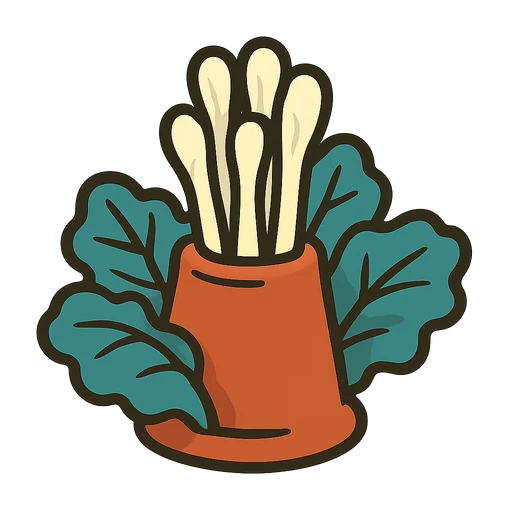
It's ready when blanched shoots are ready when they reach 6–8 inches tall and are still tightly budded — before any leaf opens fully. Shoots should be pale cream to white from light exclusion. Cut shoots at the base with a sharp knife just below soil level. Harvest over 4–6 weeks maximum per crown; stop once shoots thin noticeably to allow the crown to rebuild for next year.

Use within 2–3 days of harvest; wrap loosely in a damp cloth and refrigerate. Flavor and texture decline quickly after cutting.

Companions

Good neighbours, bad neighbours

Plant it with

Asparagus

Both are long-lived crops that want a permanent, sharply drained bed, and once asparagus ferns out in summer its tall filigree casts light shade over sea kale crowns, which sulk once temperatures hold above 85F. Set them 3 feet apart so neither is dug into.

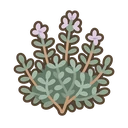
Thyme

A strong-smelling low perennial at the bed edge can help hide the cabbage-family scent that cabbage white butterflies and flea beetles follow, and it holds up under low pest pressure. Keep it outside the crown's 24-inch spread.

Chives

Onion-scented foliage often reduces how readily aphids and cabbage white butterflies settle on nearby cabbage-family leaves. Chives are perennial too, so they suit a bed that stays undug for a decade.

Nasturtium

Aphids and cabbage white butterflies often choose nasturtium over sea kale's waxy leaves. Treat it as sacrificial: pull or cut off infested growth rather than leaving a colony to spread onto the crowns.

Keep it away from

Strawberry

Old charts keep strawberries away from the cabbage family, though no mechanism has been demonstrated. The practical objection in a sea kale bed is simpler: strawberry runners creep over the crown and make cutting blanched shoots awkward.

Tomato

Tomatoes are replanted, staked and cleared every year, and that annual digging and trampling disturbs a crown that must sit undisturbed for a decade. Their summer bulk also shades and crowds sea kale leaves rebuilding reserves.

See Sea Kale in the full companion chart →

Crop rotation

After this crop

Rotation

A perennial — it holds its spot for years, so it sits outside the annual rotation.

Sea kale sits outside the yearly rotation: one crown holds its bed for 10 years or more as a moderate feeder, fed by compost rather than heavy nitrogen. When you finally retire the bed, dig out the crown and roots, then keep cabbage-family crops out of that ground for at least 3 years because of club root.

Trouble to watch for

Pests and diseases

Pests

Cabbage white caterpillar

Sign
Ragged holes in the large blue-green leaves; pale green or yellow caterpillars visible on leaf undersides.
Fix
Hand-pick caterpillars and eggs; cover with fine mesh netting before adults are seen in spring.

Slugs

Sign
Irregular holes in emerging shoots and young leaves; silvery slime trails on soil surface.
Fix
Set out iron phosphate bait around crowns at first sign; remove debris where slugs shelter.

Flea beetle

Sign
Tiny round shot-holes scattered across leaves, most damaging on seedlings.
Fix
Cover seedlings with row cover immediately after transplanting; remove once plants are well established.

Diseases

Club root

Sign
Wilting despite adequate moisture; swollen, distorted roots visible when plant is lifted.
Prevent
Test soil pH before planting; club root thrives in acidic soil. Improve drainage and maintain a 7-year gap before replanting brassicas in the same bed.

Downy mildew

Sign
Yellow patches on upper leaf surface with a grey-purple fuzzy growth on the underside.
Prevent
Space plants at full 24-inch intervals for airflow; avoid overhead watering; remove affected leaves promptly.

White blister (white rust)

Sign
Chalky white raised pustules on leaf undersides, often with yellow distortion on the upper surface.
Prevent
Remove and bin affected leaves; do not compost. Rotate brassicas out of the bed for at least 3 years.
FAQ

Common questions about Sea Kale

When should I plant Sea Kale?
Spring: start seed indoors 8–10 weeks before last frost; transplant after last frost. Spring: direct sow outdoors 2–4 weeks before last frost once soil reaches 50 °F (10 °C).
How long until Sea Kale is ready to harvest?
365–730 days, counted from transplant. It's ready when blanched shoots are ready when they reach 6–8 inches tall and are still tightly budded — before any leaf opens fully. Shoots should be pale cream to white from light exclusion.
Can I grow Sea Kale in a container?
Beds strongly preferred — deep, sandy, well-drained soil; containers require at least 18 inches depth and dry out too fast. In containers: 15-gallon tub, minimum 18 inches deep.
How often should I water Sea Kale?
Water deeply once a week during the first growing season; established crowns need water only during dry spells. Water when the top 2 inches of soil feel dry.
How should I store Sea Kale after harvest?
Use within 2–3 days of harvest; wrap loosely in a damp cloth and refrigerate. Flavor and texture decline quickly after cutting.
Can Sea Kale stay in the ground over winter?
Crowns die back naturally after frost. Cut dead foliage to the ground in late fall. Apply a 3–4 inch mulch of straw or dry leaves over the crown to protect against repeated freeze-thaw cycles.

Verdie turns this guide into your plan

Set your garden's location and every window above becomes a real date — then Verdie reminds you when it's time to sow, transplant, water, and pick.

Download on the App Store
Free to download · iPhone & iPad