Start seeds indoors
Sow 0.25 inches deep; keep the top half-inch moist until sprouts show — the seed coat is thin and dries out quickly. Seedlings emerge in 7–14 days in warm soil.
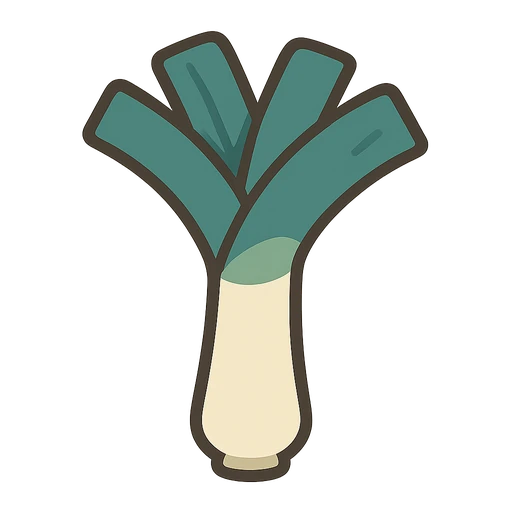
A cold-hardy, slow-growing allium that delivers mild, sweet onion flavor from late summer through deep winter when little else is in the ground.
Allium ampeloprasum · also called garden leek, pot leek
Windows are counted from the average date of your last spring frost.
Leeks occupy the bed during the hungry gap between autumn and early spring, tolerating hard frost that would kill most crops. Their long blanched shanks (the pale, tender lower stem produced by excluding light) are more versatile in the kitchen than bulbing onions.
A little history. Native to the eastern Mediterranean and western Asia; cultivated since at least ancient Egyptian times per archaeobotanical records. Unlike bulbing onions, leeks form a tight cylinder of leaf sheaths rather than a discrete bulb.
Sow 0.25 inches deep; keep the top half-inch moist until sprouts show — the seed coat is thin and dries out quickly. Seedlings emerge in 7–14 days in warm soil.
Sow seeds ¼ inch (6 mm) deep.
Beds strongly preferred — deep, loose soil is needed for blanching; containers work only if at least 12 inches deep. In containers: 5-gallon pot, minimum 12 inches deep. Space plants 6 inches (15 cm) apart.
Deep soak once or twice a week; more frequently during dry spells in summer. Water when the top inch of soil feels dry to the touch. Aim for about 1 inch per week including rain.
Side-dress (scatter fertilizer along the row and water in) every 3–4 weeks from transplant through midsummer. What to use: balanced 5–5-5 organic or compost-enriched soil; leeks are moderate feeders.
Trim seedling tops to 3–4 inches before transplanting to reduce transplant stress. Remove any flower stalks immediately if they appear — once a leek bolts, the shank becomes woody and inedible.
It's ready when shank is at least 1 inch in diameter and 3–4 inches of pale blanched stem is visible above soil level; harvest before a flower stalk emerges from the center. Loosen soil with a fork 2–3 inches from the shank, then lever gently upward and pull. Avoid yanking — the shank snaps easily. Trim roots and dark green flag leaves before storing.
Unwashed, in the refrigerator crisper drawer for up to 2 weeks; or leave in the ground and harvest as needed through winter until the ground freezes solid.
Start a second tray of seedlings 3–4 weeks after the first to extend harvest from early autumn through late winter.
Hardy varieties left in the ground over winter should be mulched with straw once the soil begins to freeze; harvest before the ground becomes unworkable or before spring regrowth begins, which triggers bolting.
Carrot
The onion smell of leek foliage can help hide carrots from carrot rust fly, while carrot foliage does the same for the flies that hunt alliums. Interplanting studies show real but inconsistent reductions, so keep row covers as the main defense.
Celery
Gardeners have long set celery beside leeks in the same rich, evenly moist bed, and both are earthed up the same way. No mechanism has been demonstrated, but neither crop crowds the other.
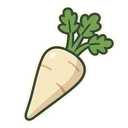
Parsnip
Parsnip drives a deep taproot while leeks feed from shallow, fibrous roots in the top few inches, so the two often share a long-season bed without fighting over water. Give each its own row so digging parsnips does not lift leek roots.
Strong-smelling leek foliage can make it harder for cabbage root fly and aphids to locate cabbage, kale, and broccoli by scent. The effect is modest under heavy pest pressure, so pair it with mesh over young brassicas.
Garden Pea
Old companion charts keep peas away from the onion family, and the pairing is repeated in most garden books. No mechanism has ever been demonstrated, so treat it as tradition rather than fact and separate them only if you have bed space to spare.
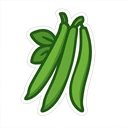
Green Bean
Beans are said to sulk beside leeks, onions, and garlic, a pairing warning that has been copied from chart to chart for a century. Trials have not confirmed it, so plant them apart only as a precaution.
Give the onion family 4 years away from this spot before any of its relatives return.
The pea and bean family, the squash family or the beet family thrive in this ground next season.
Leeks are moderate feeders that leave the soil loose from earthing up but return little to it, so top up with compost after lifting. Keep all onion-family crops out of this bed for 4 years to blunt white rot and allium leaf miner. Follow with legumes, squash and cucumbers, or beets and chard.