Start seeds indoors
Set pieces 2 inches deep and keep the top inch just moist, never soggy, until shoots break the surface. Cold wet soil rots them. Seedlings emerge in 14–42 days in warm soil.
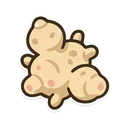
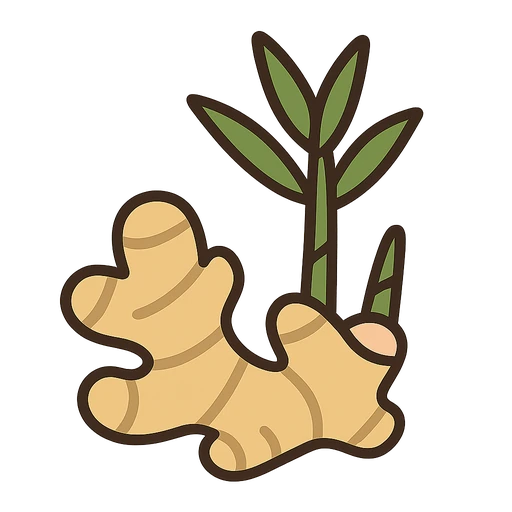
A tropical understory herb grown for its knobby underground stems, planted from a sprouted piece and lifted after a long, warm season.
Zingiber officinale · also called Common ginger, Garden ginger
8–10 weeks before last frost, in shallow trays or pots indoors.
2–3 weeks after last frost, once soil holds 65 °F (18 °C) and nights stay above 55 °F (13 °C).
Home-grown ginger is harvested young, with thin skin and no need for peeling — a texture and freshness rarely found in stores. One planted piece fills a wide pot on a warm patio.
A little history. The knob you plant is a rhizome — a thick underground stem, not a root. Native to tropical Asia and grown in cultivation so long that it rarely sets viable seed; it is propagated by division.
Set pieces 2 inches deep and keep the top inch just moist, never soggy, until shoots break the surface. Cold wet soil rots them. Seedlings emerge in 14–42 days in warm soil.
Either — needs loose soil 12 in deep and room to spread sideways rather than down. In containers: 14–16 in wide pot, at least 12 in deep. Space plants 10 inches (25 cm) apart.
Water every 2–3 days in hot weather; ease off once leaves yellow in fall. Water when the top inch of soil feels dry. Aim for about 1 inch per week including rain.
Side-dress monthly through the warm season, stopping 6 weeks before harvest. What to use: balanced 5–5-5 organic fertilizer or compost, scattered along the row and watered in.
No pruning needed. Snip yellowed or spotted leaves at the base. Mound an inch of compost over rhizomes as they push to the surface through summer.
It's ready when young ginger is ready at about 5 months, when the clump has many shoots and the new fingers are pink-tipped and thin-skinned. Mature ginger follows once leaves yellow and fall over. For young ginger, scrape soil back and snap off outer fingers, leaving the clump growing. For mature ginger, loosen the whole clump with a fork, lift it, shake off soil, and cut the leaf stalks an inch above the rhizome.
Young ginger keeps 2–3 weeks in a bag in the refrigerator. Cure mature rhizomes a few days in the shade, then hold at 55–60 °F (13–16 °C) in slightly damp sand.
One planting fills the whole season. Take a few young fingers in late summer and leave the rest to bulk up for a fall harvest.
Where frost is hard, lift rhizomes before the first freeze and store at 55–60 °F (13–16 °C) in damp sand. Where winters are frost-free, mulch heavily and leave the clump in place to resprout.
Edible Hibiscus
A tall, fast hibiscus on the south or west side can help by filtering the hottest afternoon light off the ginger bed while letting morning sun through. Keep at least 3 feet between them so the hibiscus roots do not crowd the shallow ginger.
Lemongrass
Gardeners have long grown these two side by side because they want the same things: heat, steady moisture, rich loose soil, and lifting or dividing at the end of the season. Neither shades the other out, so one watering routine serves both.
Peanut
Peanuts bank nitrogen in the soil, and as their roots break down after harvest that nitrogen becomes available to the crop that follows — so the benefit lands on next season's ginger, not this one. Their low leafy cover also shades bare soil between ginger clumps.
Sweet Alyssum
The tiny open flowers feed hoverflies and tiny parasitic wasps, whose larvae hunt the aphids that hide in ginger leaf sheaths. Sow a band along the bed edge where the low mat will not crowd the shoots.
Fennel
Fennel roots release compounds that reliably stunt most garden vegetables, and slow-growing ginger has little ability to out-race it. Grown well away in its own corner, fennel earns its keep — the flowers feed hoverflies and tiny parasitic wasps.
Peppermint
Mint spreads by running stems just under the surface and will thread straight through a ginger clump, making it impossible to lift rhizomes cleanly. Keep mint in its own container, never in the ginger bed.
Jerusalem Artichoke
These grow 6 feet or more and take both the light and the water ginger needs, and digging their tubers churns the same top foot of soil the ginger occupies. Give them a separate bed.
A perennial — it holds its spot for years, so it sits outside the annual rotation.
Treat ginger as a perennial rather than part of a rotation — no family gap is needed. It is a moderate feeder and gives nothing back, so replant divisions in fresh compost-enriched soil or new container mix each year, which also breaks the cycle of soil-borne rot and nematodes.