Start seeds indoors
Seeds benefit from 2–4 weeks of cold-moist stratification (chilled in damp paper towel in the fridge) before sowing; keep surface evenly moist until sprouts show. Seedlings emerge in 14–42 days in warm soil.
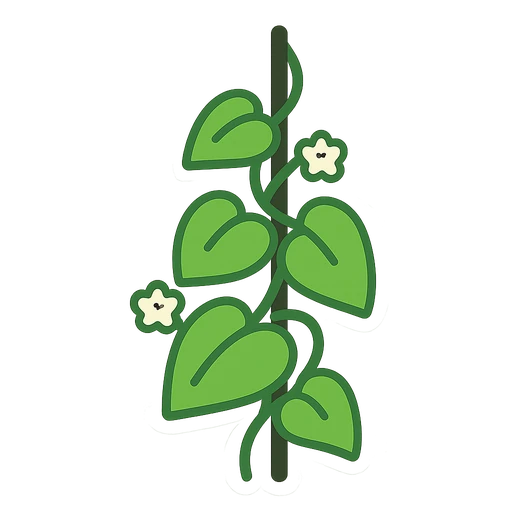
A vigorous perennial climbing vine from the Caucasus mountains that produces abundant mild-flavored leaves for years with almost no replanting.
Hablitzia tamnoides · also called Caucasian mountain spinach, climbing spinach
Windows are counted from the average date of your last spring frost.
Once established, it leafs out reliably each spring before most vegetables are in the ground, filling a hungry gap. As a long-lived perennial, it repays the initial patience with a decade or more of harvests from a single planting.
A little history. Native to shaded mountain forests of the Caucasus and adjacent regions; the sole species in its genus. Stems twine to 6-10 ft on supports and die back to the rootstock each winter in cold climates.
Seeds benefit from 2–4 weeks of cold-moist stratification (chilled in damp paper towel in the fridge) before sowing; keep surface evenly moist until sprouts show. Seedlings emerge in 14–42 days in warm soil.
Sow seeds ¼ inch (6 mm) deep.
Bed strongly preferred — deep, humus-rich soil and a trellis or fence at least 5 ft tall are needed for full yield. In containers: 15-gallon pot minimum, with a sturdy trellis insert. Space plants 24 inches (60 cm) apart.
Water deeply once or twice a week during dry spells; established plants tolerate short dry periods. Water when the top 2 inches of soil feel dry or leaves show slight midday wilt. Aim for about 1 inch per week including rain.
Top-dress with compost each spring as shoots emerge; side-dress (scatter fertilizer along the row and water in) once in midsummer. What to use: balanced compost or a low-nitrogen organic fertilizer; excess nitrogen produces lush but weak stems.
Pinch out the growing tips of young first-year plants once to encourage branching. In subsequent years, cut all stems to ground level in late autumn after dieback, or leave them as a trellis skeleton until new growth begins.
It's ready when harvest young shoots when 4–8 inches long in spring, or pick individual leaves once they reach the size of a playing card — before they toughen or the plant begins to flower. Snap or cut young shoot tips with scissors, leaving at least two leaf nodes on each stem so regrowth continues. Pick outer leaves first; never strip more than one-third of the plant at one time.
Refrigerate unwashed in a sealed bag with a damp paper towel; use within 4–5 days. Blanch and freeze surplus for longer storage.
Not applicable for succession sowing — as a perennial, a single planting provides harvests each spring. Start a second plant the following year if higher yield is needed.
Cut stems to ground level after hard frost kills the top growth. Mulch the crown with 2–3 inches of straw or leaf mold in climates with prolonged hard freezes. Remove mulch as shoots emerge in early spring.
Garlic
Garlic's strong sulfur smell can help hide tender spring shoots from aphids that locate plants by scent, and its narrow upright leaves take up almost no room at the foot of a trellis. Effect is modest under heavy pest pressure.

Chives
A clump of chives at the base of the vine often reduces aphid landings on new shoots, and if a few stems are left to flower they draw in hoverflies whose larvae eat aphids. Chives are perennial too, so the pairing stays put for years.
Nasturtium
Aphids often settle on nasturtium stems in preference to nearby foliage, pulling colonies off the vine's shoot tips. Check the nasturtiums weekly and cut off or wash down loaded stems, or the trap simply becomes a nursery.
Comfrey
Comfrey's deep taproot works well below the vine's feeding zone, so the two rarely compete for water, and its cut leaves make a good spring mulch over the crown. Plant it 3 ft away and expect it to stay put permanently.
Fennel
Fennel roots release substances that stunt most garden vegetables, and a permanent planting like this one cannot simply be moved next season. Grow fennel in its own corner well away from the bed, where its flowers still feed hoverflies and tiny parasitic wasps.
A perennial — it holds its spot for years, so it sits outside the annual rotation.
A permanent planting, so no rotation gap applies — the crown stays in the same ground for a decade or more. It is a moderate feeder that builds leaf litter and root mass in place; top-dress with compost each autumn. If it is finally dug out, follow with peas or beans to rebuild the soil.