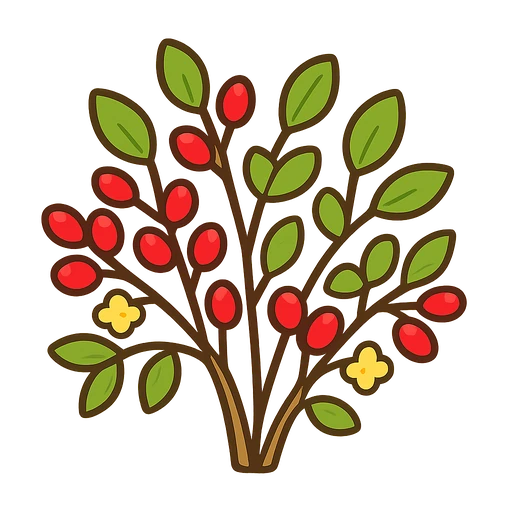
A native woodland shrub whose dried berries, leaves, and twigs all carry a warm, aromatic spice useful in cooking and tea.
Lindera benzoin · also called northern spicebush, wild allspice
Partial shadeIntermediateFrost-hardy
Sun
Partial shade
Provide afternoon shade where summer temperatures regularly exceed 90 °F (32 °C) to prevent leaf scorch.
Frost
Hardy
Fully cold-hardy through hard winters
Spacing
72 in
185 cm between plants
To harvest
730–1095 days
counted from transplant
Timing
When to plant Spicebush
Spring
Transplant
After last frost, once soil is workable and nighttime temps stay above 32 °F (0 °C).
Fall
Transplant
6–8 weeks before first hard frost to allow root establishment.
Too late?Skip fall transplanting once the ground is frozen or fewer than 6 weeks remain before hard frost.
Background
Why grow Spicebush
Spicebush is one of the few native North American shrubs with culinary value across multiple plant parts. It also supports specialist pollinators and serves as the sole larval host for the spicebush swallowtail butterfly.
A little history. Native to eastern North American deciduous forests, Lindera benzoin is dioecious (plants are either male or female), so at least one male must be planted near females to obtain the red berries used as a spice.
The season, step by step
From planting to harvest
Transplant outside
After last frost
Best in ground; containers restrict the root system and reduce berry production. Use only as a temporary measure before planting out. In containers: 15-gallon container minimum, short-term only. Space plants 72 inches (185 cm) apart.
Water and feed
All season
Water deeply once or twice a week for the first two growing seasons; established plants need water only during drought. Water when the top 2 inches of soil feel dry or leaves begin to droop slightly. Aim for about 1 inch per week including rain during establishment.
Top-dress with compost once each spring; avoid high-nitrogen fertilizers that push soft growth. What to use: 2–3 inch layer of leaf mold or aged compost spread under the canopy, not touching the stems.
Prune and maintain
As it grows
Prune only to remove dead or crossing branches immediately after flowering in early spring. Heavy pruning reduces berry set on female plants. Remove no more than one-third of the canopy in any single year.
Harvest and store
730–1095 days from transplant
It's ready when berries are ripe when they turn glossy red and pull away from the stem with gentle pressure, typically late summer to early fall. Leaves are harvested any time during the growing season. Pick ripe berries individually by hand. For spice use, dry berries whole at room temperature for 1–2 weeks, then grind. Snip small leafy twigs for tea; harvest bark only sparingly from pruned material, never by girdling live stems.
Dried whole berries keep up to 1 year in an airtight container away from light. Fresh leaves can be dried or frozen flat for 6 months.
Overwintering
No special protection needed for established plants in their native range. In the first winter after transplanting, apply a 3–4 inch mulch ring to the drip line to protect shallow roots from freeze-thaw heaving.
Pawpaw grows taller and casts the broken, dappled shade spicebush evolved under, which often prevents the leaf scorch that shows up on shrubs baked by afternoon sun above 90F. Set the spicebush on the east or north side of the pawpaw.
Wild Ginger
Wild ginger's low evergreen-looking mat covers the ground beneath the shrub, keeping the soil cool and damp over spicebush's shallow roots and crowding out weeds that would otherwise need hand-pulling close to the stems.
Ostrich fern fronds shade the soil surface through summer and hold moisture where spicebush feeds, which helps in dry spells. Give it room, since the fern spreads by runners and will fill any bare ground you leave.
Both bloom very early, and the combined nectar draws the small native bees and flies that must carry pollen from a male spicebush to a female for berries to set. More early flowers in one spot often means more reliable fruit on both shrubs.
Trout Lily
Trout lily is a spring ephemeral: it leafs out, flowers, and dies back before the shrub's canopy fills in, so the two share the same moist, leaf-littered ground without ever competing for light or water.
Keep it away from
Black Walnut
Plantings under black walnut are reliably observed to struggle, and the dense dry shade plus heavy surface roots of a mature walnut add competition on top of that. Site spicebush well outside the walnut's branch spread.
A perennial — it holds its spot for years, so it sits outside the annual rotation.
Spicebush is a permanent planting, so no rotation applies and there is no family gap to respect. It feeds moderately and leaves behind a slowly deepening layer of leaf litter that builds soil in place. If a shrub is ever removed, replant the spot with any woodland perennial.
Trouble to watch for
Pests and diseases
Pests
Spicebush swallowtail caterpillar
Sign
Leaves rolled and tied with silk; large green caterpillars with false eyespots inside the rolled leaf.
Fix
Hand-remove rolled leaves and relocate caterpillars to a nearby wild host rather than destroying them — this is a specialist native species.
Scale insects
Sign
Small brown or tan bumps fixed to stems; sticky residue or sooty mold on leaves below.
Fix
Scrub light infestations off with a soft brush and soapy water; apply horticultural oil in late winter before buds break for heavier infestations.
Japanese beetle
Sign
Irregular holes chewed between leaf veins, leaving a lacy skeleton; metallic green-bronze beetles visible on foliage.
Fix
Hand-pick beetles into soapy water in early morning when they are sluggish; avoid trap crops nearby.
Diseases
Botryosphaeria canker
Sign
Sunken, discolored patches on stems; dieback of individual branches, often starting at wound sites.
Prevent
Avoid wounding bark during cultivation; prune with clean, sharp tools and remove affected wood well below the discolored tissue.
Powdery mildew
Sign
White powdery coating on upper leaf surfaces, most common in humid summers with poor air circulation.
Prevent
Space plants to allow airflow; avoid overhead watering. Established plants rarely suffer serious damage.
FAQ
Common questions about Spicebush
When should I plant Spicebush?
Spring: after last frost, once soil is workable and nighttime temps stay above 32 °F (0 °C). Fall: 6–8 weeks before first hard frost to allow root establishment.
How long until Spicebush is ready to harvest?
730–1095 days, counted from transplant. It's ready when berries are ripe when they turn glossy red and pull away from the stem with gentle pressure, typically late summer to early fall. Leaves are harvested any time during the growing season.
Can I grow Spicebush in a container?
Best in ground; containers restrict the root system and reduce berry production. Use only as a temporary measure before planting out. In containers: 15-gallon container minimum, short-term only.
How often should I water Spicebush?
Water deeply once or twice a week for the first two growing seasons; established plants need water only during drought. Water when the top 2 inches of soil feel dry or leaves begin to droop slightly.
How should I store Spicebush after harvest?
Dried whole berries keep up to 1 year in an airtight container away from light. Fresh leaves can be dried or frozen flat for 6 months.
Can Spicebush stay in the ground over winter?
No special protection needed for established plants in their native range. In the first winter after transplanting, apply a 3–4 inch mulch ring to the drip line to protect shallow roots from freeze-thaw heaving.
Verdie turns this guide into your plan
Set your garden's location and every window above becomes a real date — then Verdie reminds you when it's time to sow, transplant, water, and pick.
 Pawpaw
 Fiddlehead Fern
 Juneberry
 Black Walnut