Start seeds indoors
Sow no deeper than half an inch and keep the surface damp until sprouts show. Break any crust after hard rain so seedlings can push through. Seedlings emerge in 3–10 days in warm soil.
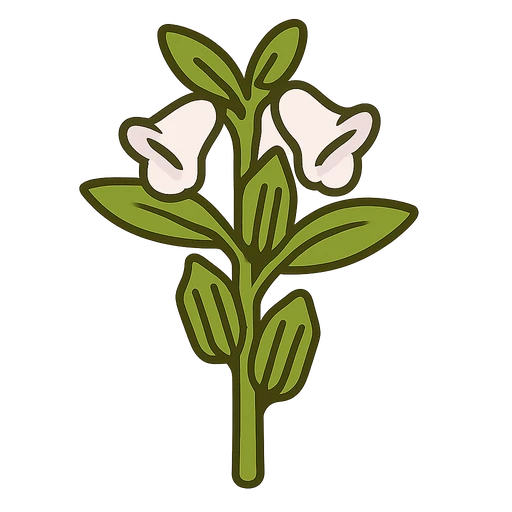
A heat-loving oilseed annual that stands upright through drought and stacks slender seed capsules along its stem from the ground up.
Sesamum indicum · also called Benne, Til
Windows are counted from the average date of your last spring frost.
One sowing gives you fresh, aromatic seed for toasting and tahini, plus months of small tubular flowers that bees work steadily. It asks for little water once established.
A little history. One of the oldest cultivated oilseeds, grown across South Asia and Africa for thousands of years. Ripe capsules split along their seams and shed seed, so plants are cut just before they dry fully.
Sow no deeper than half an inch and keep the surface damp until sprouts show. Break any crust after hard rain so seedlings can push through. Seedlings emerge in 3–10 days in warm soil.
Sow seeds ½ inch (13 mm) deep.
Water weekly while plants are young, then taper off once flowering begins. Water when the top 2 inches of soil are dry and leaves look dull at midday. Aim for about 1 inch per week early, less after flowering.
Compost before sowing, then side-dress once at first flower buds (scatter beside the row, water in). What to use: light feeder — finished compost or a low-nitrogen 5–10-10.
Optional in short seasons: pinch the growing tip at about 2 feet so the plant stops making new flowers and ripens its existing capsules together.
It's ready when the lowest capsules turn yellow-brown and begin to split at the tip, lower leaves have dropped, and the stalk is drying from the base up. Cut the whole stalk at ground level with pruners. Stand bundles upside down in paper bags or over a tarp in a dry, airy spot for 1–2 weeks, then shake so the seed falls free.
Dry seed until it is hard and crunchy, then store airtight in a cool dark cupboard for up to a year. Refrigerate or freeze to keep the oil from turning rancid.
Not a succession crop — one sowing per season is all a temperate summer supports.
Sorghum
A long-standing intercrop across dry farming regions: sorghum feeds from a dense mat of fibrous roots near the surface while sesame draws on a deeper taproot, so the two often share a bed without fighting over water. Give sesame its own row rather than sowing it in the shade of the sorghum canopy.
Cowpea
Cowpea takes the same heat and dry spells and banks nitrogen in its roots. That nitrogen is released mostly for the next season as the roots break down, so a cowpea row here this year sets up the bed rather than feeding sesame now.
French Marigold
French marigold roots release substances that suppress root-knot nematodes, a real problem for sesame in sandy soil. The effect has been shown only where marigolds are grown as a thick solid block or turned into the soil at season's end — a few edge flowers do nothing.
Sweet Alyssum
Low mats of sweet alyssum flower for months and draw in hoverflies and tiny parasitic wasps whose larvae feed on aphids and small caterpillars. Sow a strip at the row end where it will not shade young sesame seedlings.
Okra
Two upright heat crops of different leaf shape and height break up the solid block of one plant that flying pests home in on. Keep okra on the north side so it does not shade the sesame row.
Fennel
Fennel roots reliably stunt most garden vegetables, and slow-starting sesame seedlings are easy to check. Grow fennel in its own corner well away from the row — its flowers still earn a place by feeding hoverflies and tiny parasitic wasps.
Peppermint
Mint spreads by runners and will fill the row before sesame is knee-high, making it hard to cut and dry whole stalks cleanly. Keep it in a sunken pot or a separate bed.
Pumpkin
Sprawling vines run over young sesame within weeks and hold moisture around the stem bases, which invites stem rot. Give pumpkins their own ground, or at least 6 feet of clearance.
Easy-going — Sesame can grow almost anywhere in the rotation without a strict rest.
The pea and bean family, the cabbage family or the tomato family thrive in this ground next season.
A light feeder that leaves the bed in much the same shape it found it, with a woody stalk residue worth chopping before it goes to compost. Keep sesame out of the same ground for one year, then follow with peas or beans, a cabbage-family crop, or tomatoes and peppers.