Transplant outside
Best in a prepared garden bed with good drainage; containers work short-term but restrict the spreading root system. In containers: 15-gallon container minimum; repot every 2–3 years. Space plants 48 inches (120 cm) apart.
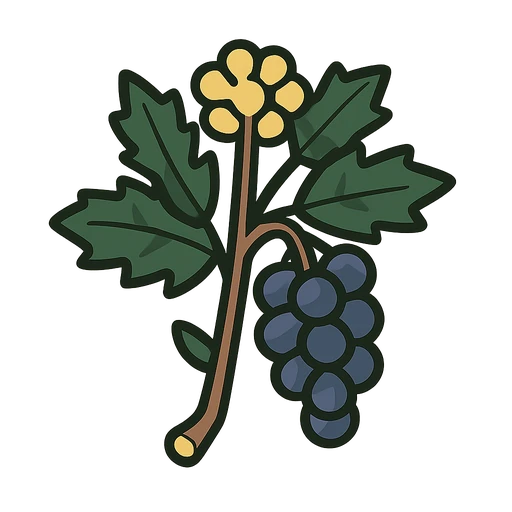
A hardy, shade-tolerant native shrub that produces tart, blue-black berries useful for jams, jellies, and juice.
Mahonia aquifolium · also called holly-leaved barberry, mountain grape
6–8 weeks before first hard frost, while soil is still workable.
As soon as soil can be worked, 2–4 weeks before last frost.
Oregon grape tolerates deep shade and poor soil where most fruiting shrubs fail, and its evergreen foliage provides year-round structure. The berries are high in pectin, making them reliable for setting preserves without added thickener.
A little history. Native to western North America from British Columbia to northern California, Oregon grape is an evergreen shrub in the barberry family. Its compound, holly-like leaves are documented in Flora of North America as a distinguishing trait of the genus.
Best in a prepared garden bed with good drainage; containers work short-term but restrict the spreading root system. In containers: 15-gallon container minimum; repot every 2–3 years. Space plants 48 inches (120 cm) apart.
Water deeply once a week during the first growing season; established plants need water only during prolonged dry spells. Water when the top 2 inches of soil feel dry during the establishment year. Aim for about 1 inch per week during dry periods.
Apply compost once each spring; side-dress (scatter fertilizer along the drip line and water in) in early spring only. What to use: 2–3 inches of compost or a balanced slow-release organic fertilizer.
Remove oldest, woodiest canes at ground level every 3–4 years after fruiting to encourage vigorous new growth. Prune lightly for shape immediately after flowering to avoid removing the current season's fruit buds.
It's ready when berries are ripe when fully blue-black with a powdery bloom (the dusty coating on the skin), typically mid to late summer. Taste a berry — ripe fruit is tart but no longer astringent. Wear gloves — leaf spines are sharp. Strip ripe clusters by hand into a bucket, or cut entire clusters with scissors. Discard any green or shriveled berries before processing.
Refrigerate unwashed berries in a shallow container for up to 1 week. Freeze in a single layer on a tray, then transfer to bags for up to 12 months. Cook before eating in quantity.
No special protection needed in most climates where it is hardy. In exposed or unusually cold sites, apply a 3-inch mulch ring around the base before the ground freezes; remove in early spring.
Both want the same conditions — dappled shade, steady moisture, and acidic woodland soil — so they hold a shady bed together without either one crowding the other out.
Bleeding heart fills the shaded ground in spring and dies back by midsummer, so it uses the bed early and then leaves the shrub's root zone free during the dry season.
A low mat of wild ginger under the shrub shades the soil, slows evaporation, and crowds out weeds that would otherwise need hand-pulling around spiny foliage.
Red-flowering currant opens at much the same time as Oregon grape, and the pair of early nectar sources draws bees and hummingbirds into the bed while the shrub is in bloom.
Salal shares the same taste for acidic, shaded ground and knits into a low evergreen layer beside the shrub, keeping soil covered year-round without competing for the same rooting depth.
Wheat
Shrubs in the barberry family are the alternate host for stem rust of cereals: the fungus completes one stage on the shrub's leaves and moves to nearby wheat. Keep Oregon grape well away from grain, and check local rules — some regions restrict planting.
Barley
Barley is hit by the same stem rust that overwinters on barberry-family shrubs, so a nearby Oregon grape gives the fungus the bridge it needs between seasons. Plant grain plots well clear of the shrub.
A perennial — it holds its spot for years, so it sits outside the annual rotation.
Oregon grape is a long-lived perennial shrub, so it holds one spot rather than moving through a rotation — no family gap applies. It is a moderate feeder that returns leaf litter to the soil beneath it; top-dress with compost each spring instead of replanting the ground.