Start seeds indoors
Soak seeds in water for 8–12 hours before sowing; keep the top inch moist but not waterlogged until sprouts emerge. Seedlings emerge in 5–14 days in warm soil.
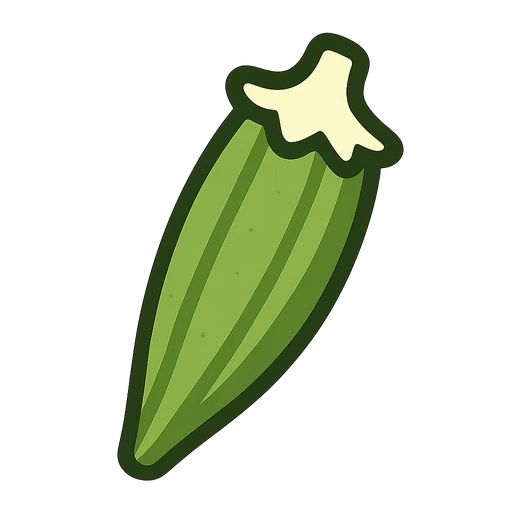
A fast-growing warm-season crop that produces tender, ribbed pods over a long summer harvest window when given full sun and heat.
Abelmoschus esculentus · also called lady's finger, gumbo
Windows are counted from the average date of your last spring frost.
Okra tolerates heat and brief dry spells that stress most other summer vegetables, making it one of the most reliable producers in a hot garden. Fresh pods picked at 3-4 inches have a texture and sweetness unavailable in any store-bought equivalent.
A little history. Native to northeastern Africa and domesticated in the Nile corridor; a member of the mallow family, it is more closely related to hibiscus and cotton than to any common food vegetable. The mucilaginous (gel-forming) quality of the pod comes from soluble polysaccharides concentrated in the seed cavity.
Soak seeds in water for 8–12 hours before sowing; keep the top inch moist but not waterlogged until sprouts emerge. Seedlings emerge in 5–14 days in warm soil.
Sow seeds 1 inch (25 mm) deep.
Deep soak once or twice a week; more often during flowering and pod set in peak heat. Water when the top 2 inches of soil feel dry, or leaves begin to show slight midday droop. Aim for about 1 inch per week including rain.
Side-dress (scatter fertilizer along the row and water in) once at planting, then again when first flower buds appear. What to use: low-nitrogen balanced fertilizer such as 5–10-10 organic; excess nitrogen drives leaf growth at the expense of pods.
Once plants reach 24 inches, remove the lowest 2–3 leaves to improve airflow. In long-season climates, cut plants back by one-third in midsummer to trigger a second flush of pods.
It's ready when pods are 3–4 inches long, firm, and snap cleanly when bent. Skin should be bright green and free of browning. Check daily once pods begin forming. Use pruning shears or a sharp knife to cut the stem just above the cap; do not pull or twist. Wear gloves and long sleeves — the plant's fine hairs irritate skin.
Refrigerate unwashed pods in a paper bag or loosely wrapped in a dry cloth for up to 3 days. Pods deteriorate quickly; freeze extras by blanching 3 minutes then cooling before bagging.
In climates with a frost-free window longer than 120 days, sow a second batch 4–5 weeks after the first to extend harvest into early fall.
Basil
Basil's strong-smelling foliage can help hide young okra from aphids that locate hosts by scent, and it stays short enough not to shade the stalks. Keep it about a foot out from the okra stem so both get water and light.
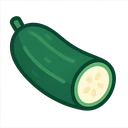
Cucumber
Okra sends down a deep tap root while cucumber feeds in the top few inches, so the two often share a bed without fighting over water. Give the cucumber its own trellis rather than letting it climb the okra stalks.

Cantaloupe
Melon vines run along the ground under upright okra, shading the soil, holding moisture, and crowding out weeds during the hottest weeks. Allow at least 3 feet between rows so the vines do not smother young okra seedlings.

Bell Pepper
A row of okra on the west or south side casts light afternoon shade that often reduces sunscald (pale, papery patches burned into exposed pepper fruit) in hot summers. Set the peppers about 2 feet out so they still get morning sun.

Sunflower
Sunflower heads draw in hoverflies, lacewings, and tiny parasitic wasps that work over aphid colonies on nearby okra. Plant them at the bed edge and 3 feet away, since both crops are tall and will compete for light and water if crowded.
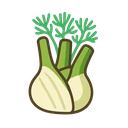
Fennel
Fennel roots release compounds that reliably stunt most garden vegetables, and okra seedlings are no exception. Grow fennel in its own corner or a pot well away from the bed, where its flowers still feed hoverflies and tiny parasitic wasps.

Sweet Potato
Sweet potato vines run hard and often blanket the base of young okra, competing for water and light. Both crops also feed root-knot nematodes, so pairing them can build up soil populations that stunt the following season.
Edible Hibiscus
Okra is the closest garden relative of edible hibiscus, and the two share whitefly, aphids, spider mites and the same leaf spot fungi. Planted side by side they stack the pressure and let problems move straight across; keep them in separate beds.
Roselle
Okra is a close mallow-family relative and shares roselle's leaf spot troubles along with whiteflies and aphids. Planting them side by side stacks the risk and makes the family gap in your rotation harder to keep.
Easy-going — Okra can grow almost anywhere in the rotation without a strict rest.
The pea and bean family, the cabbage family or the tomato family thrive in this ground next season.
Okra is a light feeder that takes little from the bed but leaves tough, slow-rotting stalks — chop or remove them. Wait a year before any mallow-family crop returns here, longer if wilt showed up. Beans or peas follow well, then brassicas such as cabbage, or nightshades like tomatoes.