Crop guide · The nightshade family

How to grow hot peppers

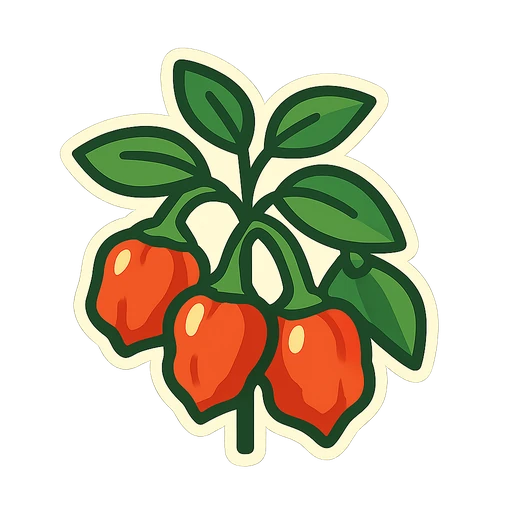
Intensely hot, fruity-flavored peppers that thrive in heat and reward patient gardeners with prolific harvests from midsummer through frost.

Capsicum chinense · also called habanero, scotch bonnet

Full sun Intermediate Frost-tender
Sun
Full sun
Light afternoon shade above 95 °F (35 °C) can prevent blossom drop, but avoid heavy shade that reduces fruit set
Frost
Tender
Killed by the first light frost
Spacing
18 in
45 cm between plants
Sow depth
¼ in
6 mm
To harvest
90–120 days
counted from transplant
Soil pH
6.0–6.8
slightly acidic to neutral
Timing

When to plant hot peppers

Windows are counted from the average date of your last spring frost.

Summer:set transplants out once nights stay reliably above 55 °F (13 °C) and soil is warm.
Too late?Skip transplanting if fewer than 100 frost-free days remain — plants need a long warm season to ripen pods fully.
Background

Why grow hot peppers

Home-grown chinense peppers ripen to flavor profiles — floral, fruity, smoky — that dried or pickled commercial products rarely match. A single plant can yield dozens of pods over a long season, making it highly productive per square foot.

A little history. Native to the Amazon basin and Caribbean; among the hottest peppers known, with heat generated by capsaicin compounds concentrated in the placental tissue (the white inner ribs) rather than the seeds themselves.

The season, step by step

From planting to harvest

Start seeds indoors

10–12 weeks before last frost

Keep the top half-inch of seed-starting mix consistently moist; use a heat mat — germination drops sharply below 75 °F (24 °C). Seedlings emerge in 10–21 days in warm soil.

Best soil temp 80–90 °F (27–32 °C) Minimum 65 °F (18 °C) Emerges in 10–21 days

Transplant outside

2–3 weeks after last frost

Either works well — needs at least 12 inches of soil depth and good drainage. In containers: 5-gallon pot minimum; 7–10 gallon preferred for full yield. Space plants 18 inches (45 cm) apart.

Water and feed

All season

Deep soak twice a week in warm weather; reduce slightly once fruit is sizing up. Water when the top inch of soil feels dry, or leaves show the faintest midday wilt. Aim for about 1 inch per week including rain.

Side-dress (scatter fertilizer along the row and water in) every 3–4 weeks once flowering begins. What to use: low-nitrogen, higher-phosphorus and potassium feed at flowering; balanced feed during early vegetative growth.

Prune and maintain

As it grows

Pinch the first flower bud that appears before transplanting to redirect energy into branching. Once established, remove any crossing or dead branches to improve airflow.

Harvest and store

90–120 days from transplant

It's ready when pods have reached full size and shifted from green to their ripe color (red, orange, yellow, or chocolate depending on variety); skin is firm and glossy. Cut pods with scissors or pruners, leaving a short stem attached; do not pull — tugging can break branches. Wear gloves when handling superhot varieties.

Fresh pods keep 1–2 weeks refrigerated in a paper bag. Freeze whole or sliced for up to 12 months. Dry at 130–140 °F (54–60 °C) until brittle for long-term storage.

Companions

Good neighbours, bad neighbours

Plant it with

Basil

The strong-smelling leaves can help hide young pepper plants from aphids and thrips, which locate hosts partly by scent. Expect real benefit only under low pest pressure, and keep basil about a foot clear so it does not shade the pepper's lower branches.

Carrot

Carrot sends a single deep taproot straight down while pepper feeds mostly in the top foot of soil, so the two often share a bed without fighting over water. Sow carrots on the sunny side and pull them before the pepper canopy closes over.
Parsley

Left to flower in its second year, parsley opens flat umbels of tiny blooms that feed hoverflies, lacewings, and small parasitic wasps — the insects that clean up aphid colonies on pepper shoots.

French Marigold

French marigold roots release compounds that suppress root-knot nematodes, but only when the plants are grown thickly across the area or chopped into the soil at season's end. A few flowers along the bed edge will not protect the peppers.
Oregano

Allowed to bloom, oregano's small flowers draw hoverflies and tiny parasitic wasps that hunt aphids, and its low sprawl shades the soil surface. Give it its own corner, since it spreads wider each year.
Keep it away from

Fennel

Fennel roots release compounds that stunt most garden vegetables, peppers included — expect slowed growth and poor fruit set nearby. Planted well apart, though, its flowers feed hoverflies and tiny parasitic wasps, so keep it in a far corner rather than banning it.

Kohlrabi

Old companion charts have long kept kohlrabi away from the tomato family, and no mechanism has been demonstrated. If you do interplant, the practical concern is simply competition: kohlrabi wants steady moisture and cool soil that peppers do not.

See hot peppers in the full companion chart →

Crop rotation

After this crop

Family rest

Give the tomato family 3 years away from this spot before any of its relatives return.

Good next crops

The pea and bean family, the onion family or the carrot family thrive in this ground next season.

Peppers leave the soil hungry and depleted of nitrogen, with nightshade root diseases such as phytophthora able to linger. Keep tomatoes, potatoes, eggplant, and peppers out of this bed for 3 years, then follow with beans or peas, the onion family, or carrots and their relatives.

Trouble to watch for

Pests and diseases

Pests

Aphids

Sign
Clusters of tiny soft-bodied insects on new growth and undersides of leaves; sticky residue and curled leaves.
Fix
Knock off with a firm water spray; apply insecticidal soap to undersides of leaves if colonies persist.

Pepper weevil

Sign
Small puncture holes in pods and stems; pods drop early or rot from the inside.
Fix
Remove and destroy infested pods immediately; use row cover early in the season to exclude adults.

Spider mites

Sign
Fine stippling on leaves, tiny webbing on undersides, especially during hot dry spells.
Fix
Increase humidity around plants; spray undersides with water or insecticidal soap every 3-4 days.

Thrips

Sign
Silver-streaked or bronzed leaf surfaces; distorted new growth and scarred pods.
Fix
Apply spinosad-based spray in the evening; remove heavily infested leaves and dispose of them away from the bed.

Diseases

Phytophthora blight

Sign
Sudden wilting of entire branches or the whole plant; dark water-soaked lesions at the stem base or on pods.
Prevent
Ensure excellent drainage; avoid overhead watering; rotate nightshades out of the bed for at least 3 years.

Bacterial leaf spot

Sign
Small water-soaked spots on leaves that turn brown with yellow halos; spots may also appear on pods.
Prevent
Water at the base, not overhead; space plants for airflow; remove infected leaves promptly.

Pepper mosaic virus

Sign
Mottled yellow-green patterning on leaves; stunted, distorted growth; reduced fruit set.
Prevent
Control aphids, which spread the virus; remove and bag infected plants; do not compost them.

Blossom end rot

Sign
Sunken, dark, leathery patch at the blossom end of developing pods.
Prevent
Maintain consistent soil moisture; avoid high-nitrogen feeding once flowering starts; mulch to stabilize soil moisture.
Good to know:Leaves and stems contain alkaloids and are not eaten. The placental ribs and seeds are edible but carry the highest concentration of heat — remove them if reducing intensity.
FAQ

Common questions about hot peppers

When should I plant hot peppers?
Spring: 10–12 weeks before last frost date; transplant out 2–3 weeks after last frost. Summer: set transplants out once nights stay reliably above 55 °F (13 °C) and soil is warm.
How long until hot peppers are ready to harvest?
90–120 days, counted from transplant. It's ready when pods have reached full size and shifted from green to their ripe color (red, orange, yellow, or chocolate depending on variety); skin is firm and glossy.
Can I grow hot peppers in a container?
Either works well — needs at least 12 inches of soil depth and good drainage. In containers: 5-gallon pot minimum; 7–10 gallon preferred for full yield.
How often should I water hot peppers?
Deep soak twice a week in warm weather; reduce slightly once fruit is sizing up. Water when the top inch of soil feels dry, or leaves show the faintest midday wilt.
Is any part of hot peppers unsafe to eat?
Leaves and stems contain alkaloids and are not eaten. The placental ribs and seeds are edible but carry the highest concentration of heat — remove them if reducing intensity.
How should I store hot peppers after harvest?
Fresh pods keep 1–2 weeks refrigerated in a paper bag. Freeze whole or sliced for up to 12 months. Dry at 130–140 °F (54–60 °C) until brittle for long-term storage.

Verdie turns this guide into your plan

Set your garden's location and every window above becomes a real date — then Verdie reminds you when it's time to sow, transplant, water, and pick.

Download on the App Store
Free to download · iPhone & iPad