Transplant outside
4–6 weeks before last frost
Best in open ground; needs 10–15 ft clearance. Container culture is impractical for fruiting specimens. Space plants 144 inches (365 cm) apart.
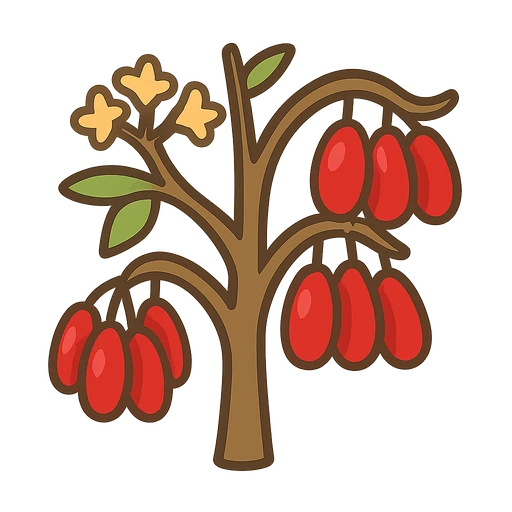
A cold-hardy shrub or small tree that produces tart, olive-shaped red fruits weeks before most other fruiting plants even flower.
Cornus mas · also called European cornel, cornelian cherry dogwood
As soon as the ground can be worked, 4–6 weeks before last frost.
6–8 weeks before first hard frost, while soil is still warm.
One of the earliest-flowering woody plants in the garden, it provides late-winter pollen for bees and a reliable crop of vitamin-rich fruits by midsummer. The fruit is versatile — eaten fresh, dried, or made into preserves — and the plant tolerates a wide range of soils.
A little history. Native to central and southern Europe and western Asia, Cornelian cherry is a true dogwood (Cornus genus) despite its cherry-like fruit. Fruits are drupes (fleshy fruits with a single hard stone), not true cherries.
Best in open ground; needs 10–15 ft clearance. Container culture is impractical for fruiting specimens. Space plants 144 inches (365 cm) apart.
Deep soak once a week during the first two growing seasons; established plants need water only during prolonged dry spells. Water when the top 2 inches of soil feel dry during the establishment period. Aim for about 1 inch per week in the first two seasons.
Apply compost in early spring once a year; avoid high-nitrogen feeds after midsummer. What to use: 2–3 inch layer of well-rotted compost worked lightly into the root zone.
Prune only to remove dead, crossing, or damaged branches immediately after flowering. Avoid heavy pruning — fruit is borne on short spurs (stubby side shoots) that develop on wood two or more years old.
It's ready when fruits turn deep red to burgundy and detach easily from the stem with a gentle tug; fully ripe fruit is slightly soft and loses its astringency. Spread a clean sheet or tarp under the plant and shake branches gently — ripe fruits fall freely. Hand-pick any remaining ripe fruits. Harvest over several days as ripening is uneven.
Refrigerate unwashed fruits in a shallow container for up to 2 weeks. Freeze on a tray then bag for up to 12 months. Dry or preserve in syrup for longer storage.
No special care needed for established plants. In the first winter after planting, mulch the root zone with 3–4 inches of wood chips to moderate soil temperature swings.
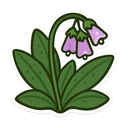 Comfrey
Comfrey's deep taproot pulls water and minerals from well below the shrub's shallow feeder roots, so the two rarely compete. Cut the leaves two or three times a season and lay them under the canopy as mulch that breaks down quickly.
 Chives
A ring of chives at the drip line carries a strong onion smell that can help hide the trunk and low branches from insects that locate hosts by scent. Effect is modest and works best under low pest pressure, not as a substitute for winter oil sprays.
 Borage
Borage opens long after the cornelian cherry has finished flowering, so it adds nothing to fruit set — its value is the steady nectar that draws in hoverflies, lacewings, and tiny parasitic wasps, the insects that work over scale colonies on the stems.
 White Clover
A low clover cover shades the root zone, holds moisture, and crowds out weeds that would otherwise be hoed close to the trunk. Its banked nitrogen is released slowly as roots break down, feeding later seasons; keep it 12 inches clear of a newly planted stem.
 Black Walnut
Black walnut roots and fallen husks release substances that reliably stunt many woody and vegetable neighbours. Cornelian cherry is not on the confirmed sensitive list, but plant it well outside the walnut's root spread — at least 50 feet — rather than gamble.
A perennial — it holds its spot for years, so it sits outside the annual rotation.
A long-lived woody plant, so no bed rotation applies and there is no family gap to respect. It is a moderate feeder that leaves permanent roots in place; treat the ground beneath it as a standing planting and top-dress with compost instead of turning the soil.
Set your garden's location and every window above becomes a real date — then Verdie reminds you when it's time to sow, transplant, water, and pick.