Crop guide · The legume family

How to grow Groundnut

A native North American climbing vine that produces strings of starchy, protein-rich tubers underground — an unusual dual-purpose crop yielding both edible roots and edible beans.

Apios americana · also called hopniss, Indian potato

Full sun Intermediate Frost-hardy
Sun
Full sun
Tolerates partial shade in climates where summer temperatures regularly exceed 90 °F (32 °C)
Frost
Hardy
Tops are killed by the first hard frost
Spacing
12 in
30 cm between plants
Sow depth
3 in
76 mm
To harvest
150–210 days
counted from sowing
Soil pH
5.5–7.0
on the acidic side
Timing

When to plant Groundnut

Spring
Direct sow

Plant tubers 2–4 weeks after last frost, once soil reaches 60 °F (16 °C).

Fall
Direct sow

Plant tubers 6–8 weeks before first fall frost for establishment before dormancy.

Too late?Skip spring planting once soil stays above 80 °F (27 °C) — tubers planted in heat establish poorly; wait for a fall window instead.
Background

Why grow Groundnut

Groundnut fixes its own nitrogen through root bacteria, improving soil while it grows. The tubers offer a nutty, chestnut-like flavor and contain roughly three times the protein of potato by dry weight, according to published nutritional analyses.

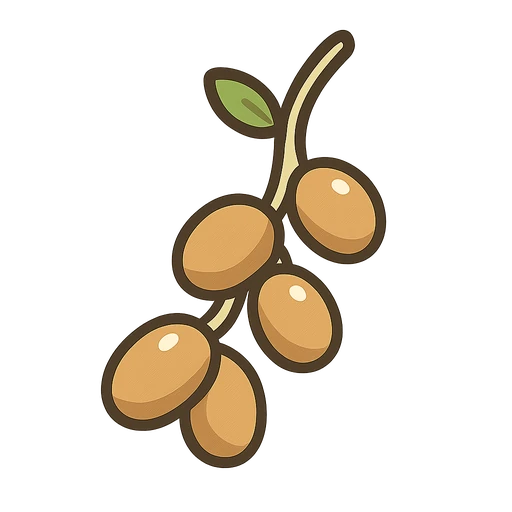
A little history. Native to eastern North America, documented in the wild from Nova Scotia to Florida. Tubers form as swellings along a slender underground rhizome (a horizontal underground stem), not as discrete root masses. Described by Meriwether Lewis during the 1804 expedition.

The season, step by step

From planting to harvest

Sow outside

2–4 weeks after last frost

Sow seeds 3 inches (76 mm) deep, and aim for 12 inches (30 cm) between plants once thinned. Plant tuber pieces 2–3 inches deep; keep soil evenly moist for the first 3 weeks until shoots break the surface. Seedlings emerge in 14–28 days.

Best soil temp 65–75 °F (18–24 °C) Minimum 55 °F (13 °C) Emerges in 14–28 days

Water and feed

All season

Water deeply once or twice a week during active vine growth; reduce once vines begin to yellow in late summer. Water when the top 2 inches of soil feel dry to the touch. Aim for about 1 inch per week including rain.

Amend bed with compost at planting; no further nitrogen feeding needed during the season. What to use: compost worked in at planting; excess nitrogen drives vine growth at the expense of tuber formation.

Prune and maintain

As it grows

Pinch (remove the growing tip) of vines once they reach 5–6 feet to encourage lateral branching and redirect energy toward tuber development; provide a trellis or fence — vines reach 8–12 feet.

Harvest and store

150–210 days from sowing

It's ready when harvest after the first killing frost browns the tops, or in late fall once foliage yellows naturally; tubers should be firm and at least 1 inch in diameter — larger tubers develop in the second and third year. Loosen soil with a fork 6–8 inches from the crown; lift the entire rhizome string carefully and snap off tubers; leave a few small tubers in place to regrow next season.

Brush off soil and store unwashed in a cool (35–40 °F (2–4 °C)), humid root cellar or refrigerator crisper drawer; use within 2–3 weeks — tubers dry out faster than potato.
Companions

Good neighbours, bad neighbours

Plant it with

Sweet Corn

Corn lends a living stalk for the twining vine, in the spirit of the Three Sisters. Groundnut is far heavier than a common bean, so let the corn reach 3 feet first and expect to add a stake or fence if the stalks start to lean.

Zucchini

Broad squash leaves shade the soil surface, hold moisture, and crowd out weeds around the shallow rhizomes (horizontal underground stems) where the tubers form. Keep the squash at least 2 feet out so digging season does not tangle the two.

Sunflower

A thick-stemmed sunflower can carry a young groundnut vine for one season, saving you a trellis. Choose a single-stem type over 6 feet, and cut the stalk off at soil level in fall rather than pulling it through the tuber string.

Cardinal Flower

Both are eastern North American natives that want moist, rich ground at a pond or bed edge, and cardinal flower's upright red spikes root shallowly enough that they do not fight the groundnut rhizomes for space.

Keep it away from

Fennel

Fennel roots release substances that stunt most garden vegetables, and a slow-establishing perennial like groundnut cannot outgrow the setback. Its flowers do feed hoverflies and tiny parasitic wasps, so keep a plant in a far corner of the garden instead.

Garlic

Old companion charts have long kept the onion family away from beans and their relatives, and groundnut inherits that caution. No mechanism has been demonstrated, so treat it as tradition rather than a rule worth redesigning a bed around.

See Groundnut in the full companion chart →

Crop rotation

After this crop

Rotation

A perennial — it holds its spot for years, so it sits outside the annual rotation.

A perennial that holds its bed for three or more years, banking nitrogen in its roots as it goes, so there is no annual rotation gap to keep. When you finally clear it, sift out every tuber fragment or it resprouts, then follow with a hungry crop such as cabbage family greens or corn.

Trouble to watch for

Pests and diseases

Pests

Bean leaf beetle

Sign
Round holes punched through leaves; small reddish-brown beetles visible on foliage.
Fix
Hand-pick adults in the morning; row cover early in the season prevents establishment.

Aphids

Sign
Clusters of small soft-bodied insects on new growth; leaves curl or pucker; sticky residue on stems.
Fix
Knock off with a firm water spray; introduce or encourage ladybugs and parasitic wasps.

Vole

Sign
Tubers gnawed or missing at harvest; surface runways visible in mulch near the planting area.
Fix
Line the bed with hardware cloth (half-inch mesh) at 8-inch depth before planting.

Diseases

Root rot

Sign
Vines yellow and collapse despite adequate water; tubers are soft, brown, and foul-smelling at harvest.
Prevent
Plant in well-drained soil or raised beds; avoid overwatering; do not replant in the same spot for at least 3 years.

Powdery mildew

Sign
White powdery coating on upper leaf surfaces, typically appearing in late summer as air circulation decreases.
Prevent
Space plants at least 12 inches apart; train vines upward on a trellis to improve airflow; remove affected leaves promptly.
Good to know:Raw tubers contain compounds that cause digestive discomfort in some people — always cook before eating. Do not confuse the vine with poison hemlock or wild parsnip when foraging; identify by the distinctive beaded tuber string.
FAQ

Common questions about Groundnut

When should I plant Groundnut?
Spring: plant tubers 2–4 weeks after last frost, once soil reaches 60 °F (16 °C). Fall: plant tubers 6–8 weeks before first fall frost for establishment before dormancy.
How long until Groundnut is ready to harvest?
150–210 days, counted from sowing. It's ready when harvest after the first killing frost browns the tops, or in late fall once foliage yellows naturally; tubers should be firm and at least 1 inch in diameter — larger tubers develop in the second and third year.
Can I grow Groundnut in a container?
Beds strongly preferred — rhizomes spread 18–24 inches and need 10–12 inches of loose soil depth; containers restrict yield significantly. In containers: 15-gallon pot minimum, at least 14 inches deep.
How often should I water Groundnut?
Water deeply once or twice a week during active vine growth; reduce once vines begin to yellow in late summer. Water when the top 2 inches of soil feel dry to the touch.
Is any part of Groundnut unsafe to eat?
Raw tubers contain compounds that cause digestive discomfort in some people — always cook before eating. Do not confuse the vine with poison hemlock or wild parsnip when foraging; identify by the distinctive beaded tuber string.
How should I store Groundnut after harvest?
Brush off soil and store unwashed in a cool (35–40 °F (2–4 °C)), humid root cellar or refrigerator crisper drawer; use within 2–3 weeks — tubers dry out faster than potato.

Verdie turns this guide into your plan

Set your garden's location and every window above becomes a real date — then Verdie reminds you when it's time to sow, transplant, water, and pick.

Download on the App Store
Free to download · iPhone & iPad